Ricardo Severo Palace
Restoration of Ricardo Severo Palace
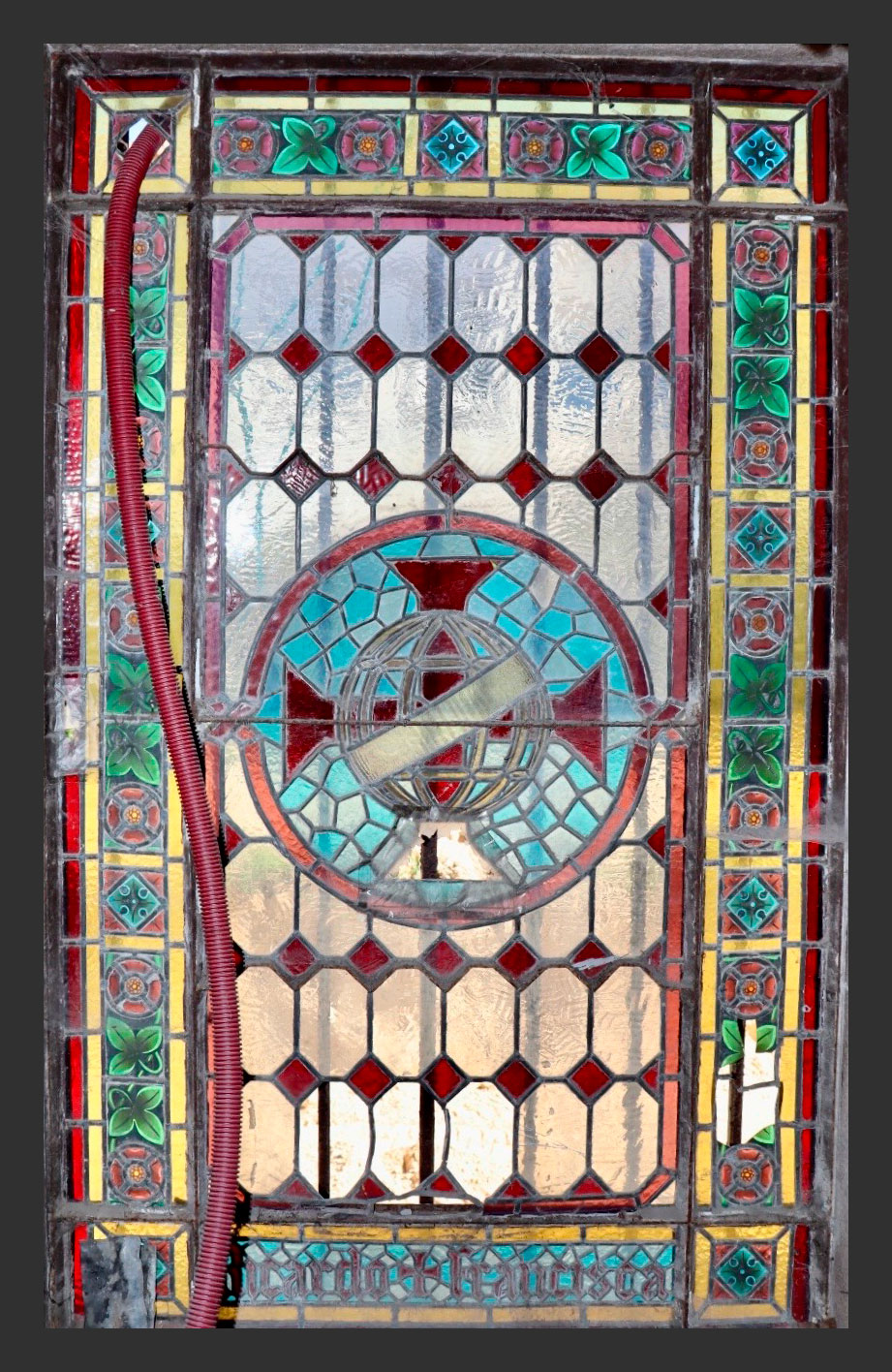
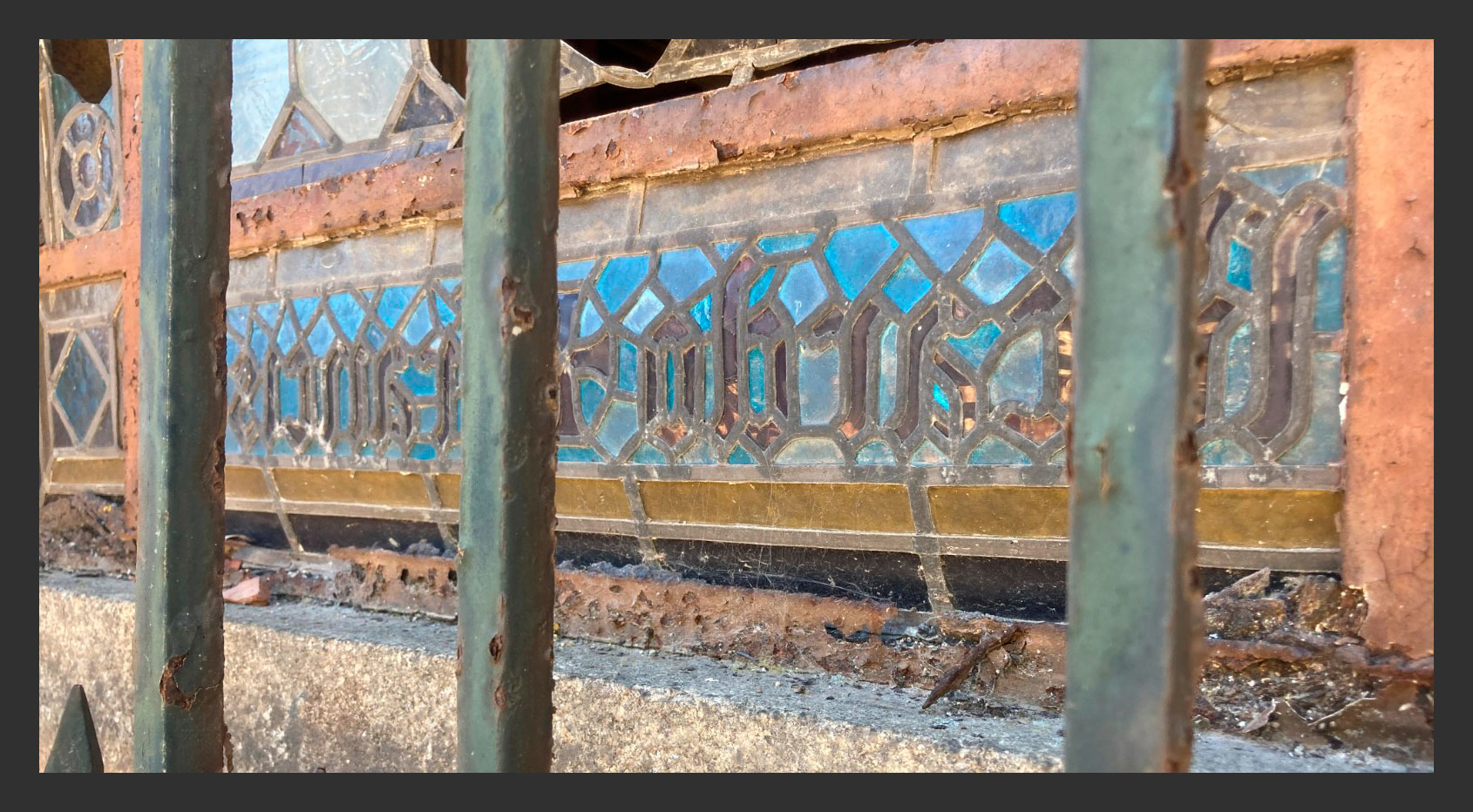
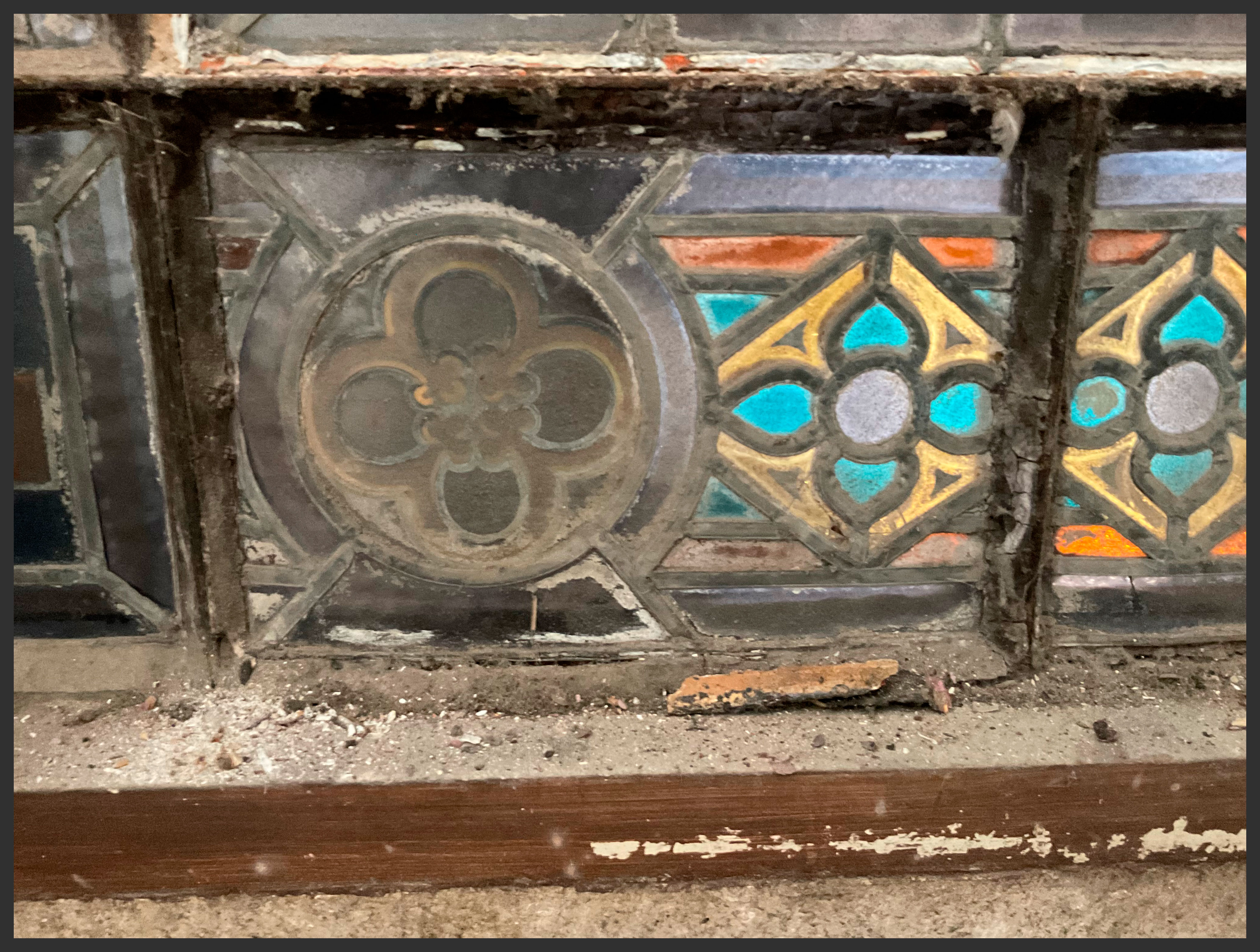
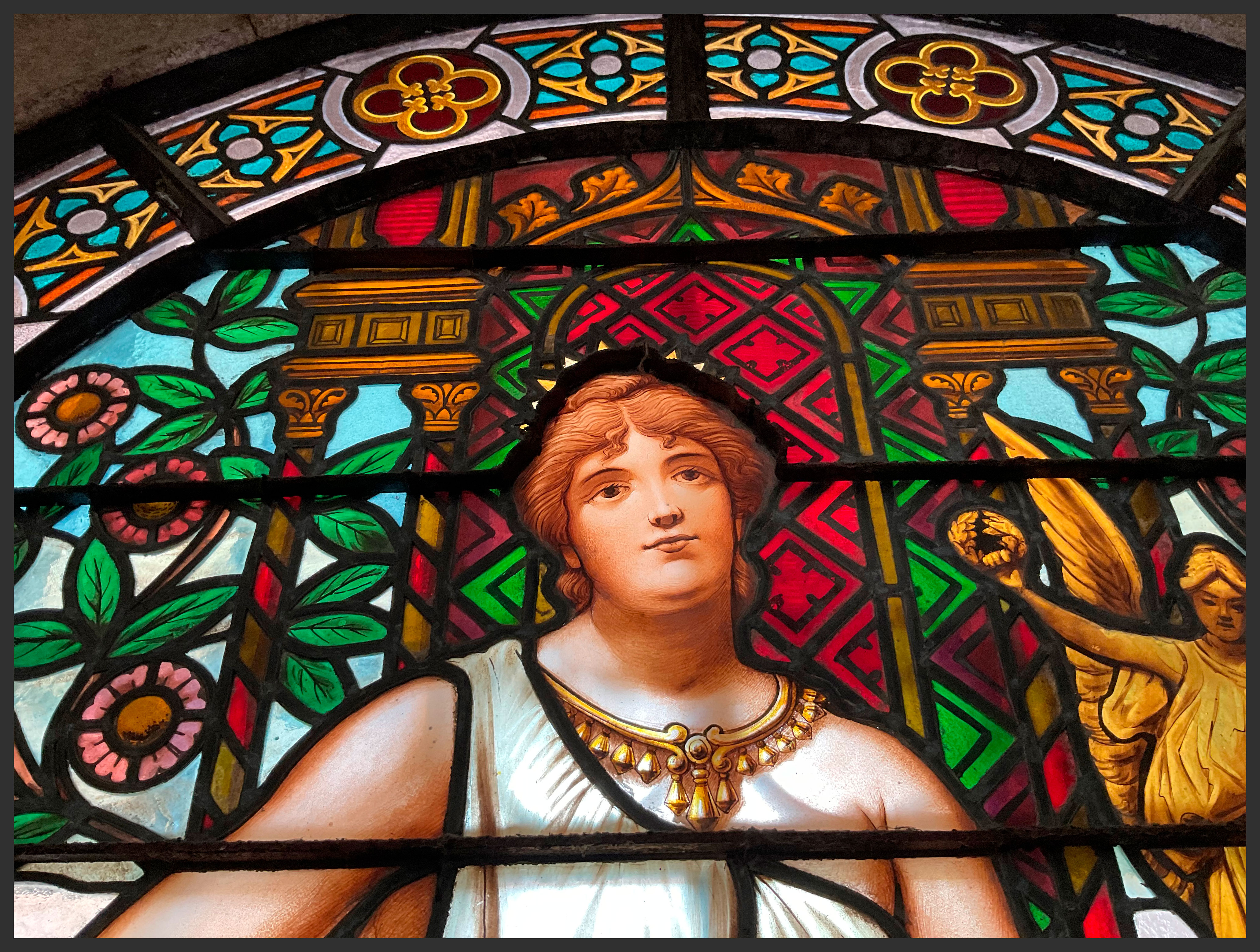
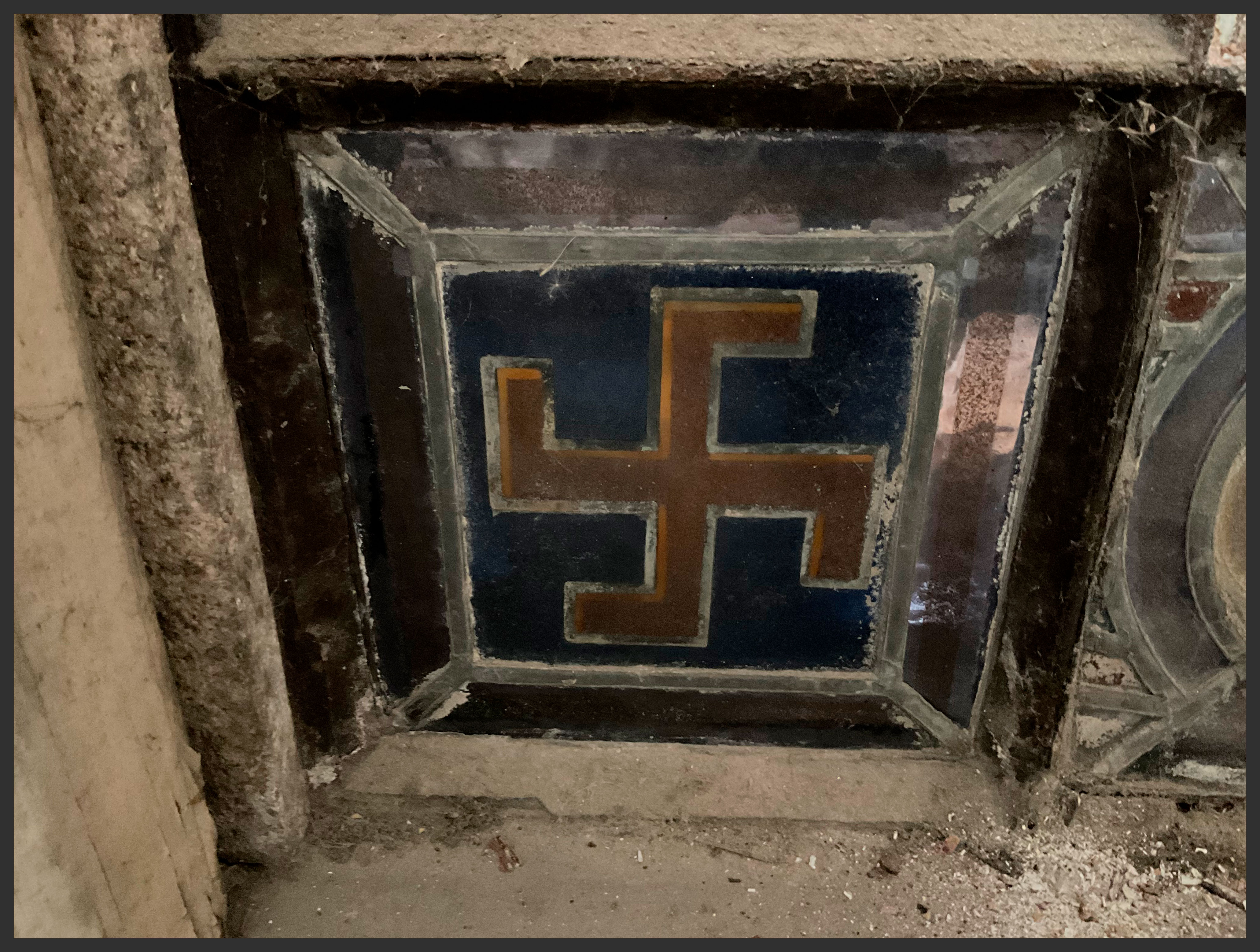
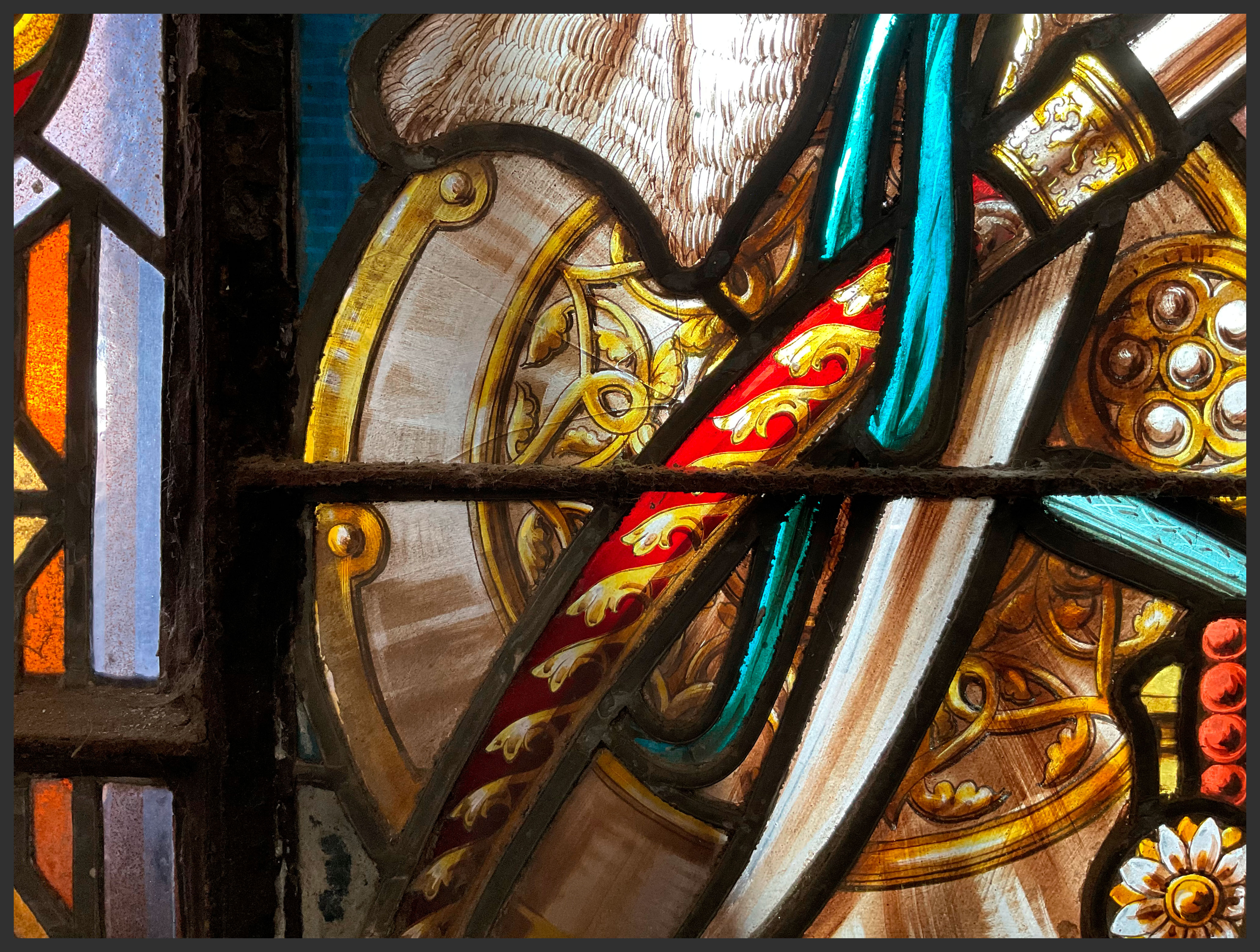
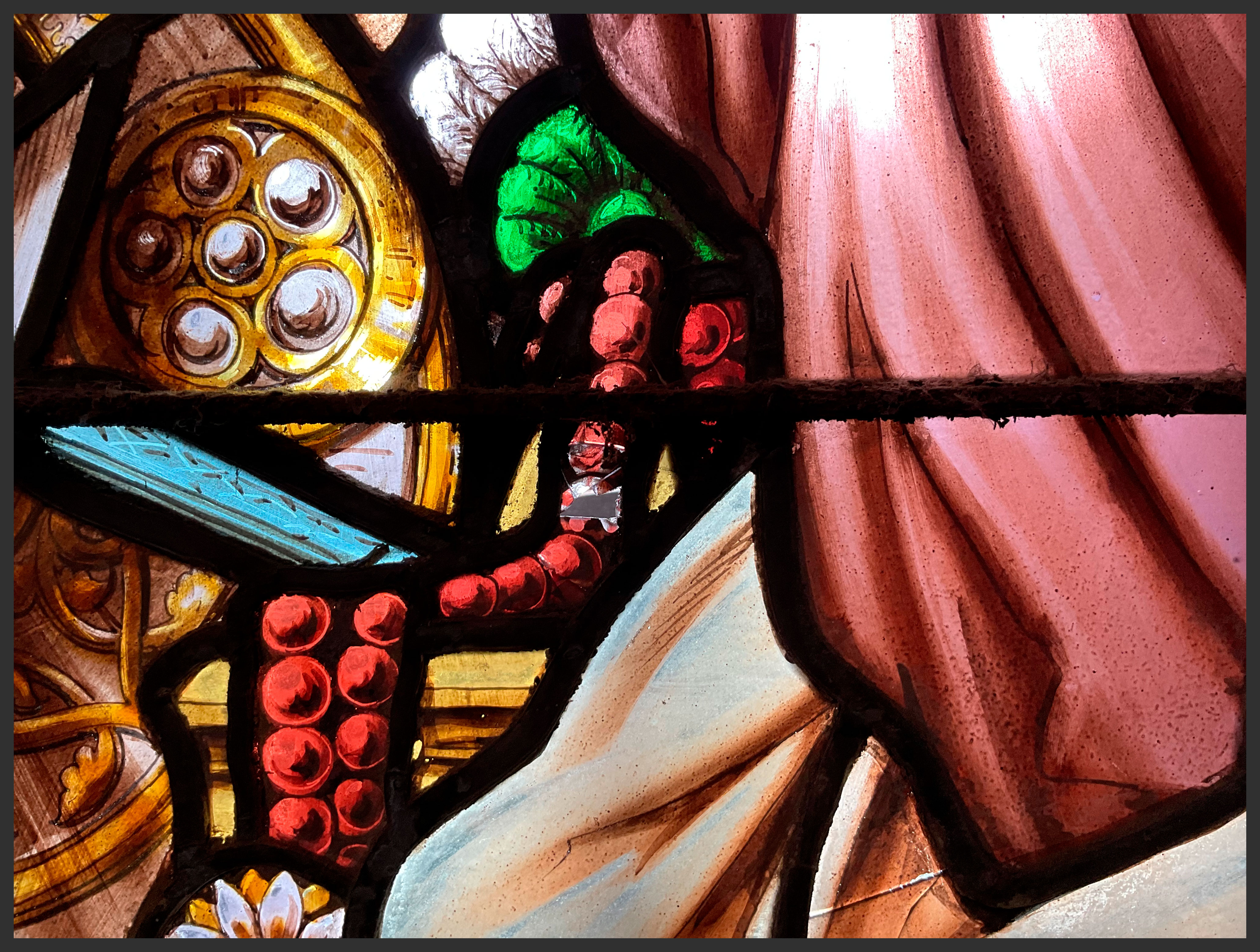
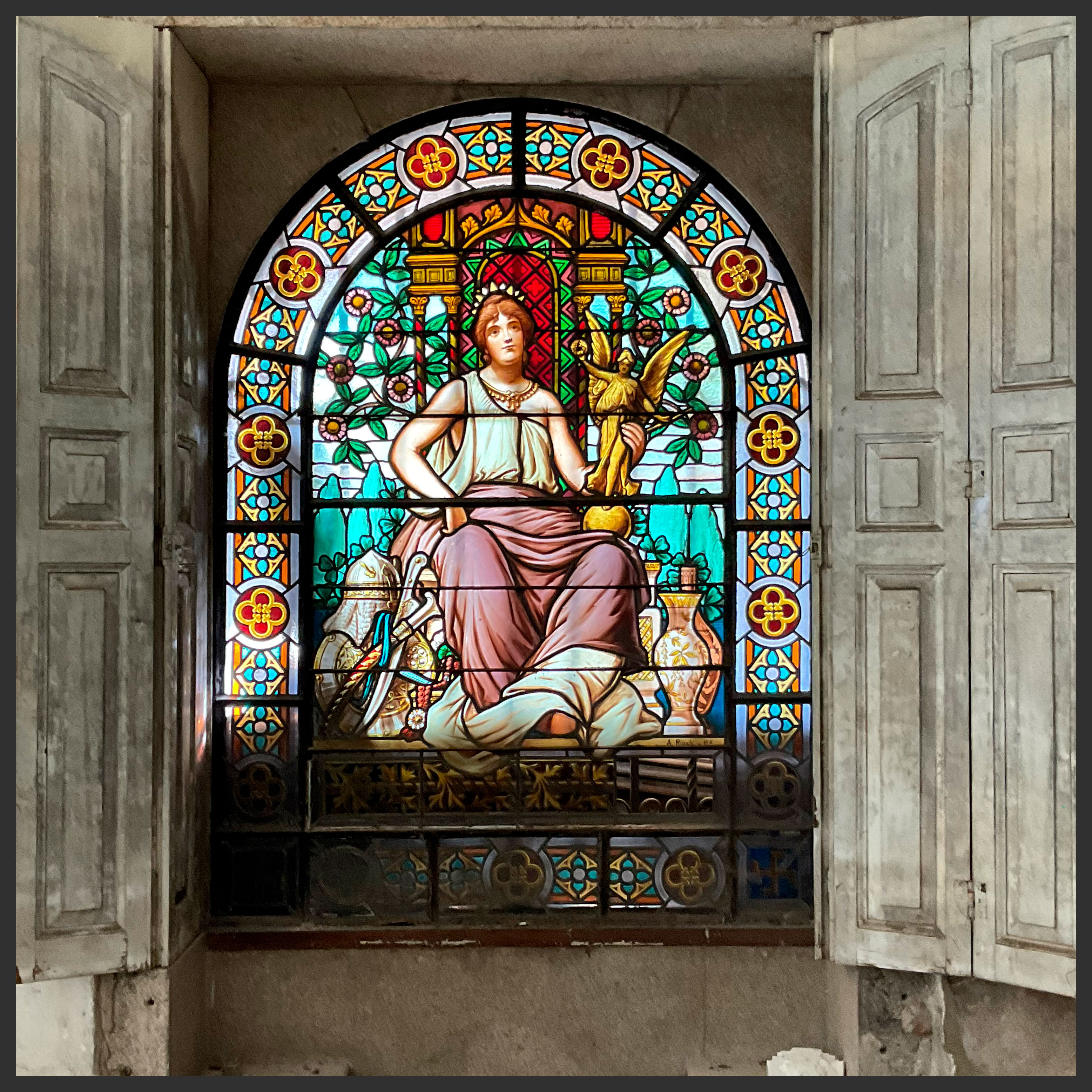
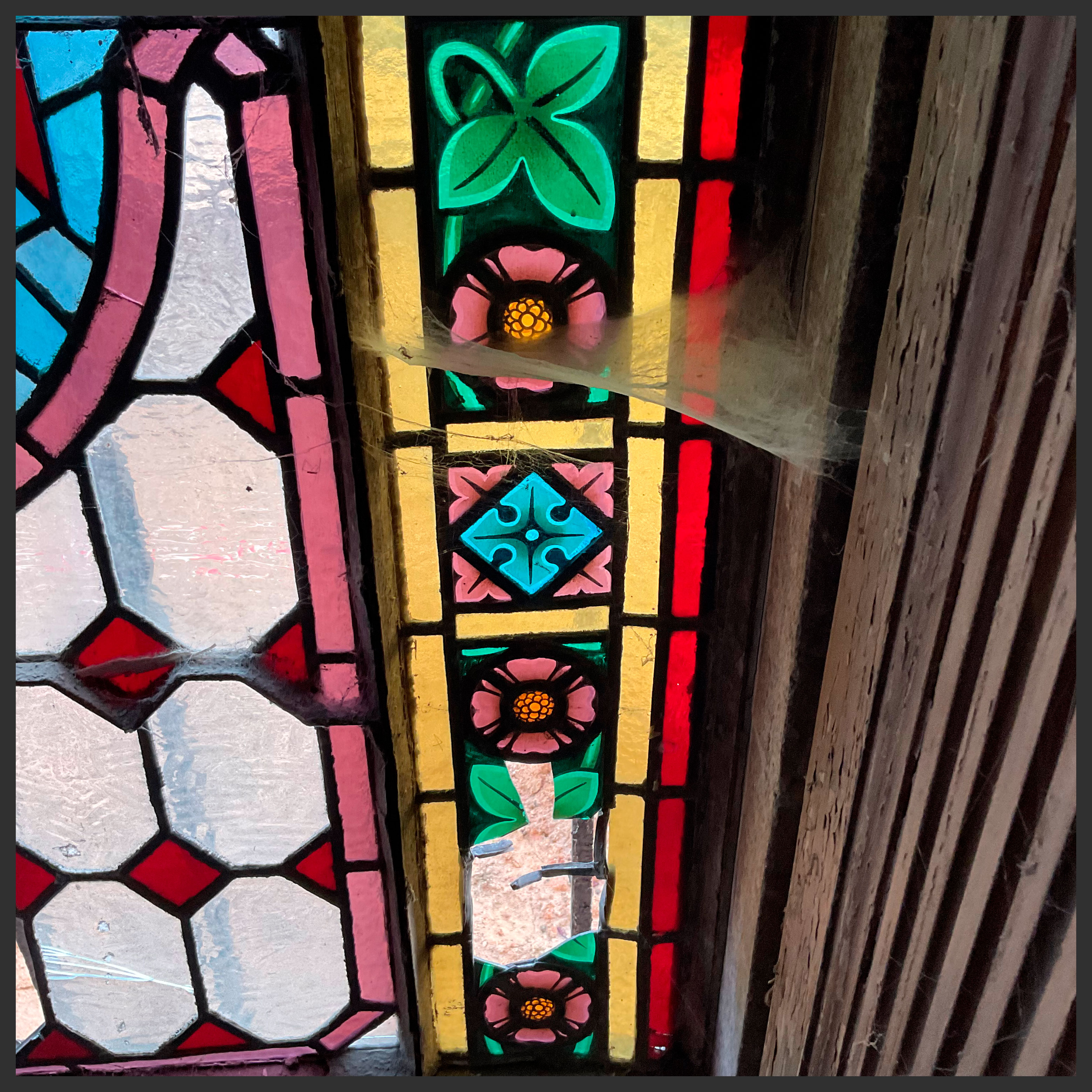
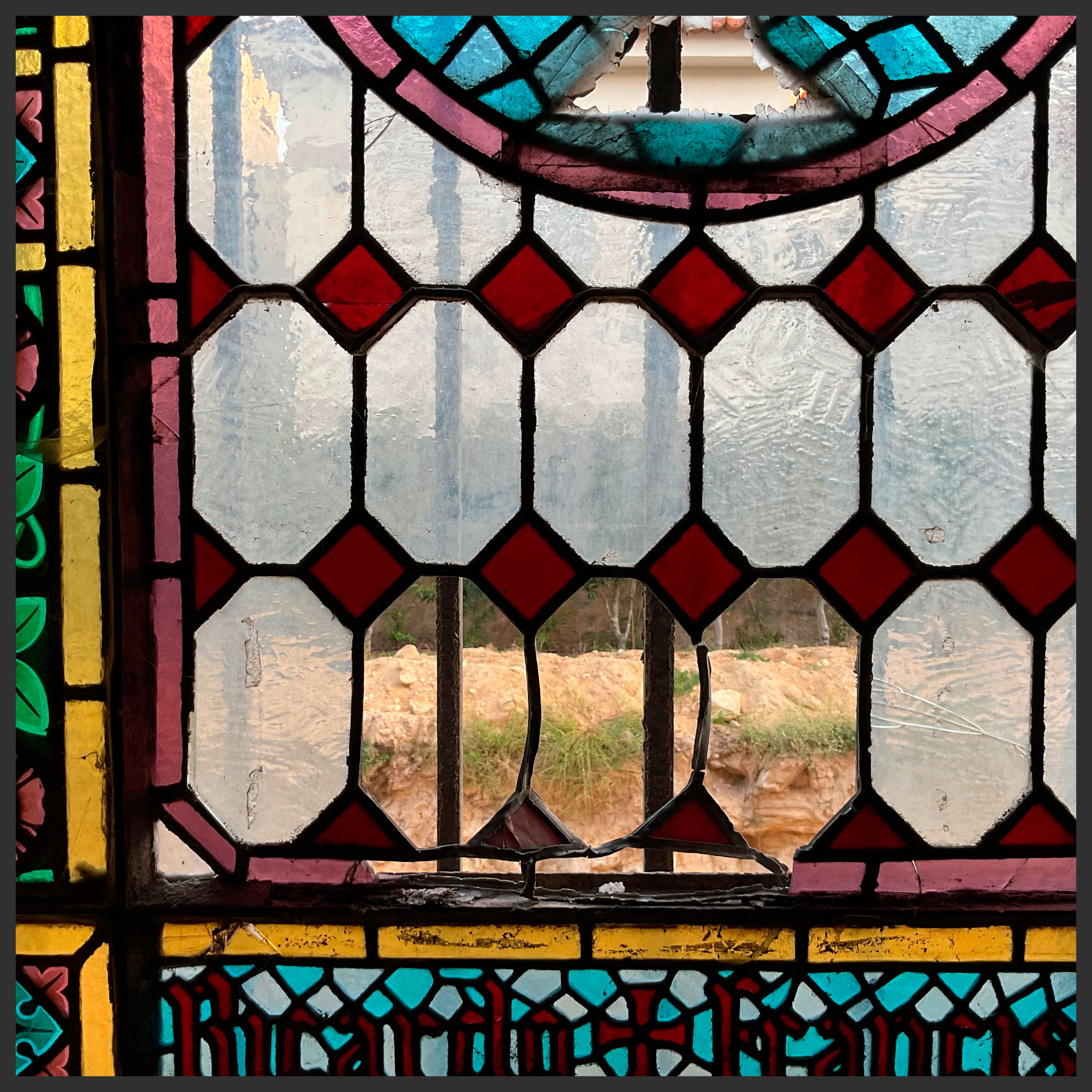
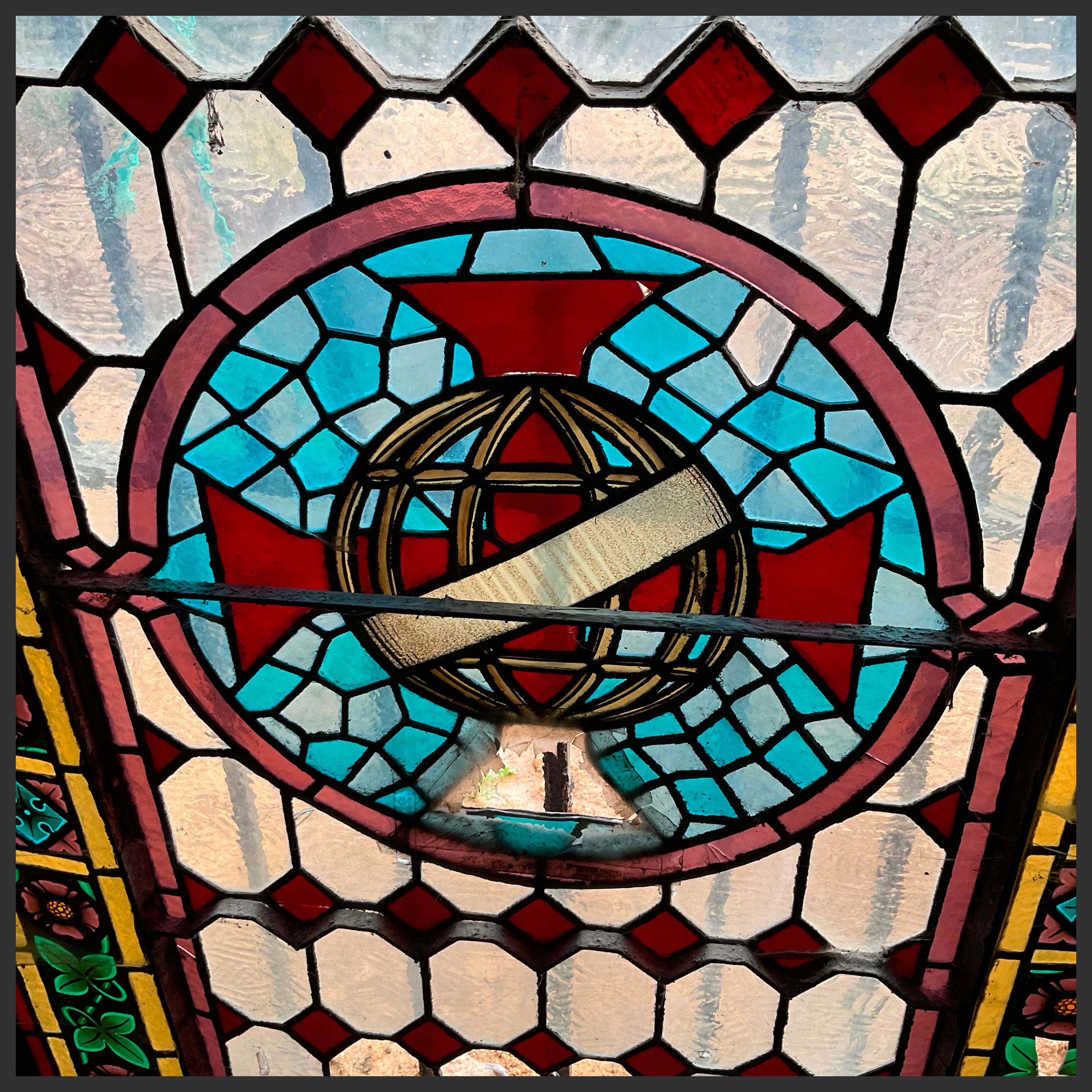
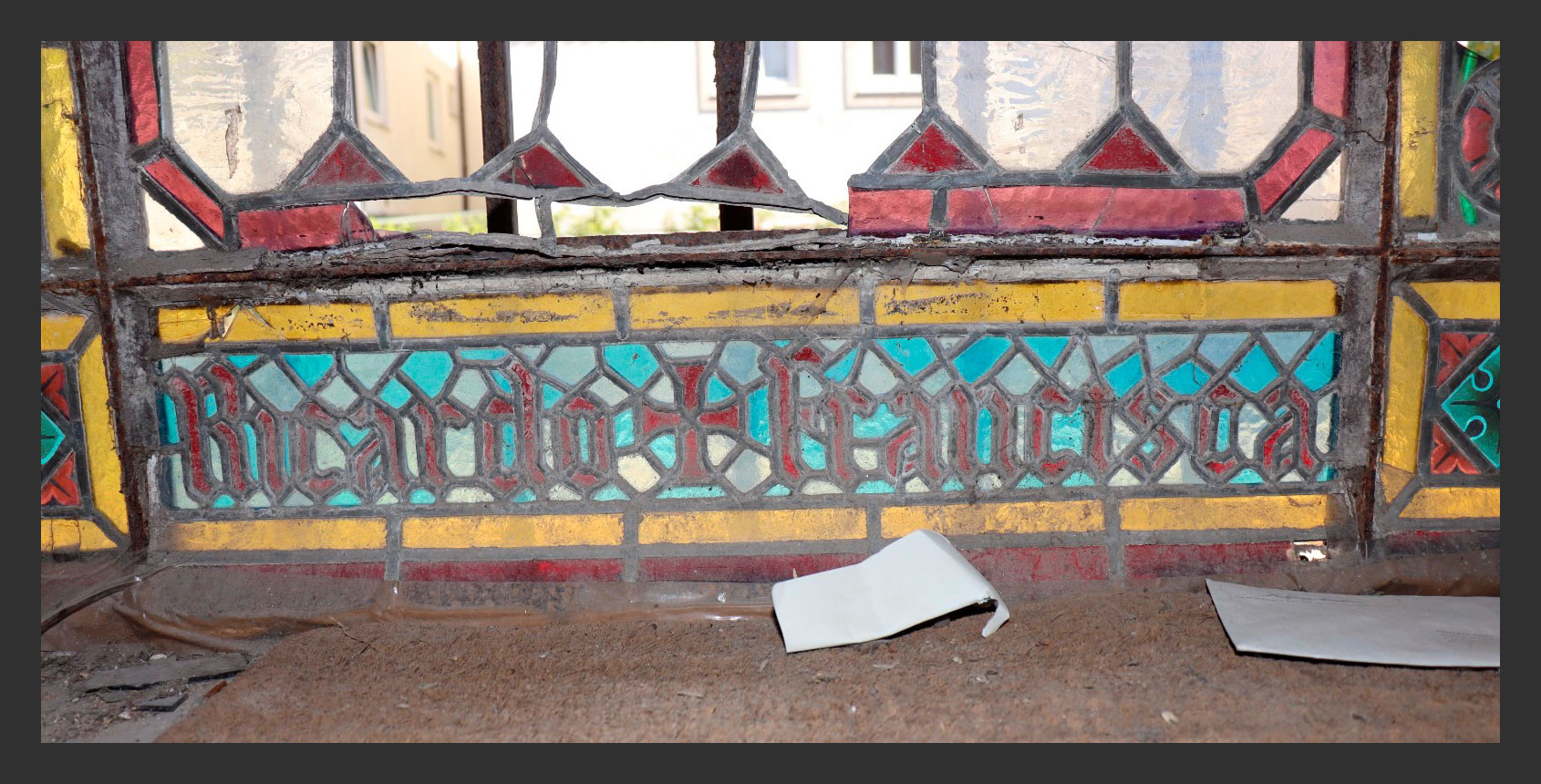
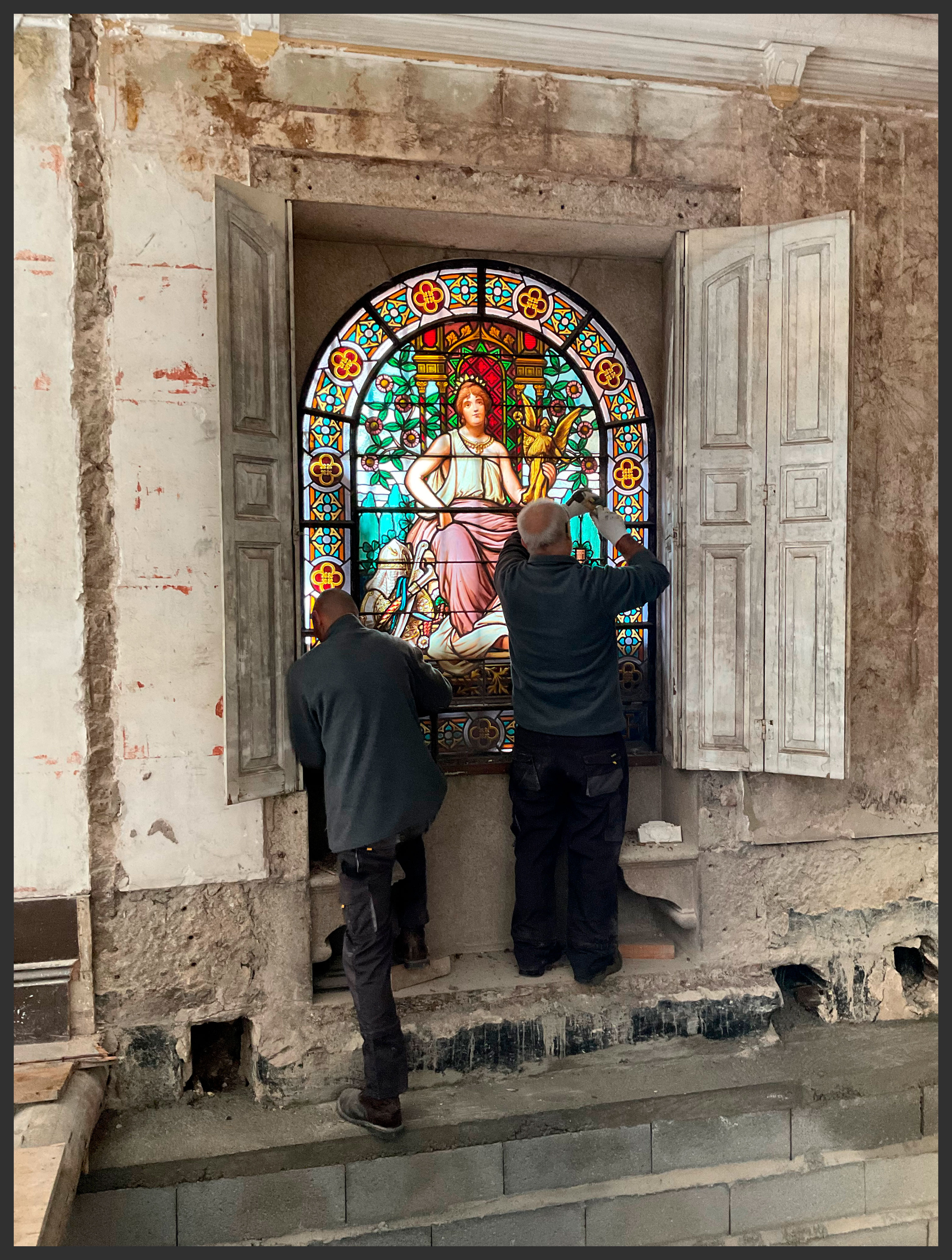
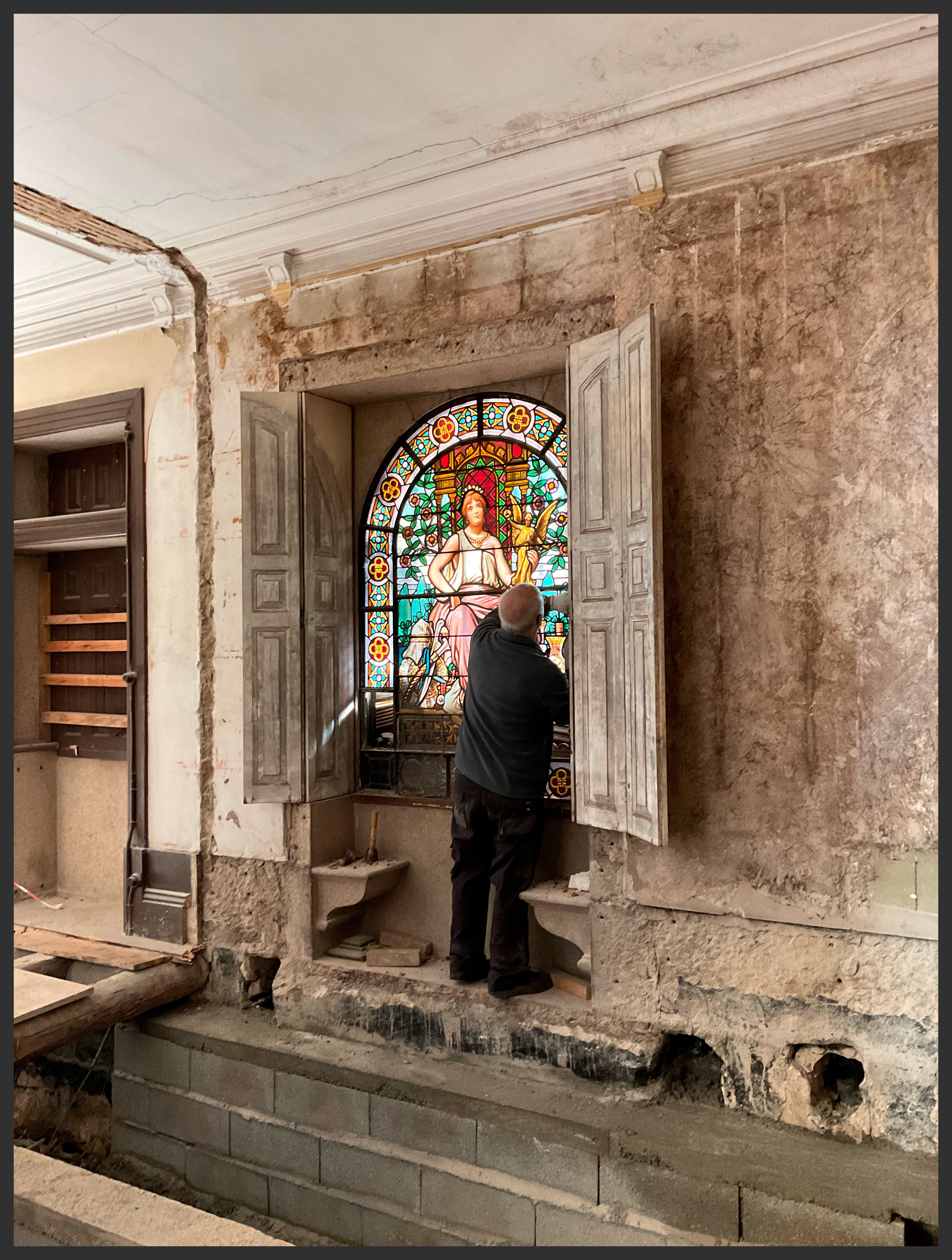
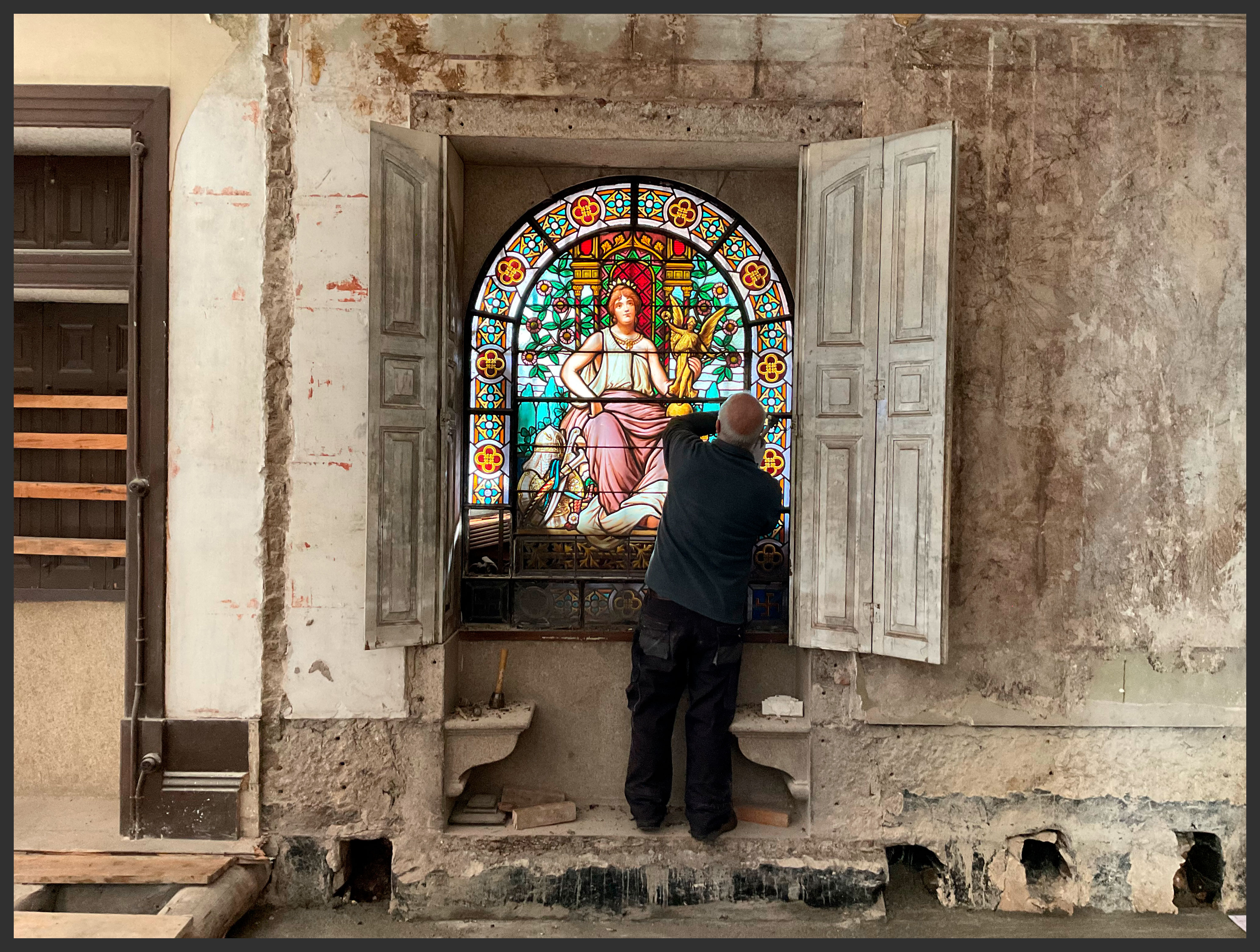
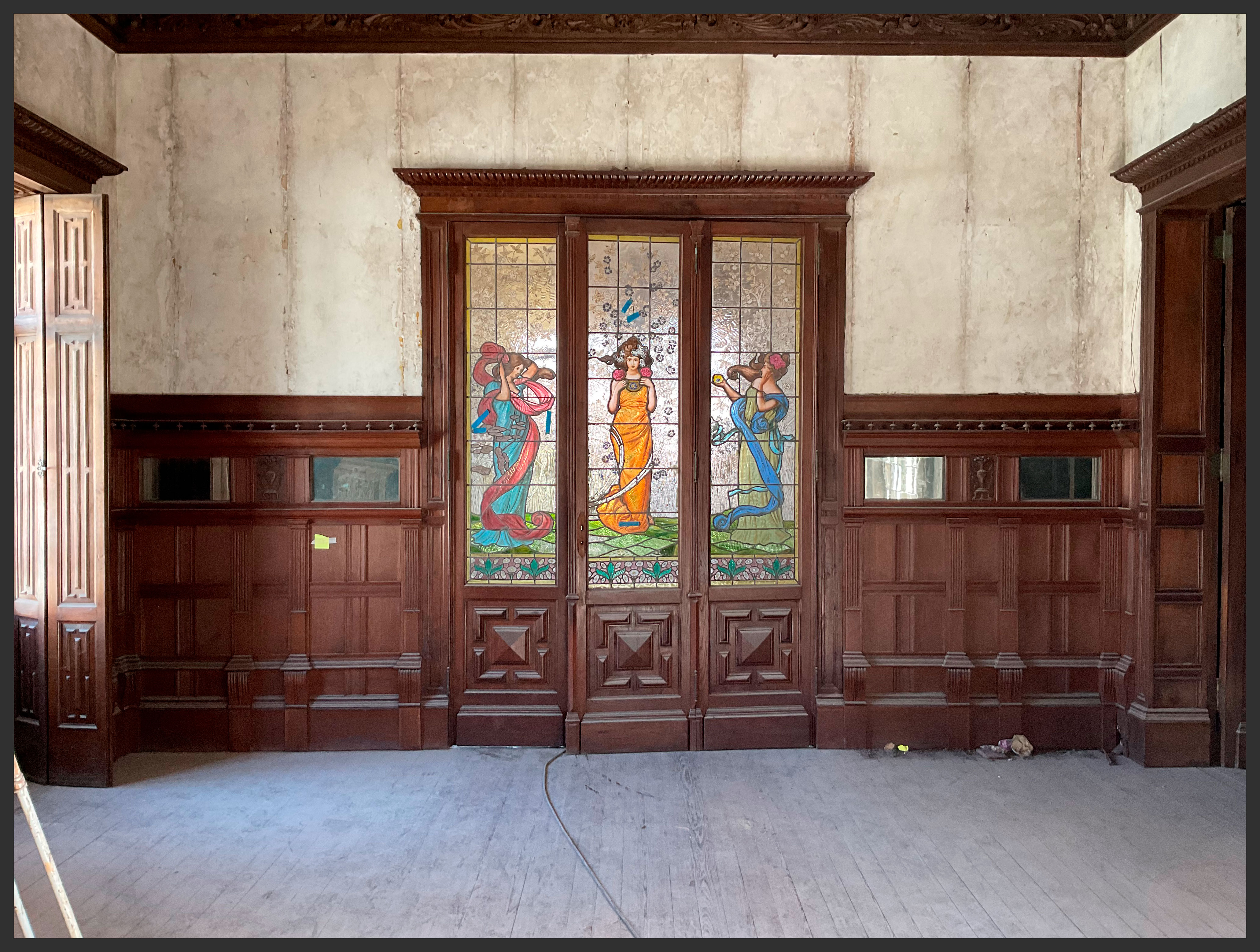
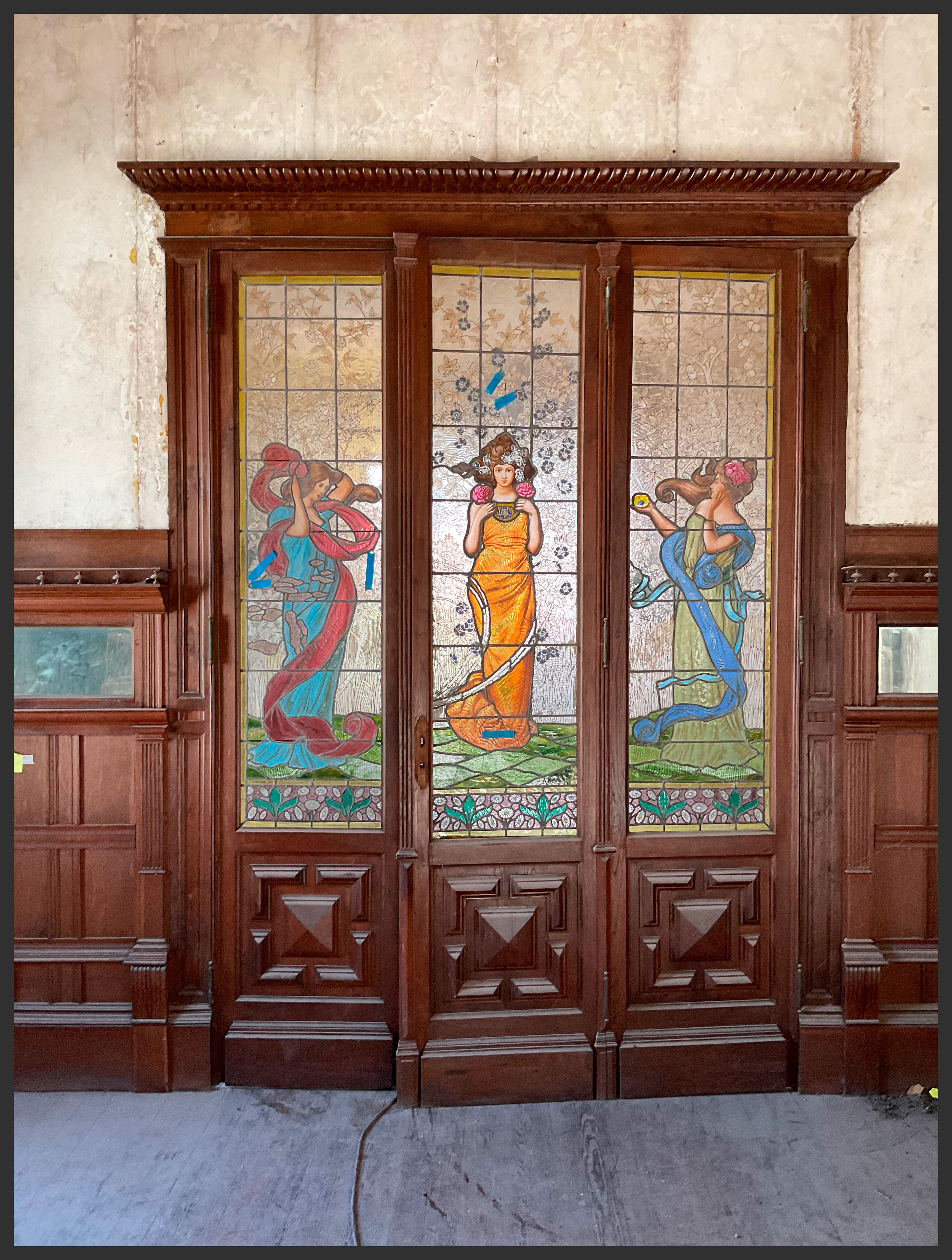
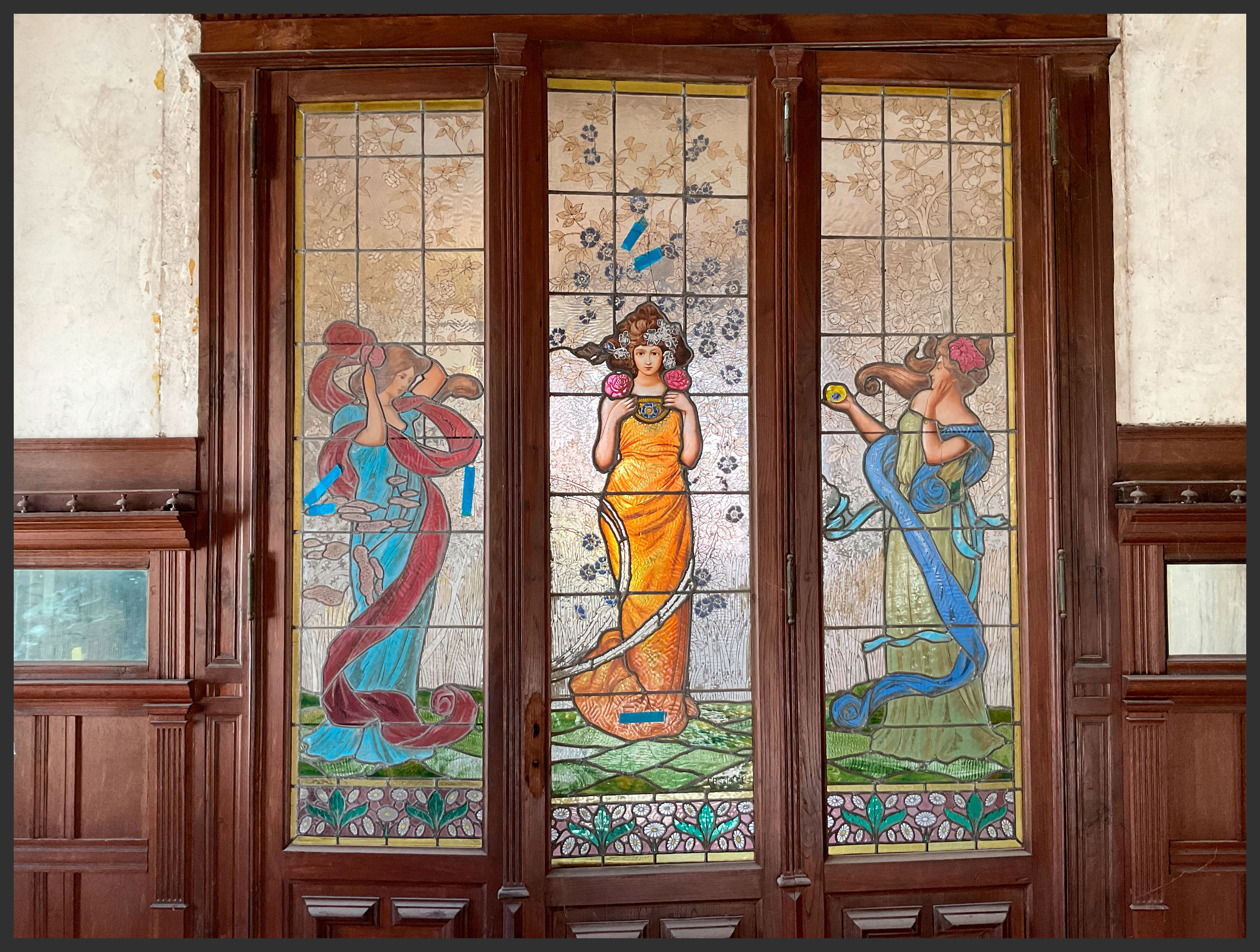
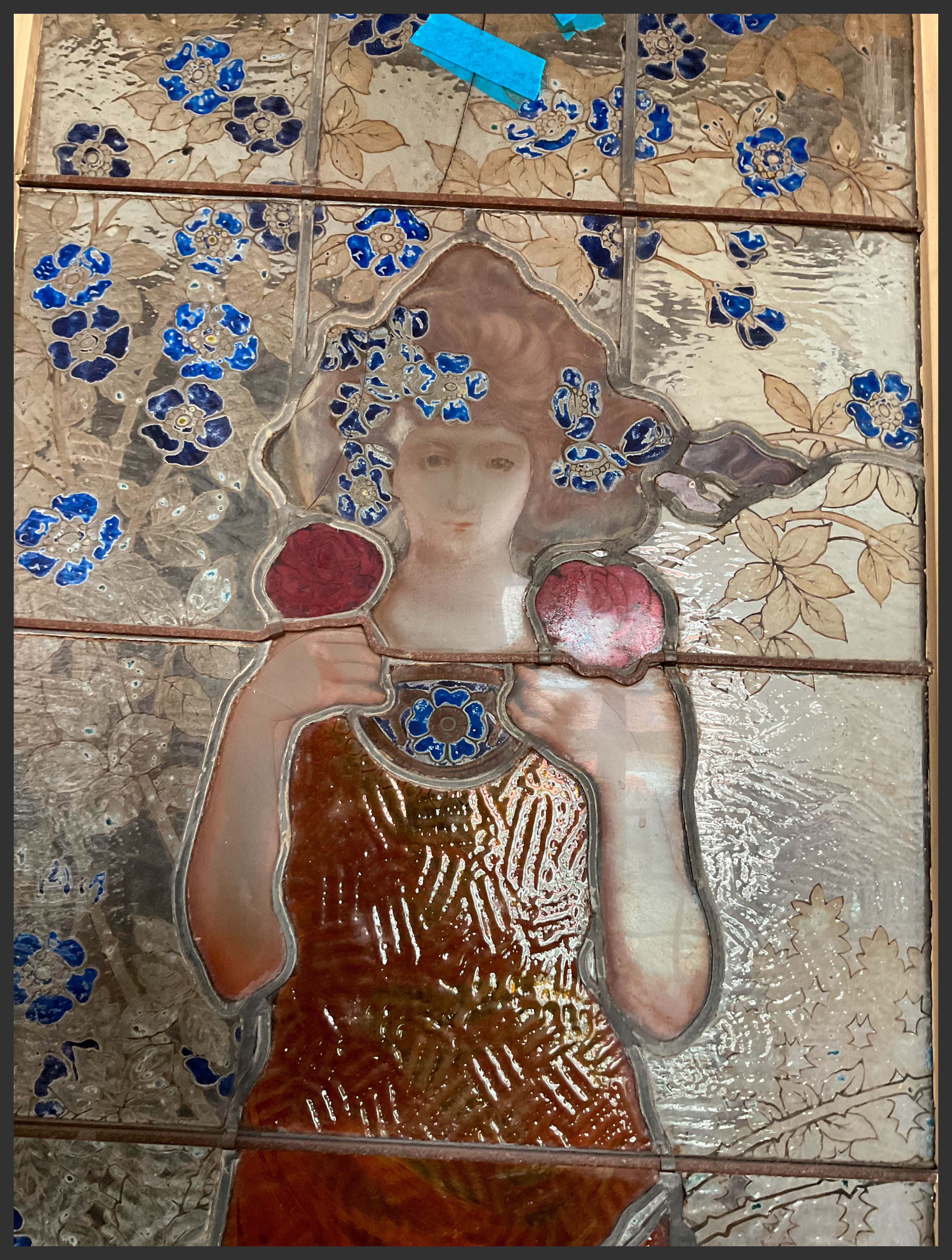
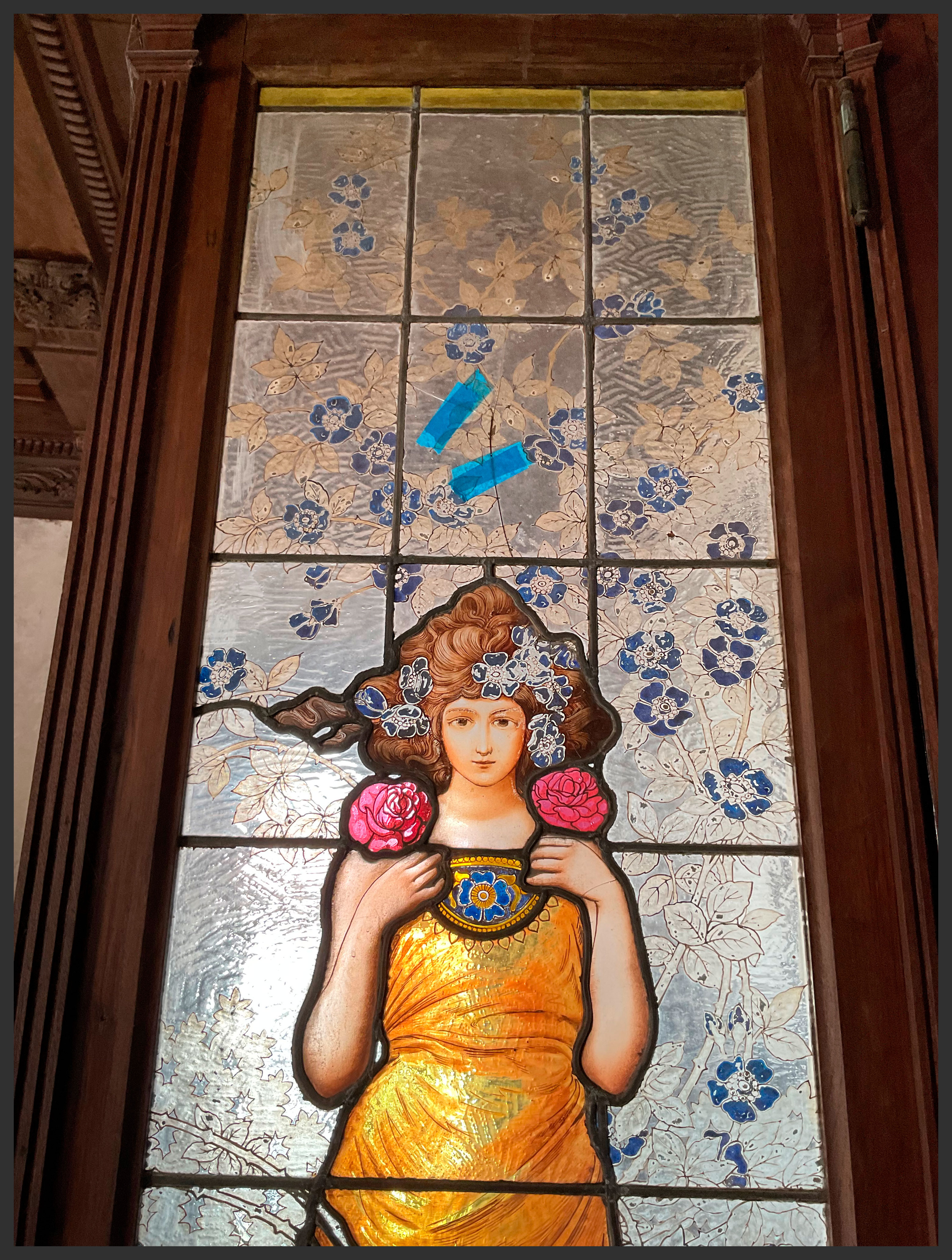
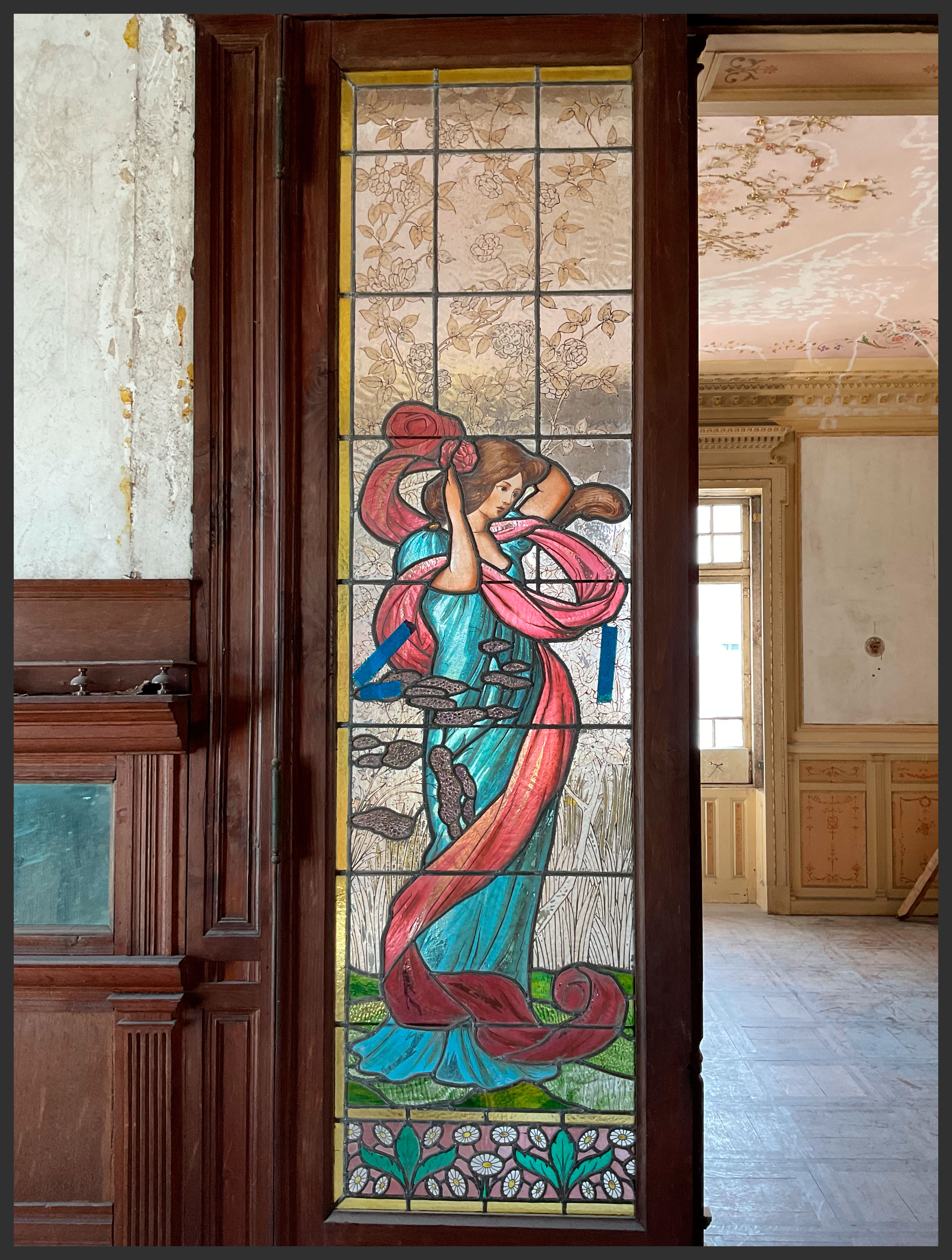
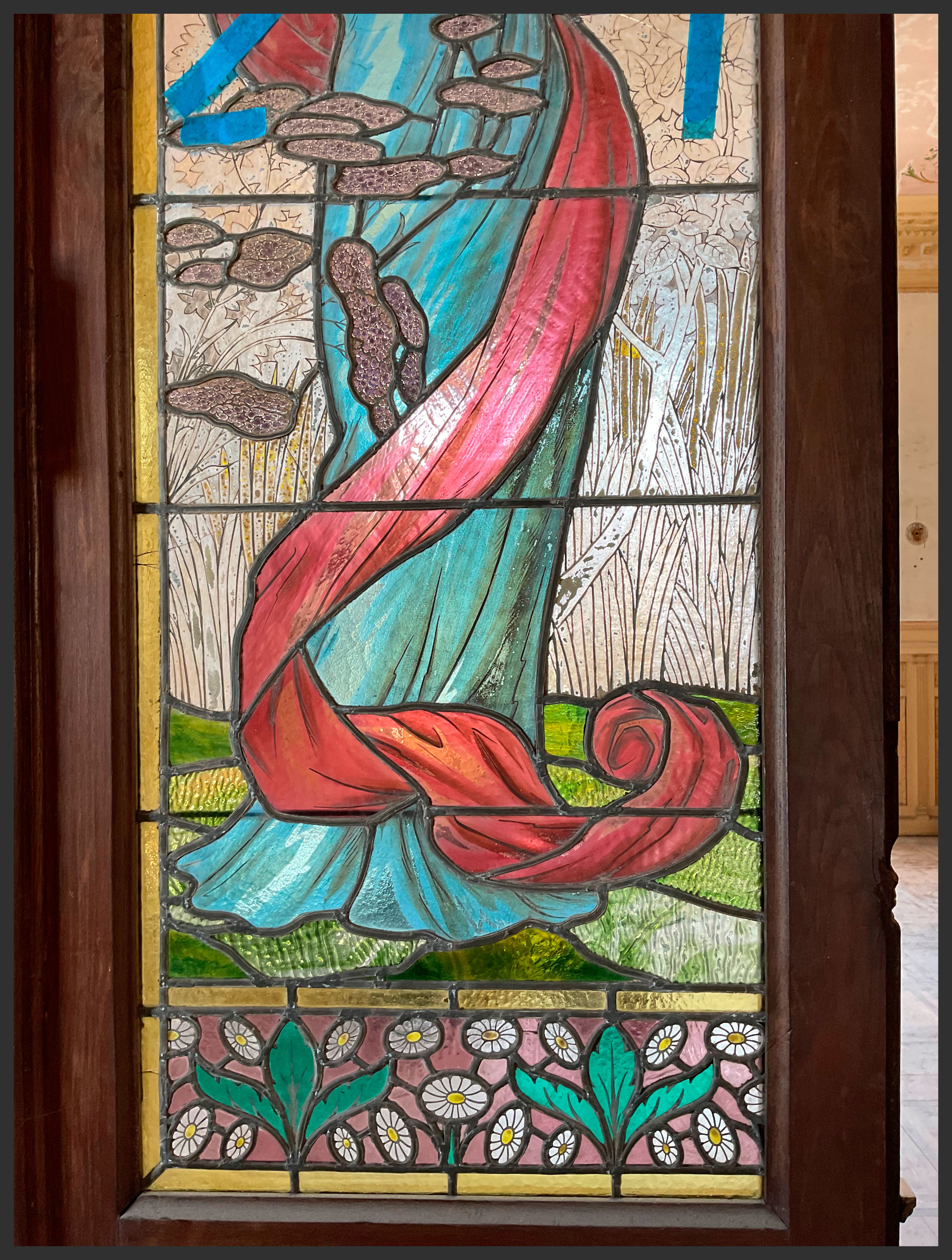
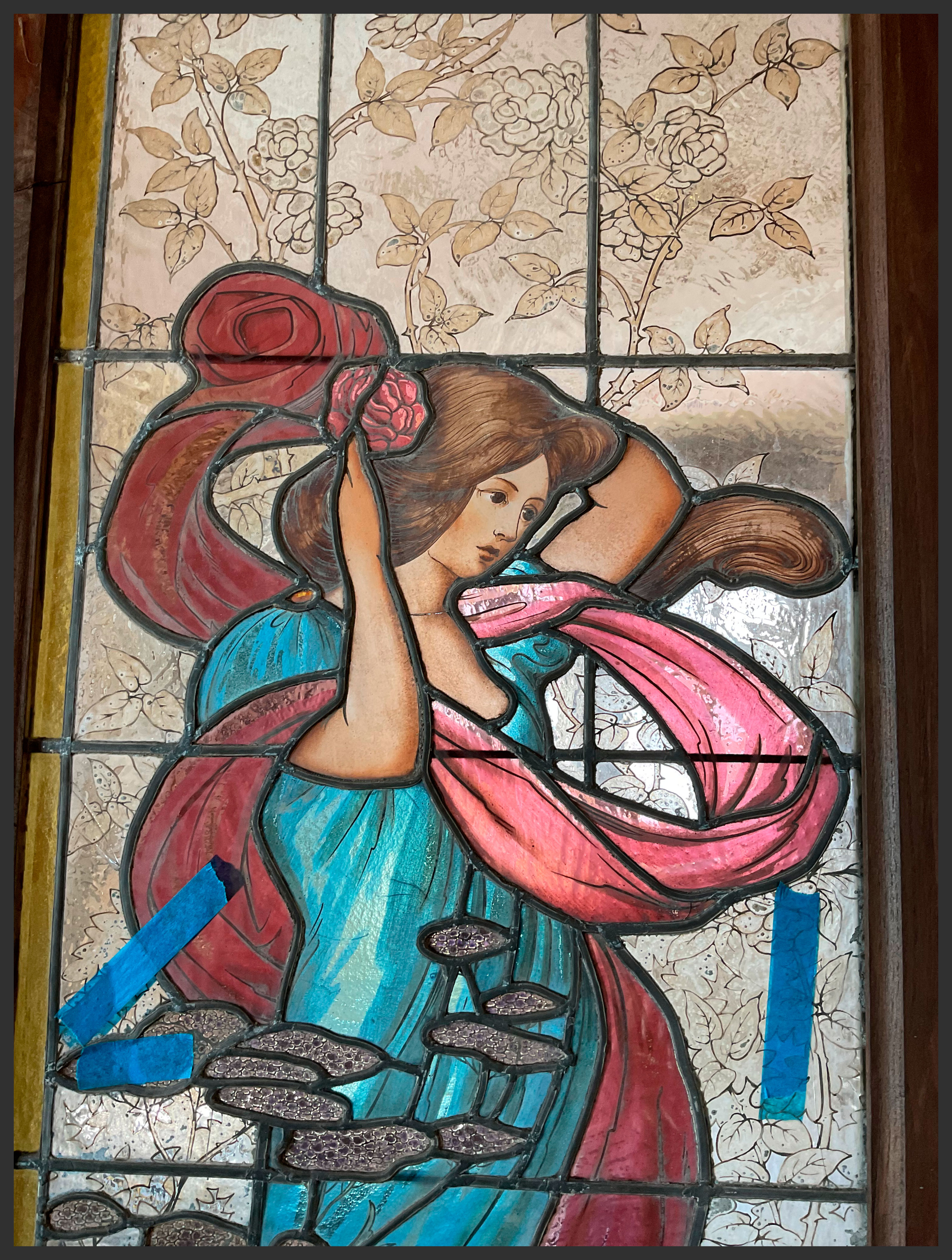
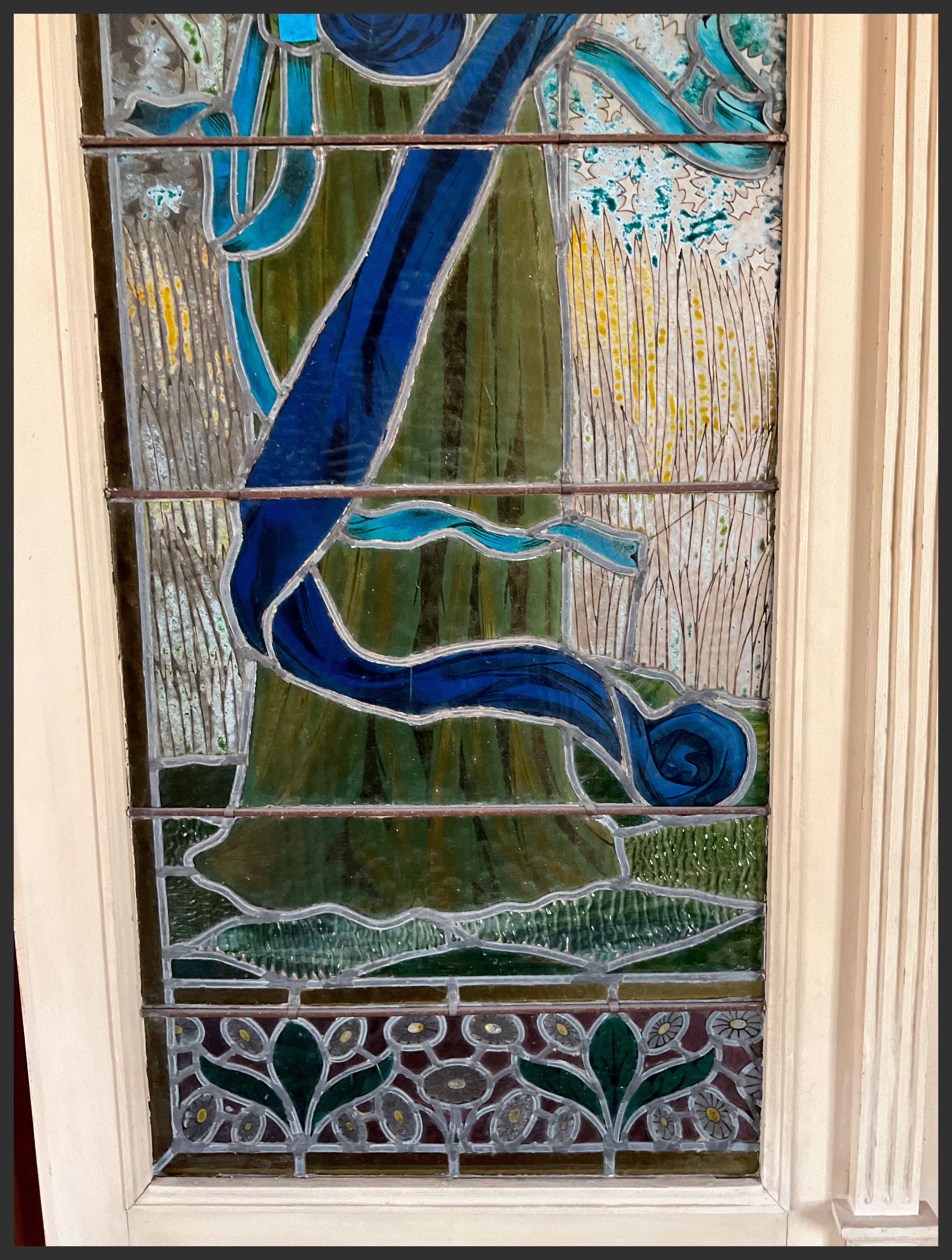
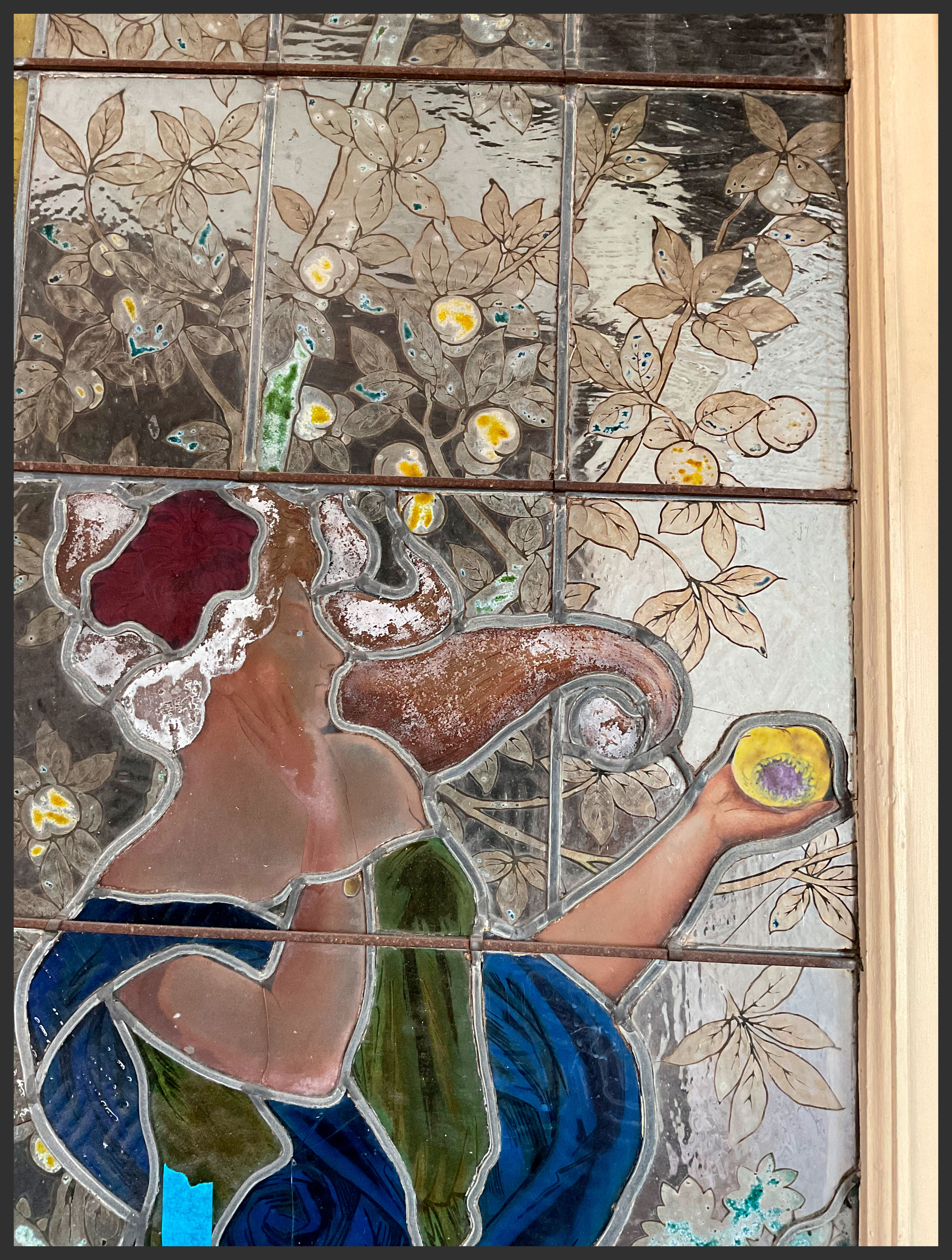
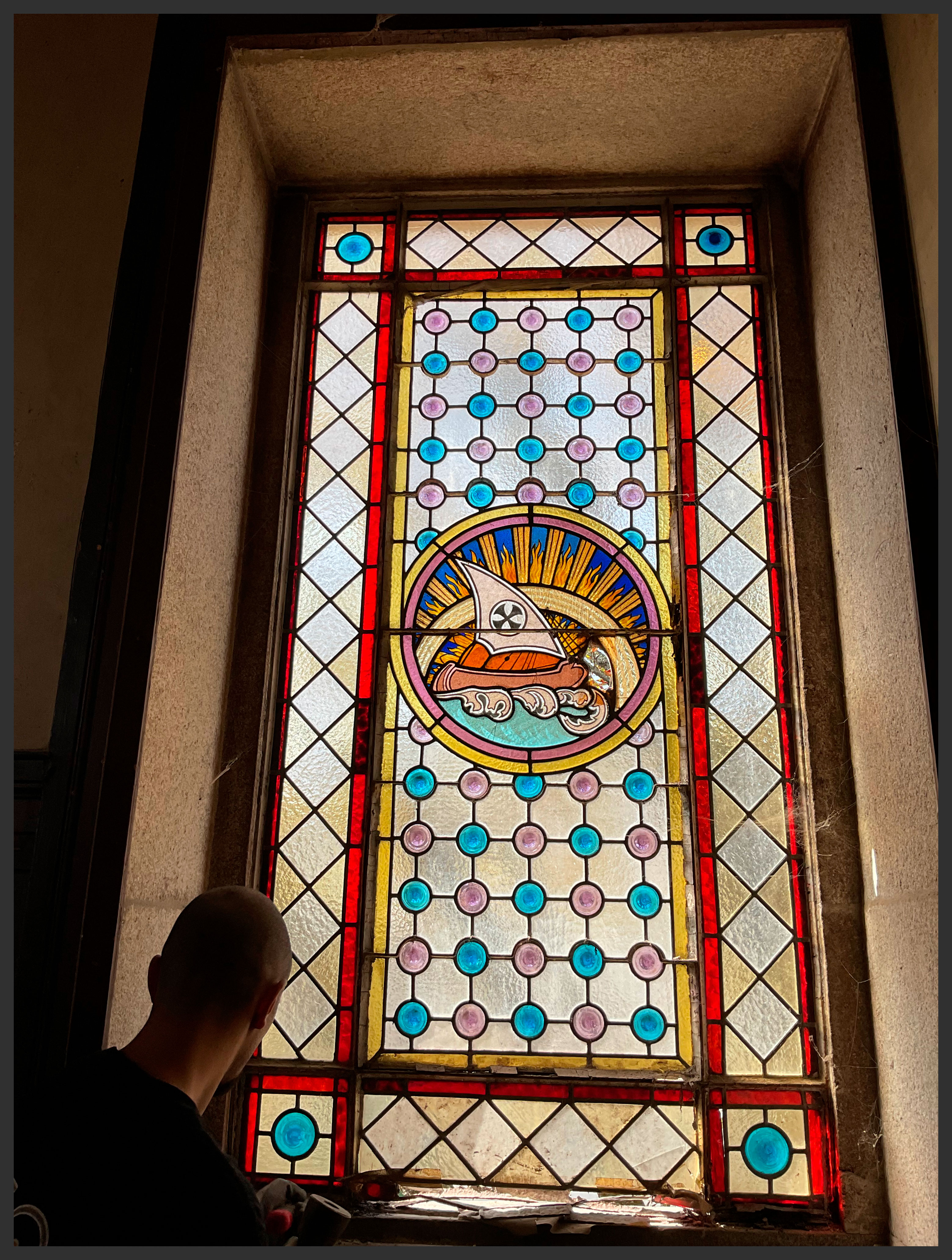
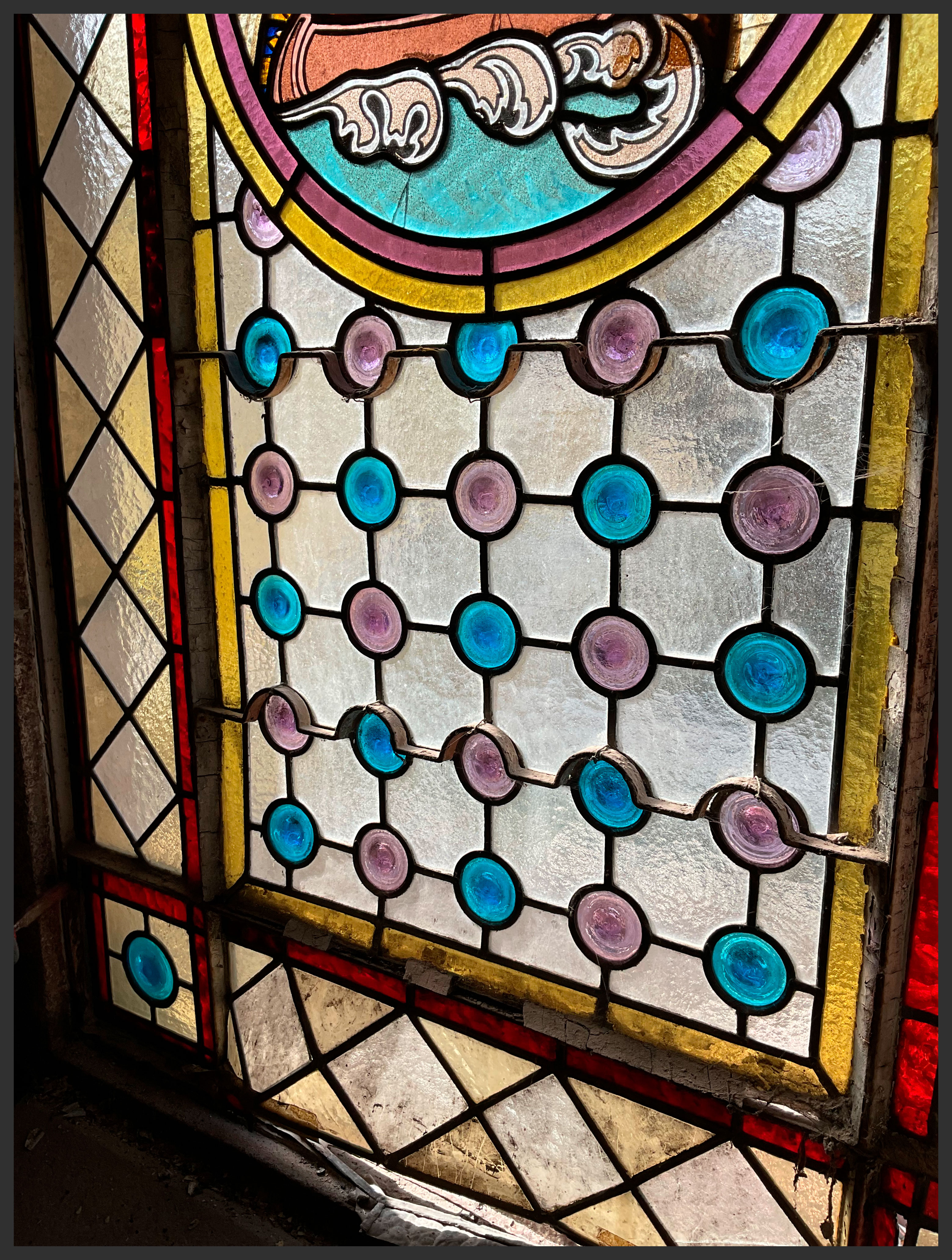
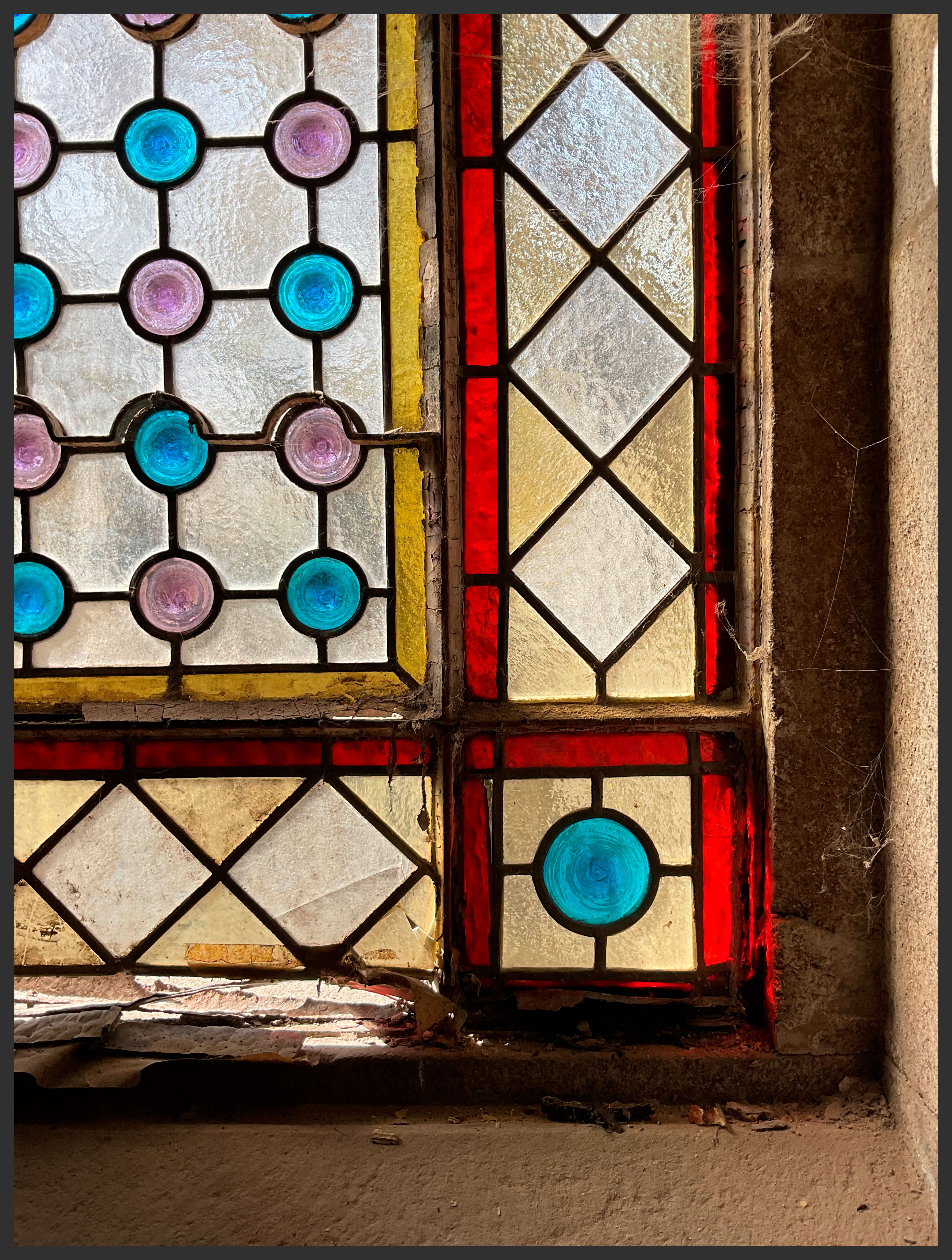
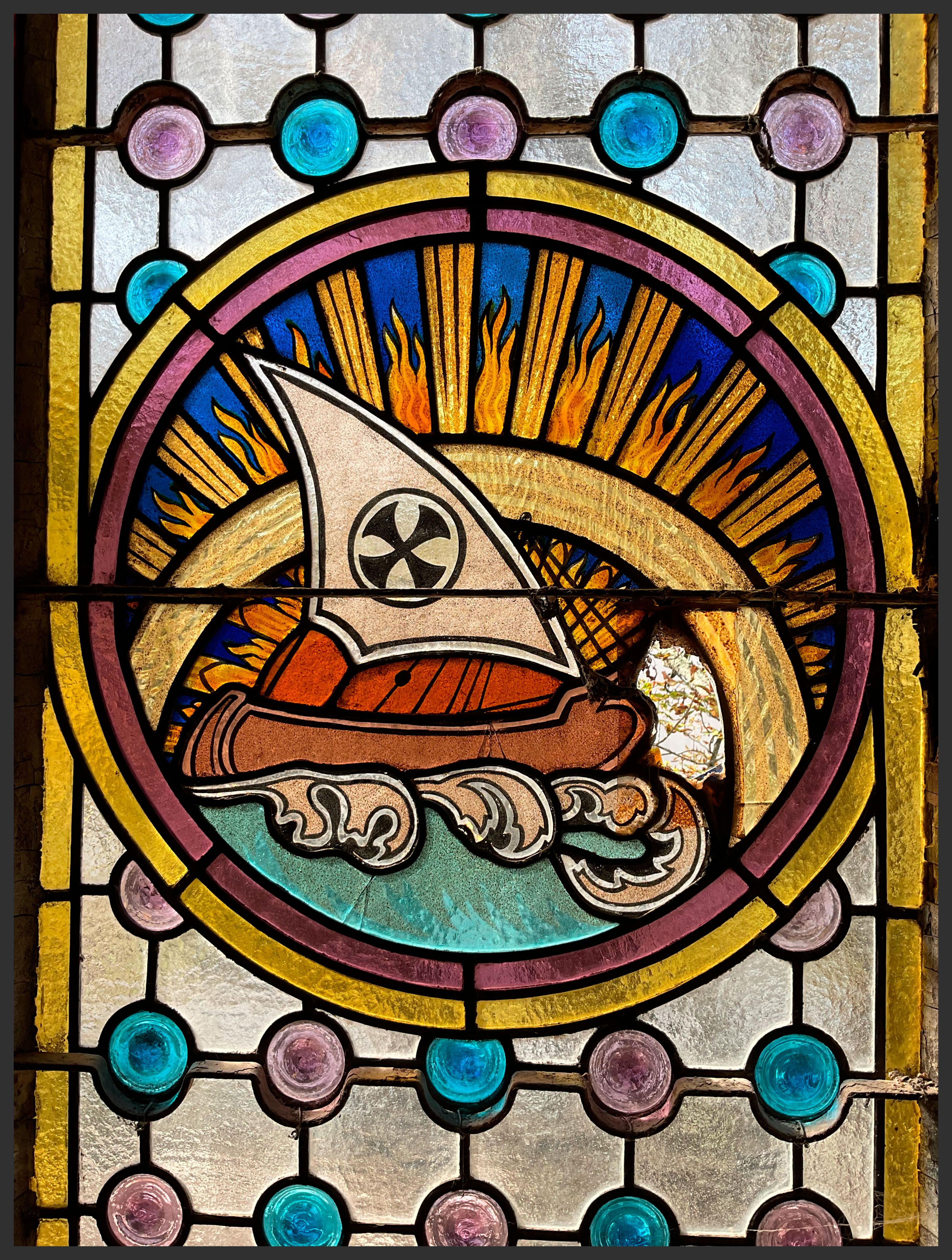
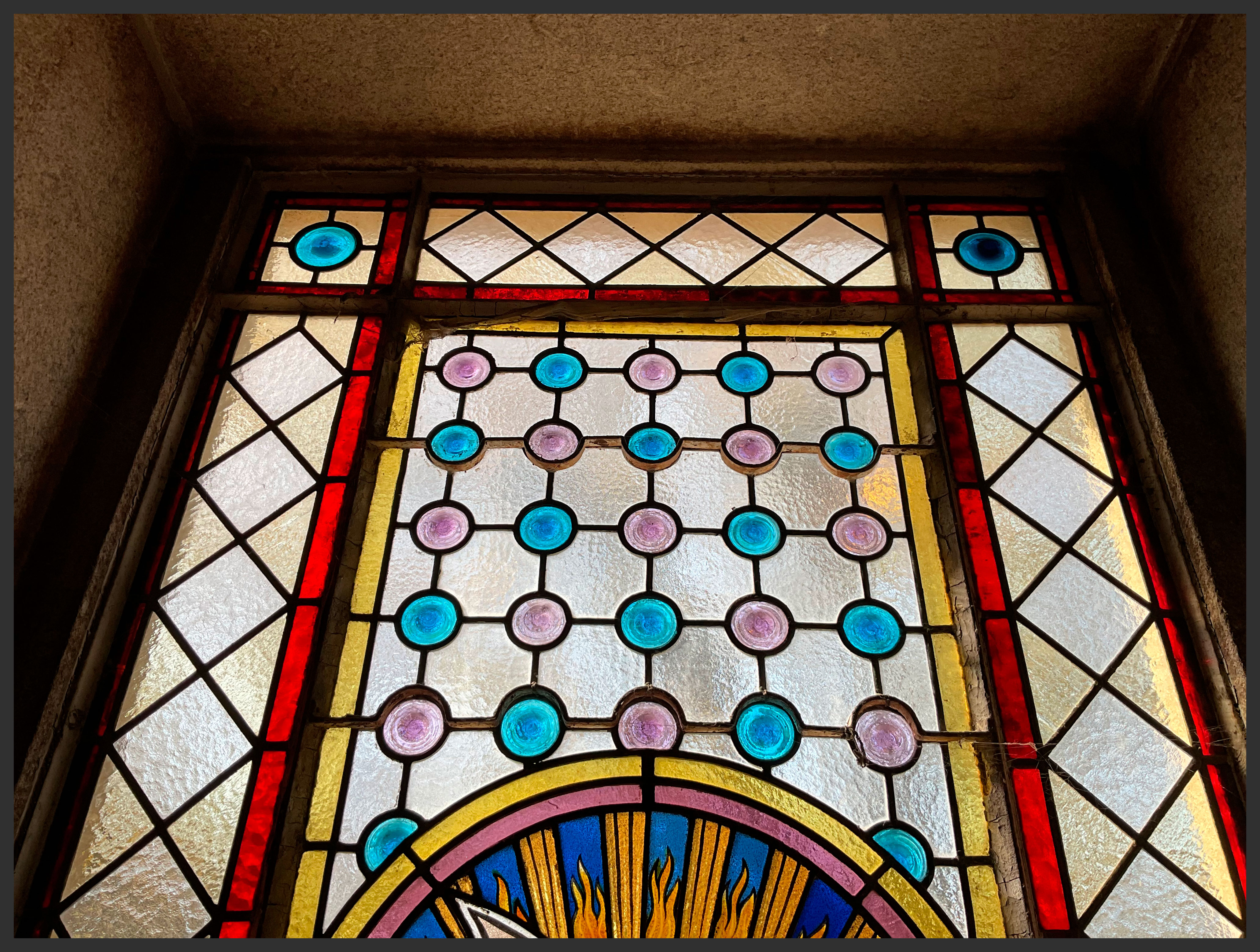
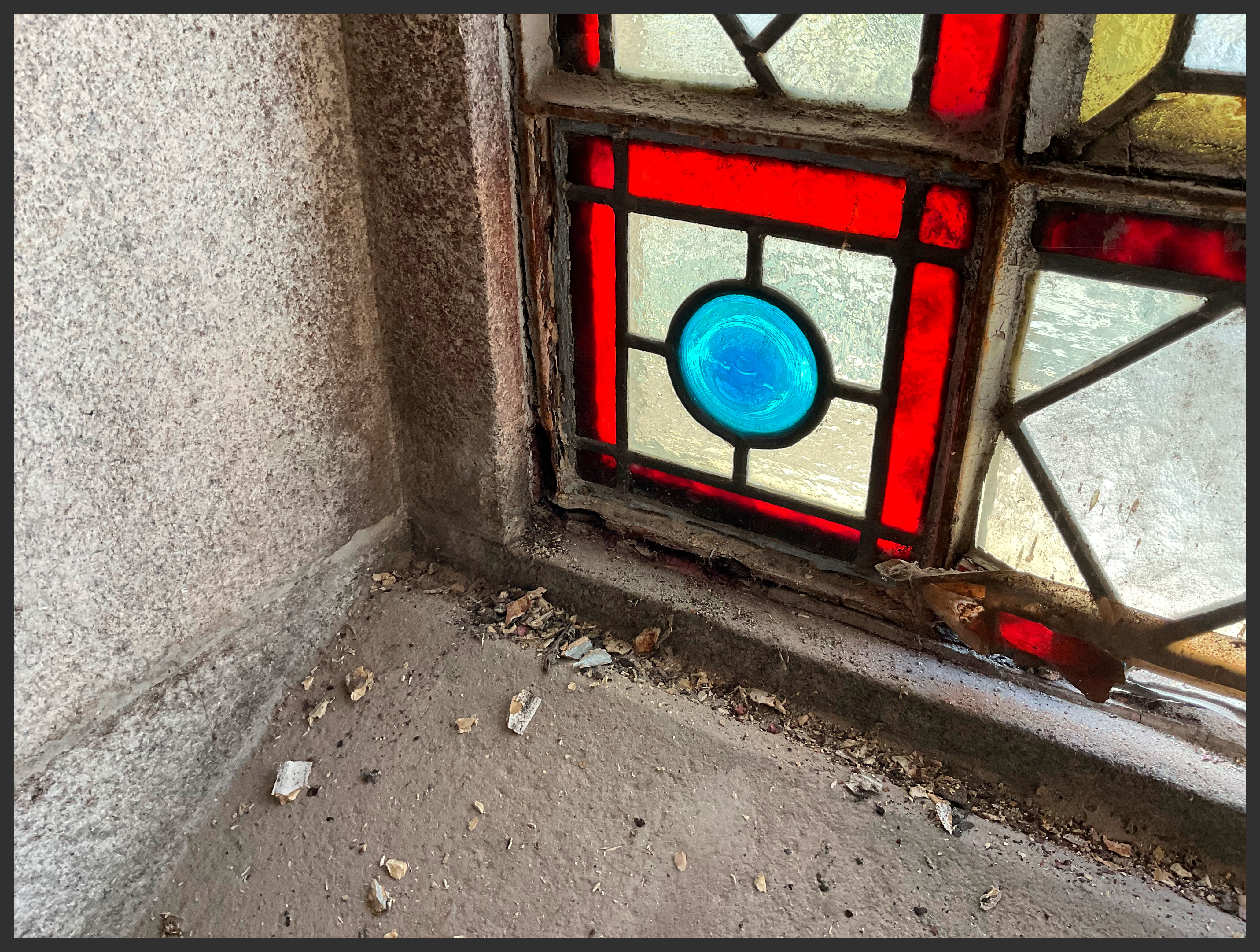
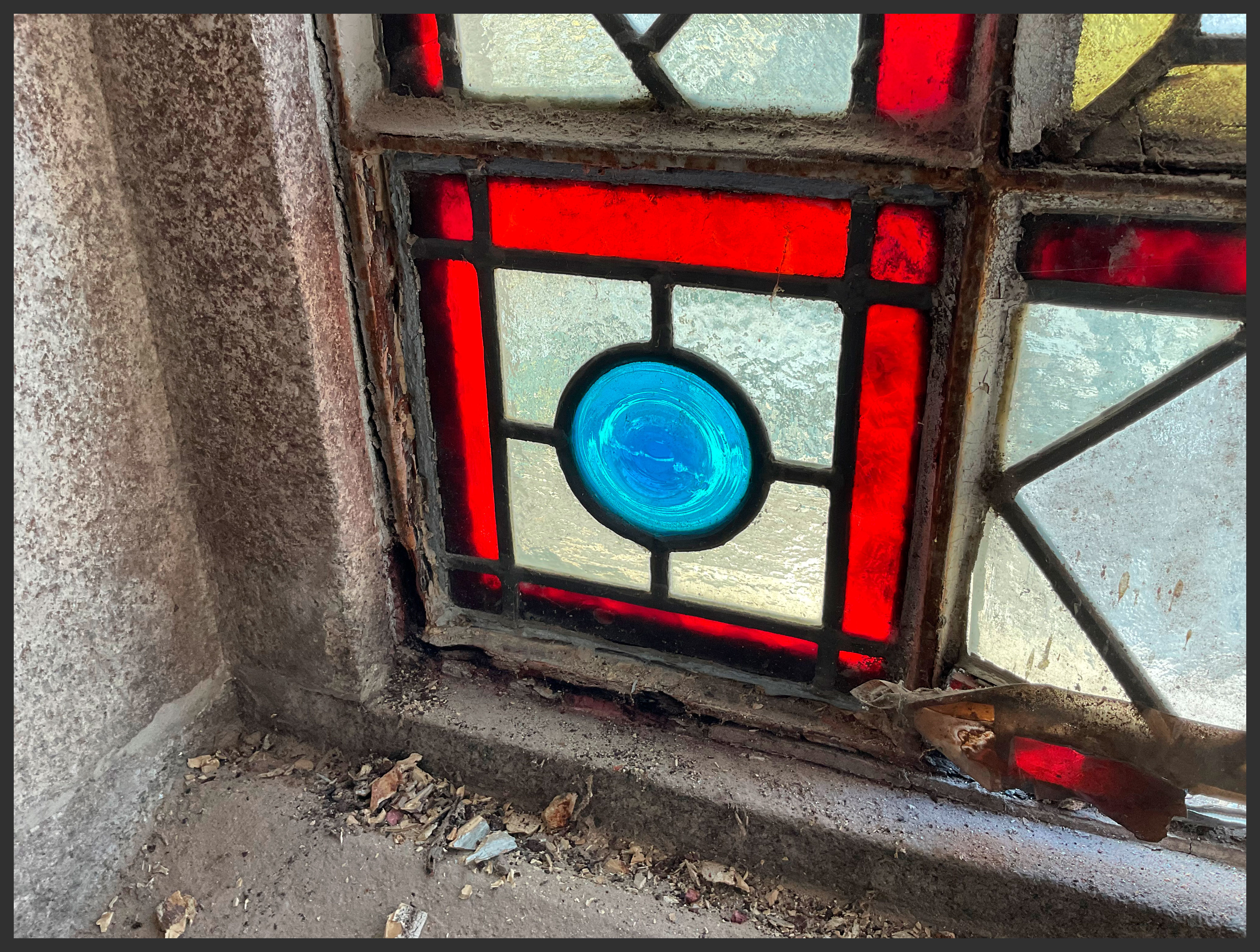
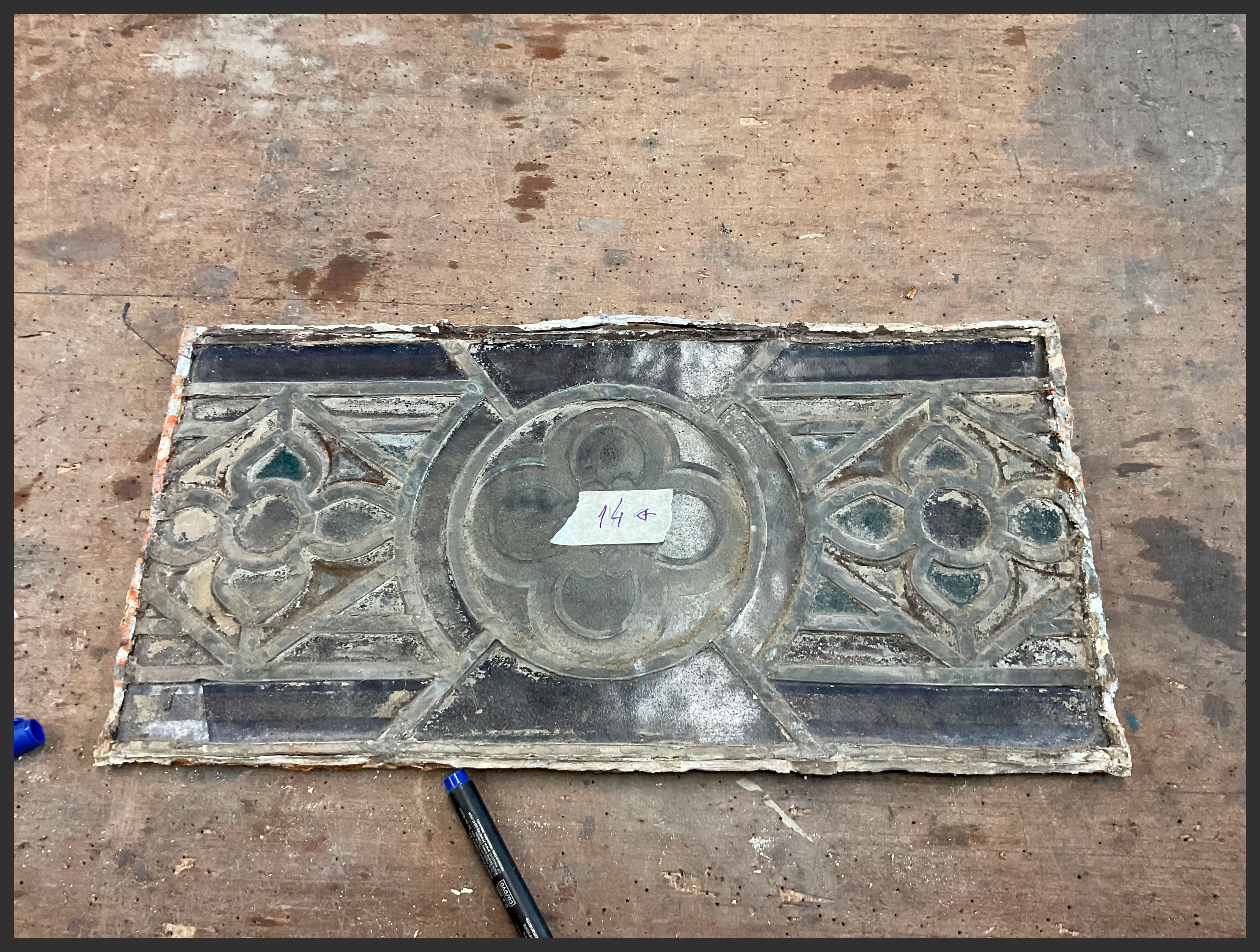
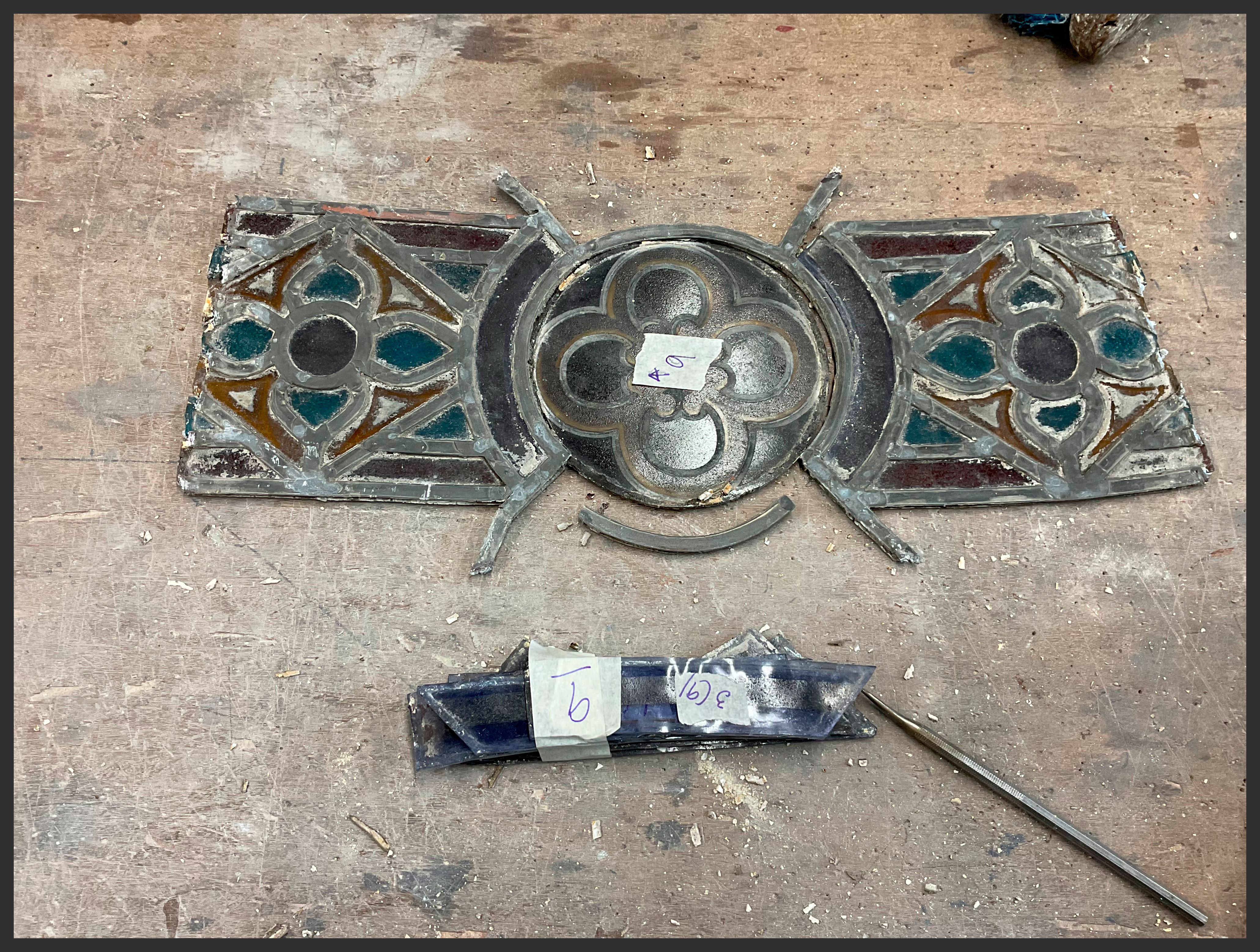
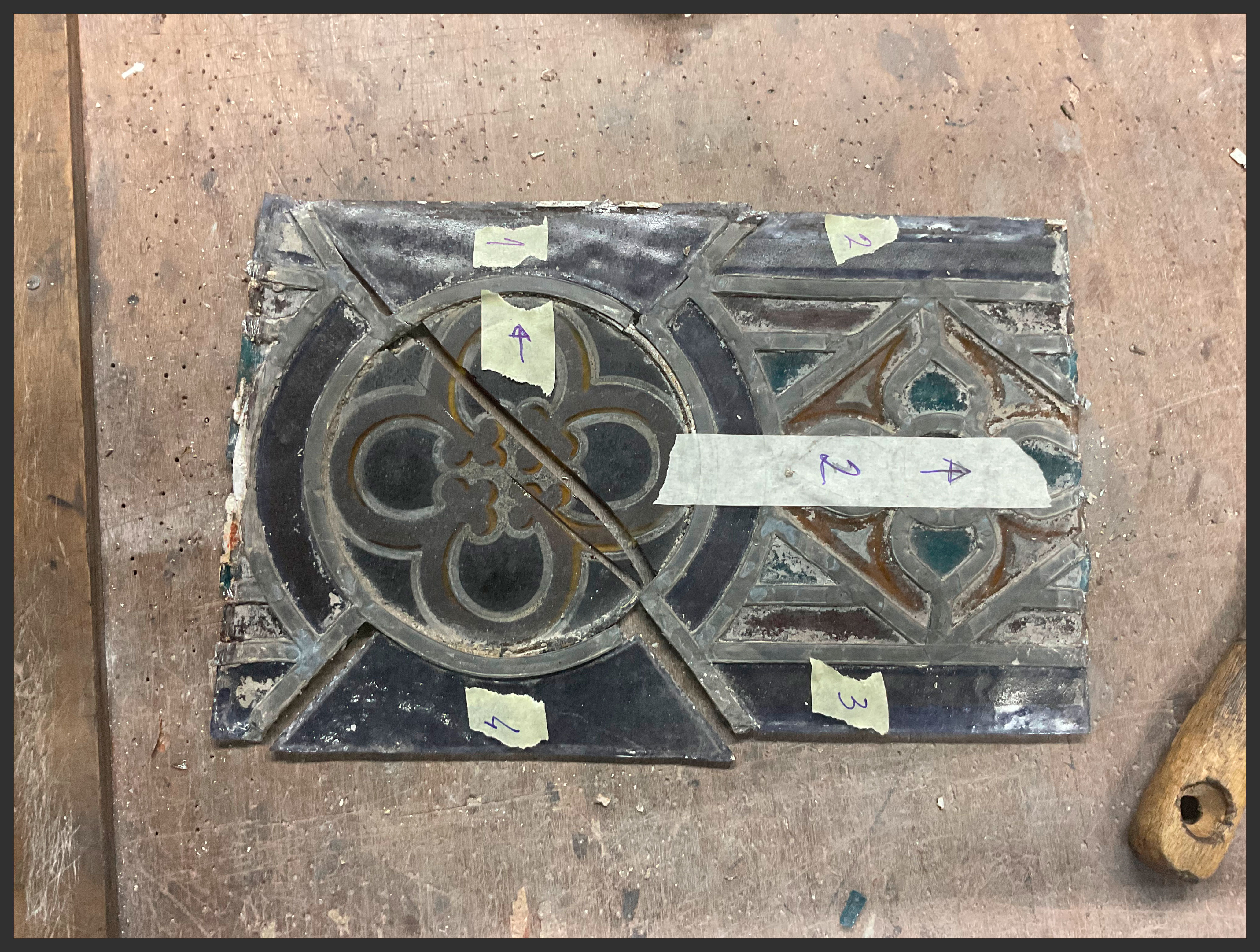
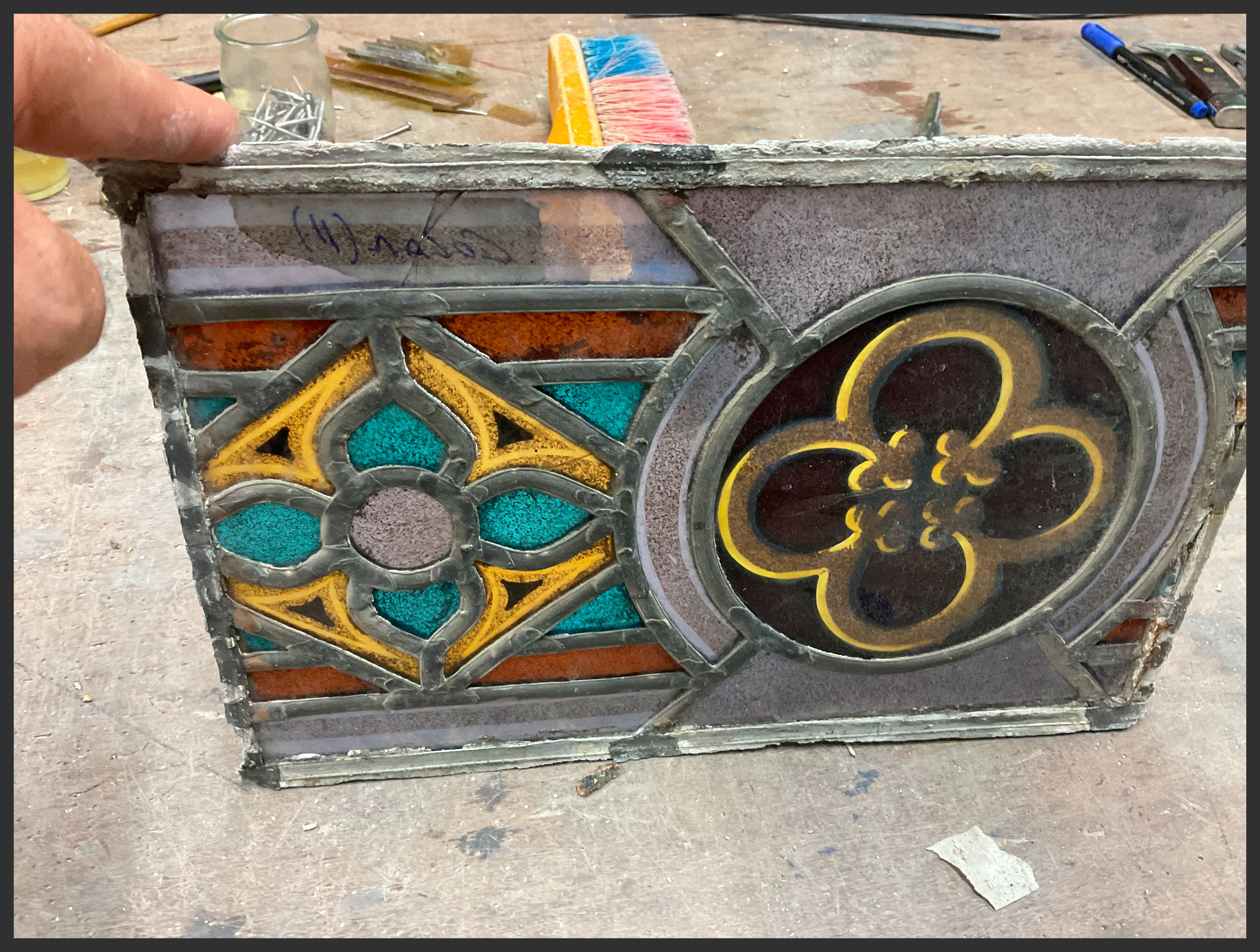
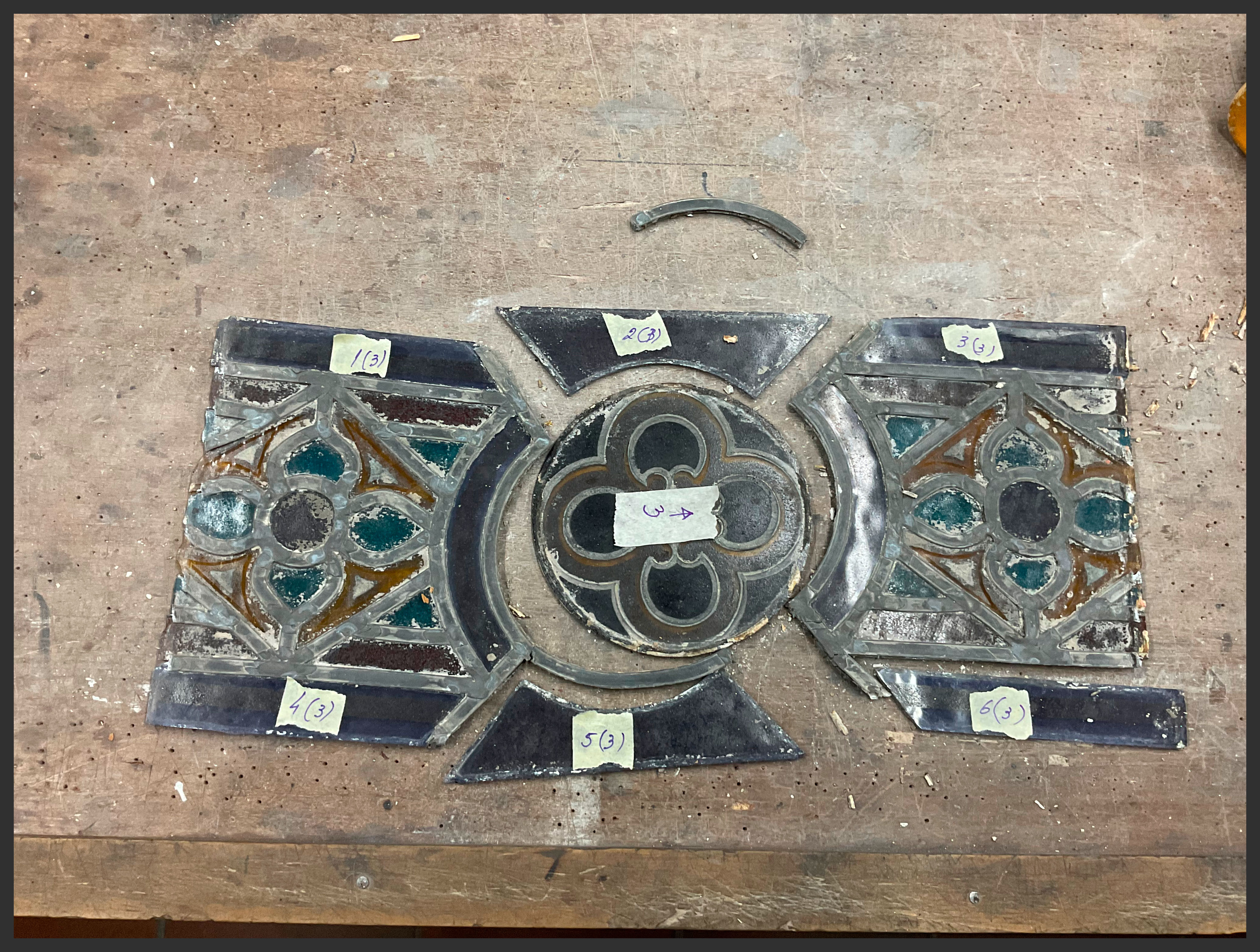
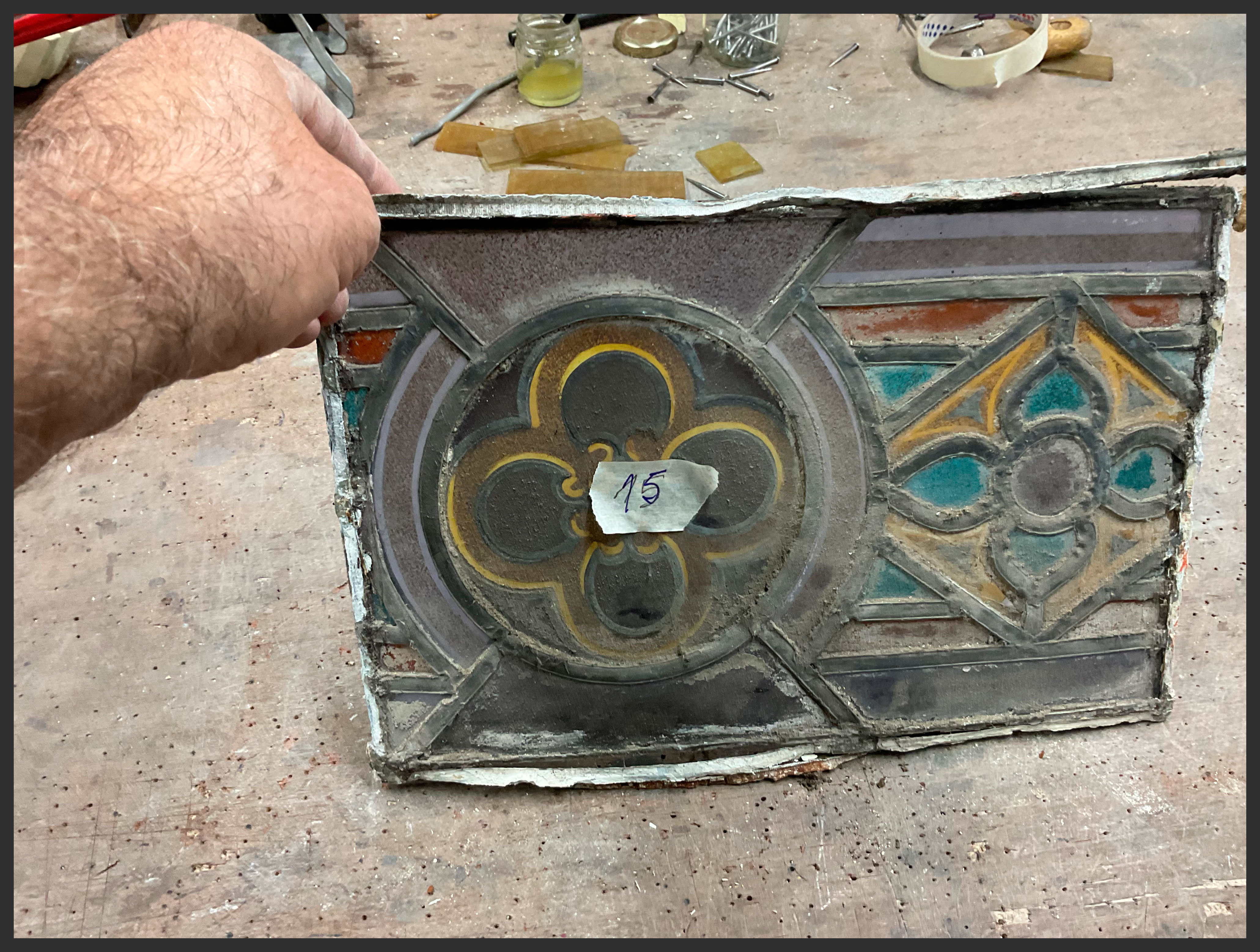
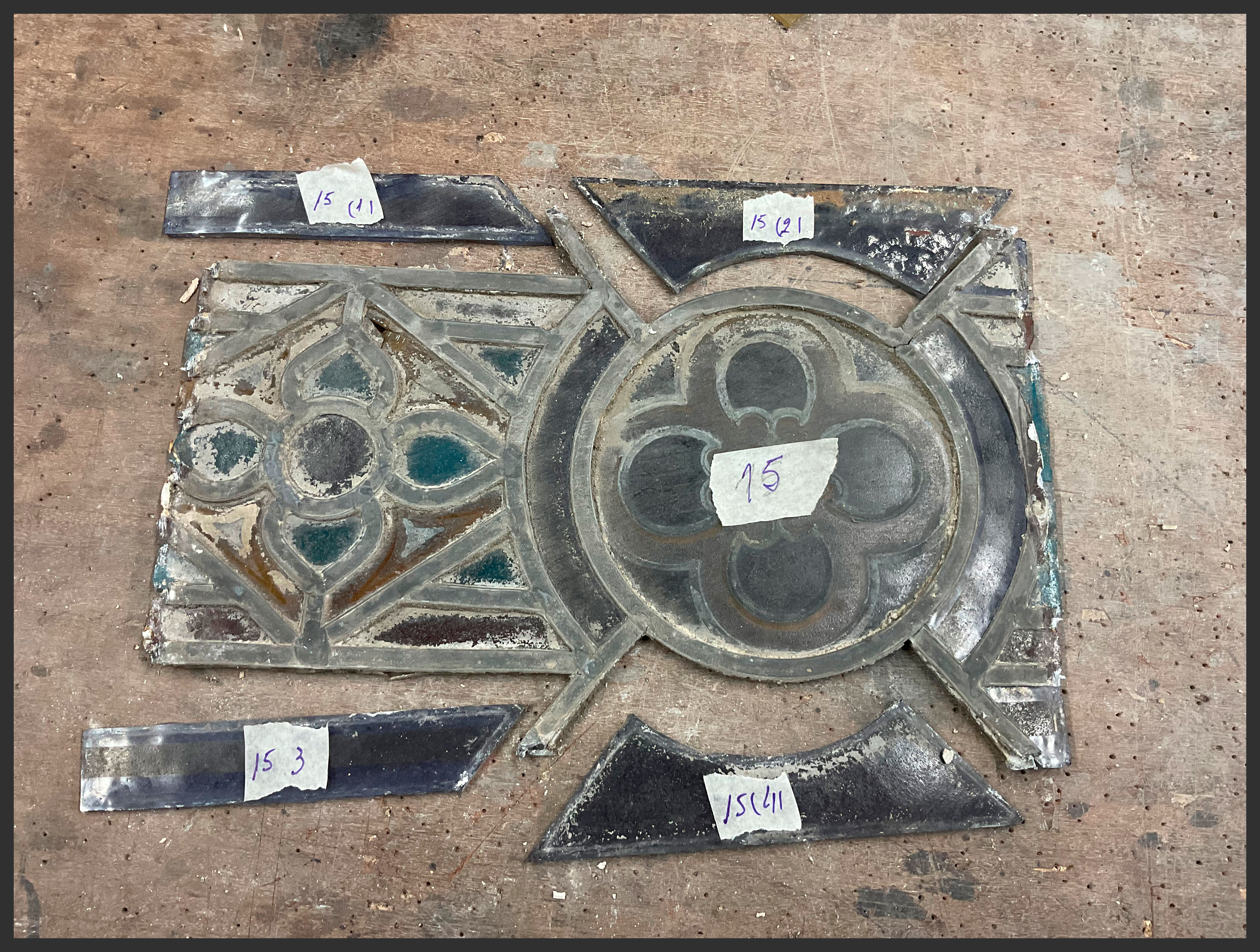
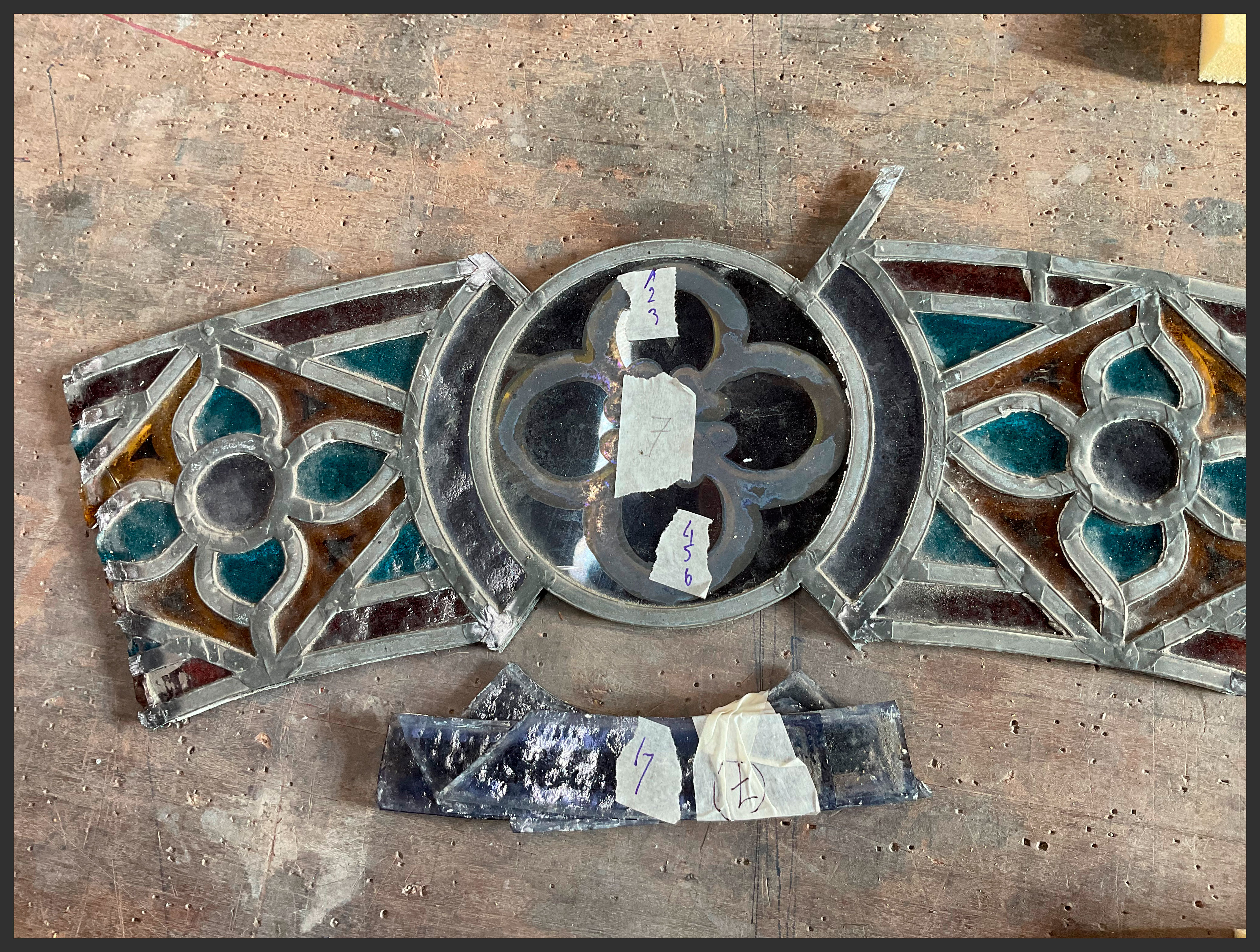
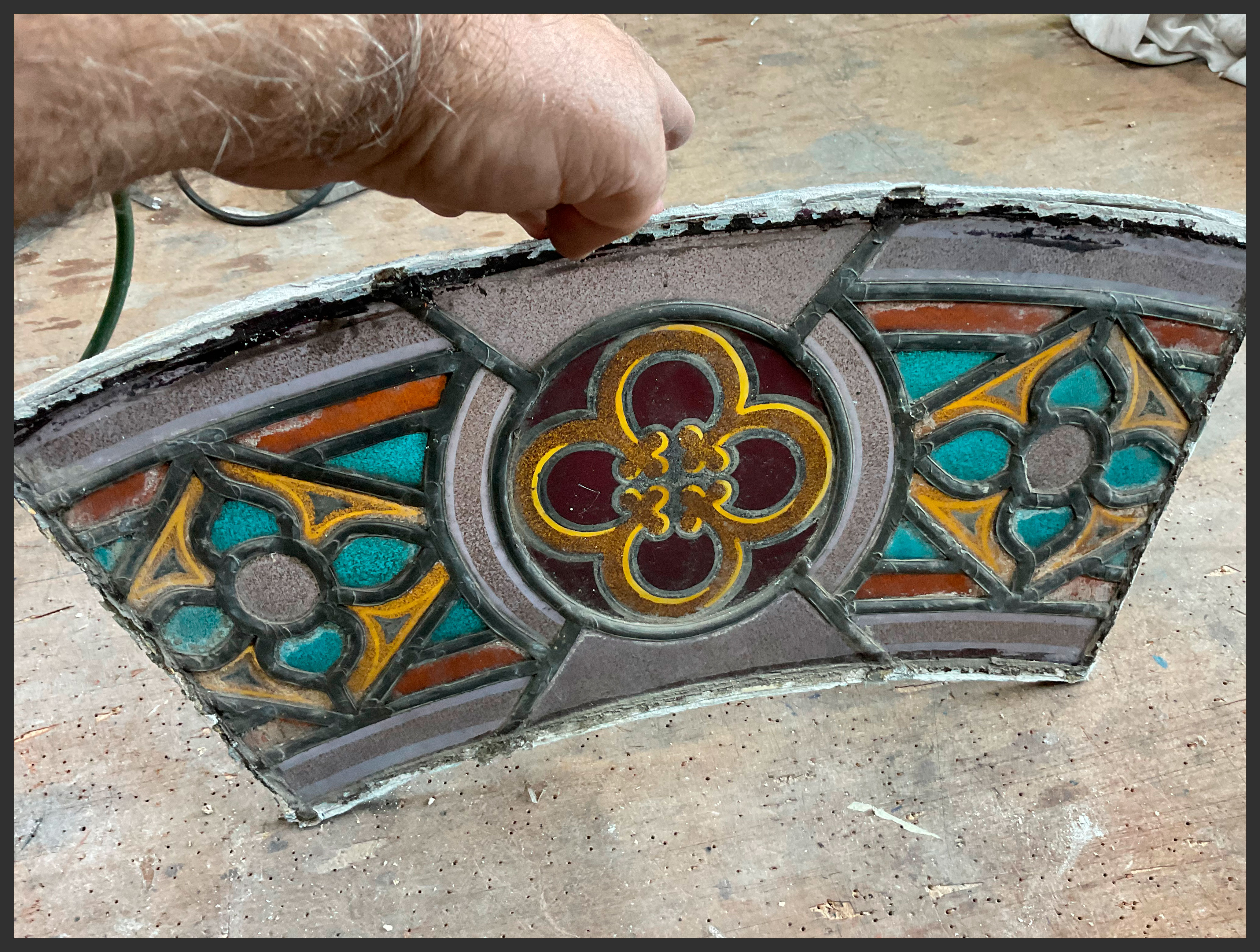
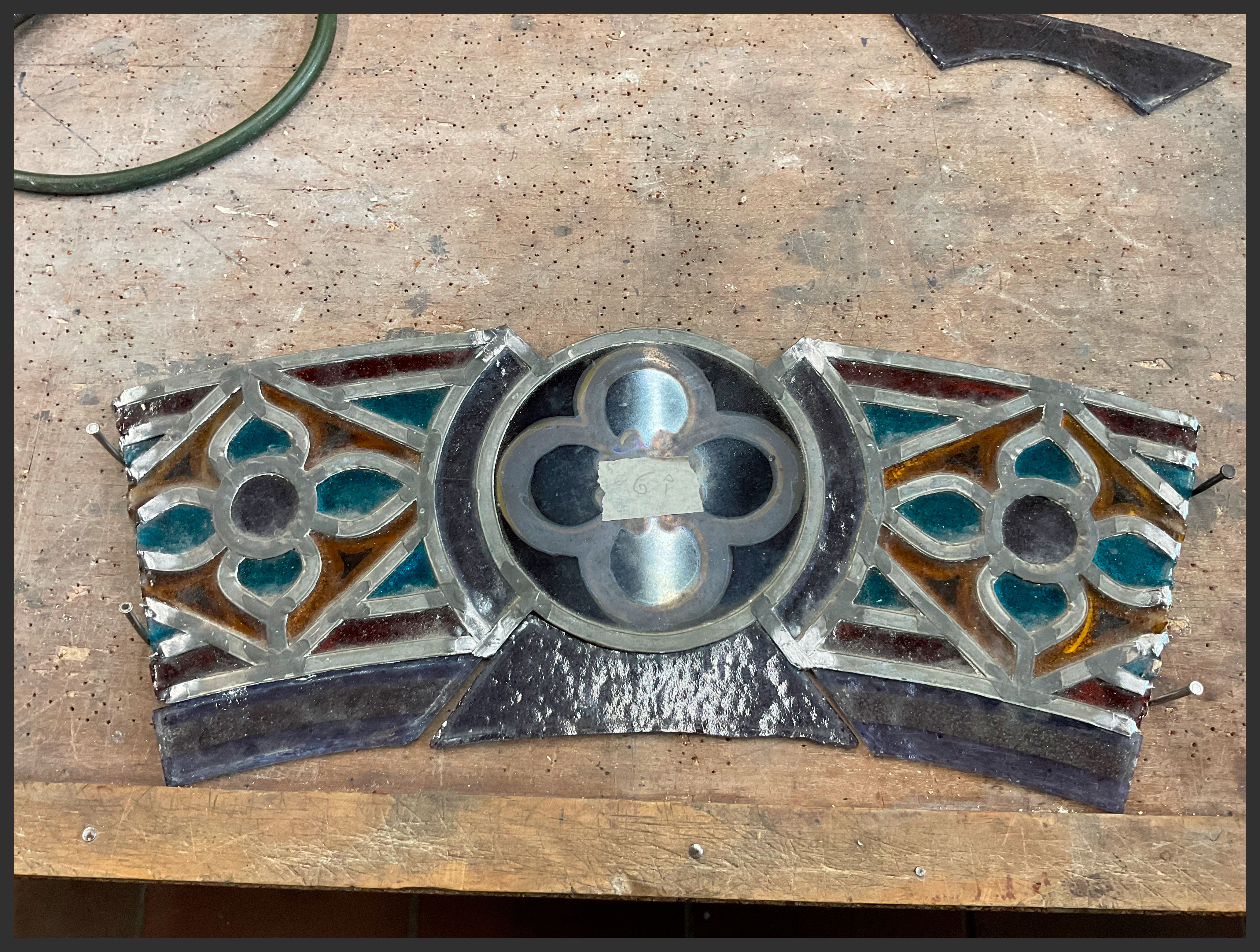
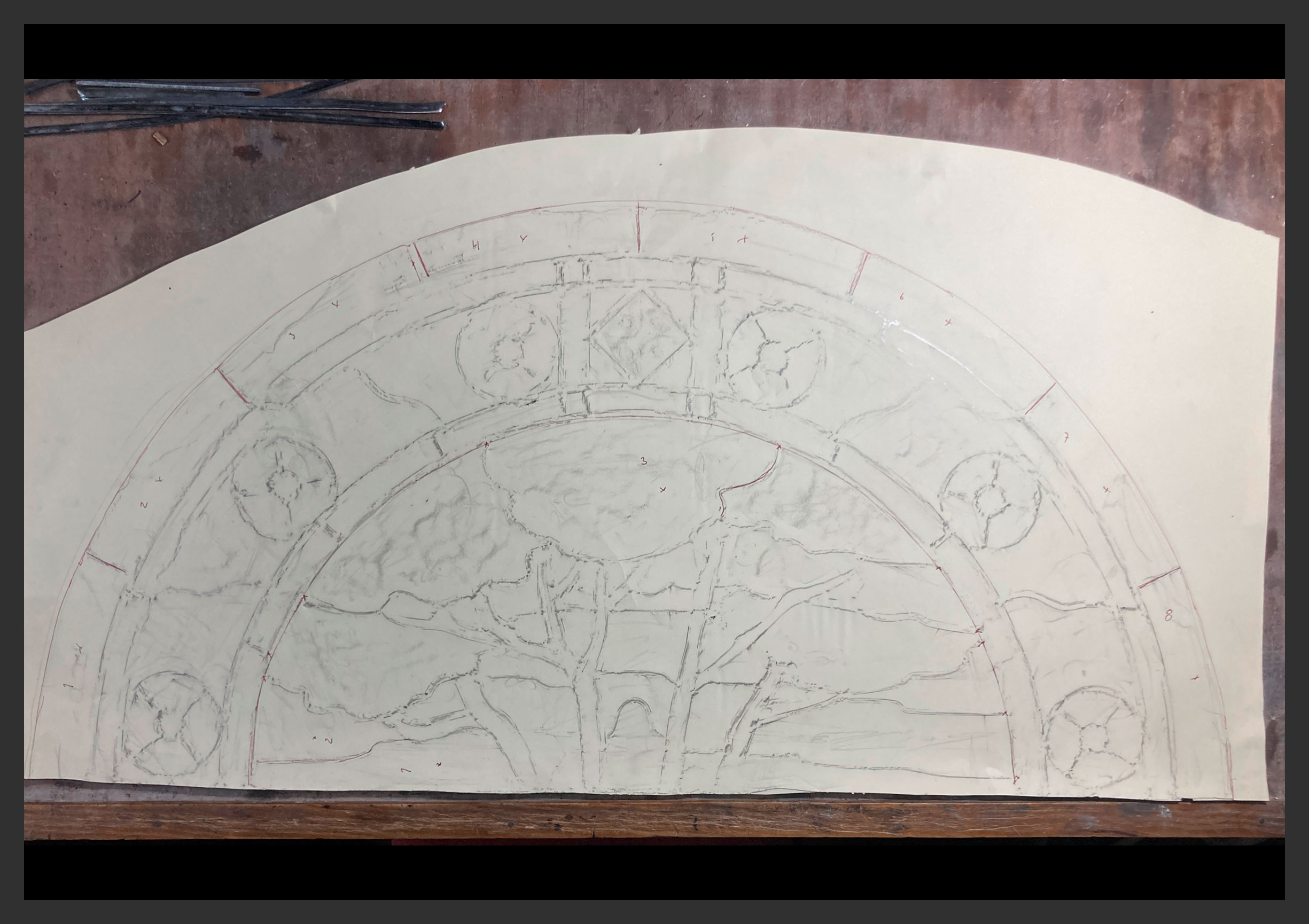
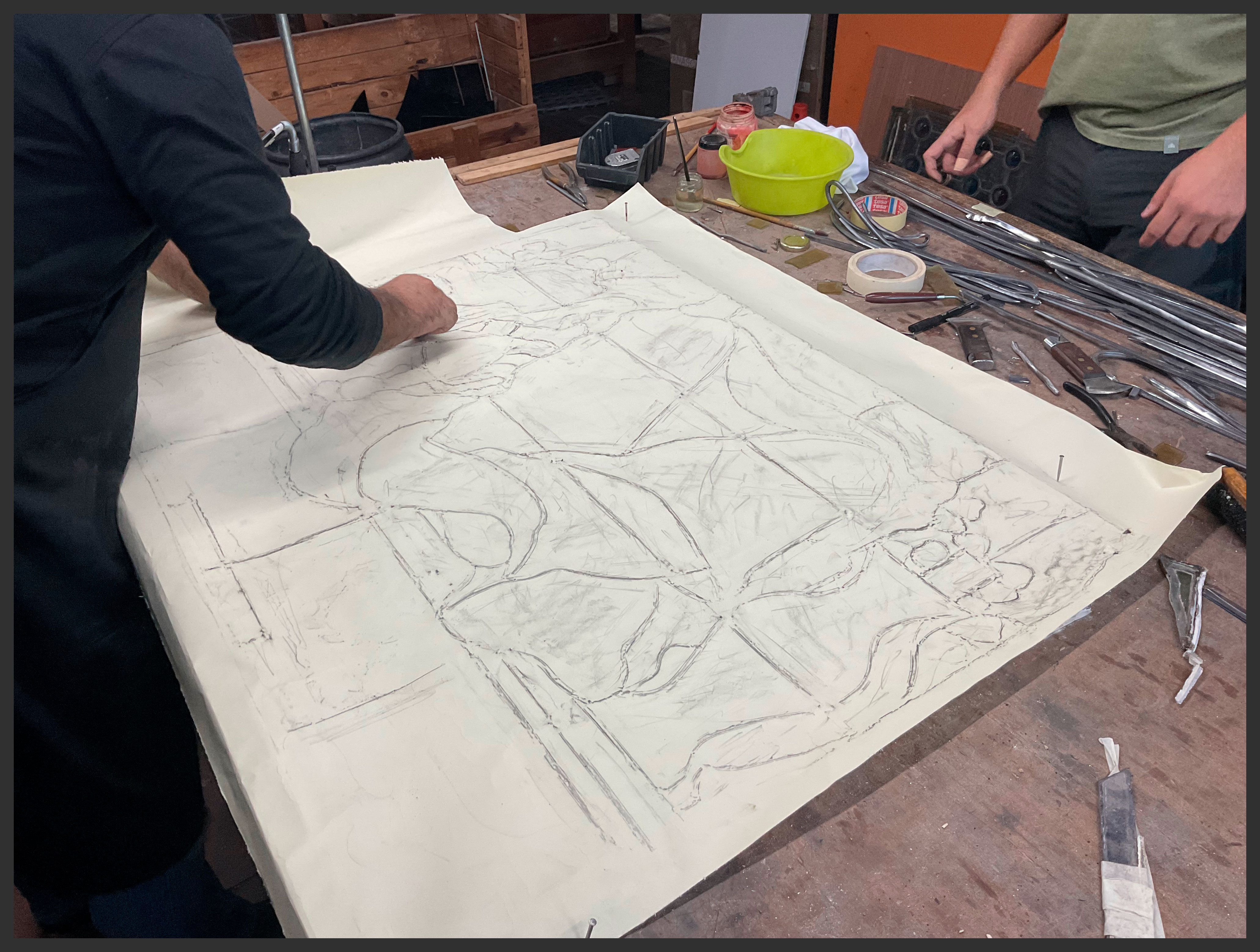
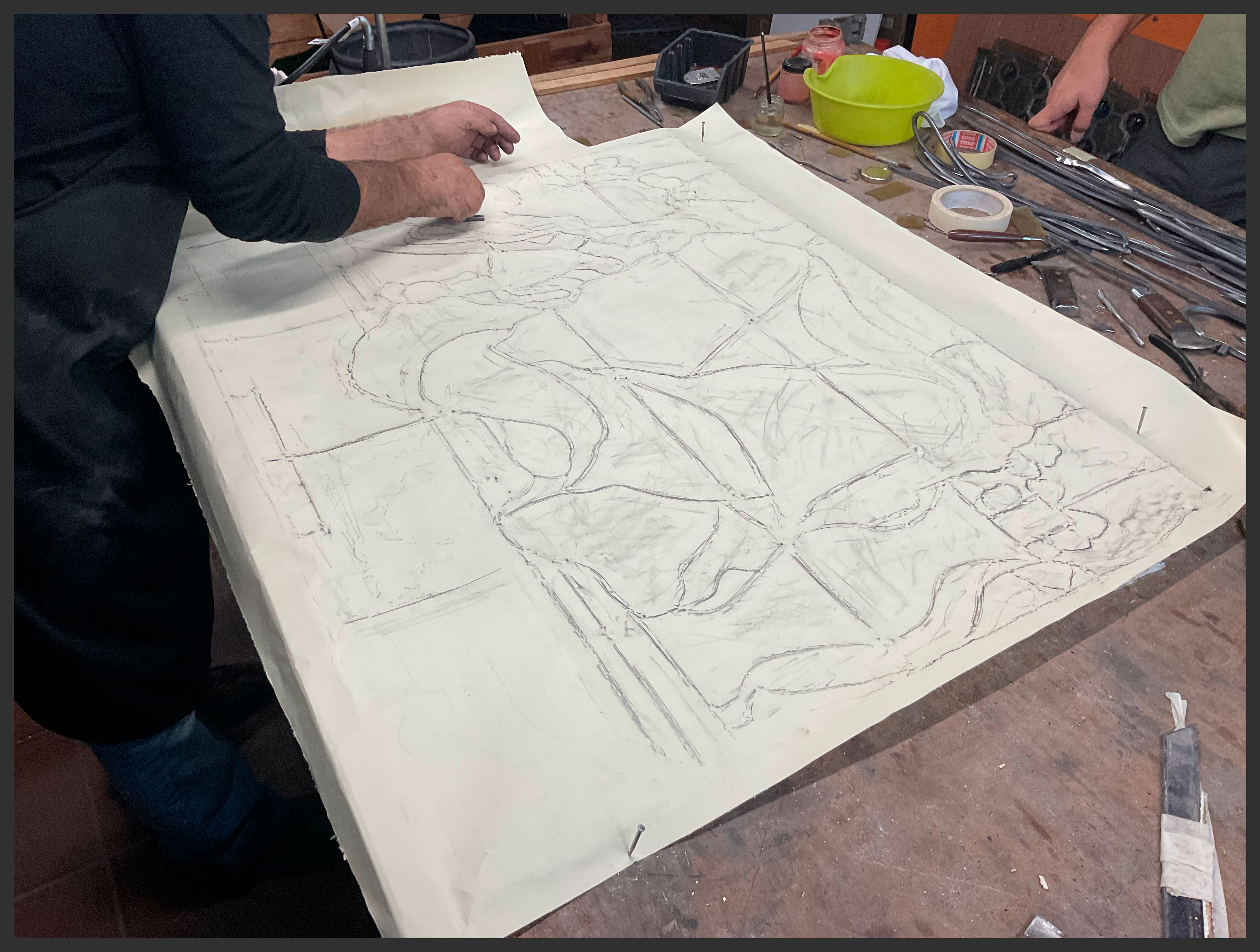
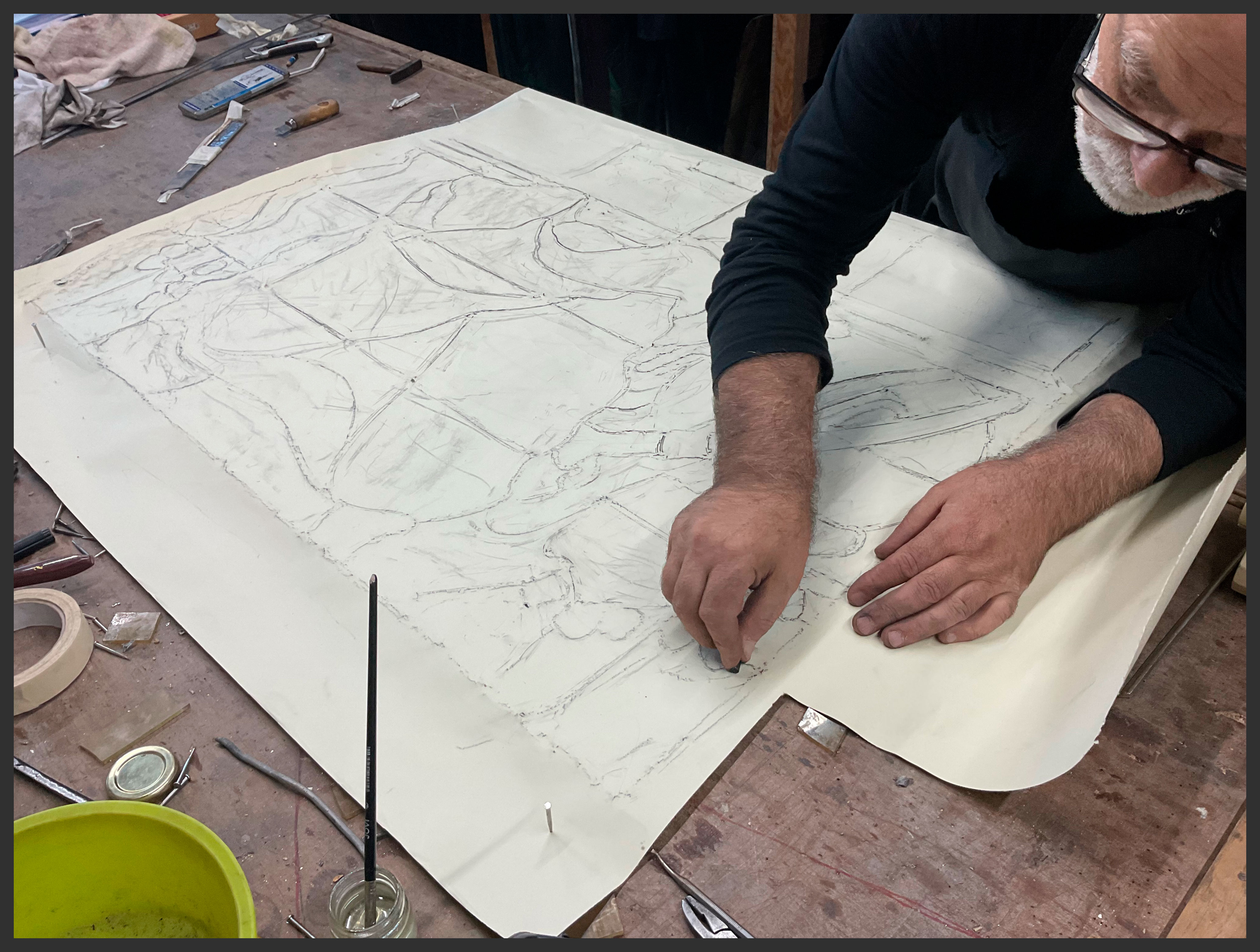
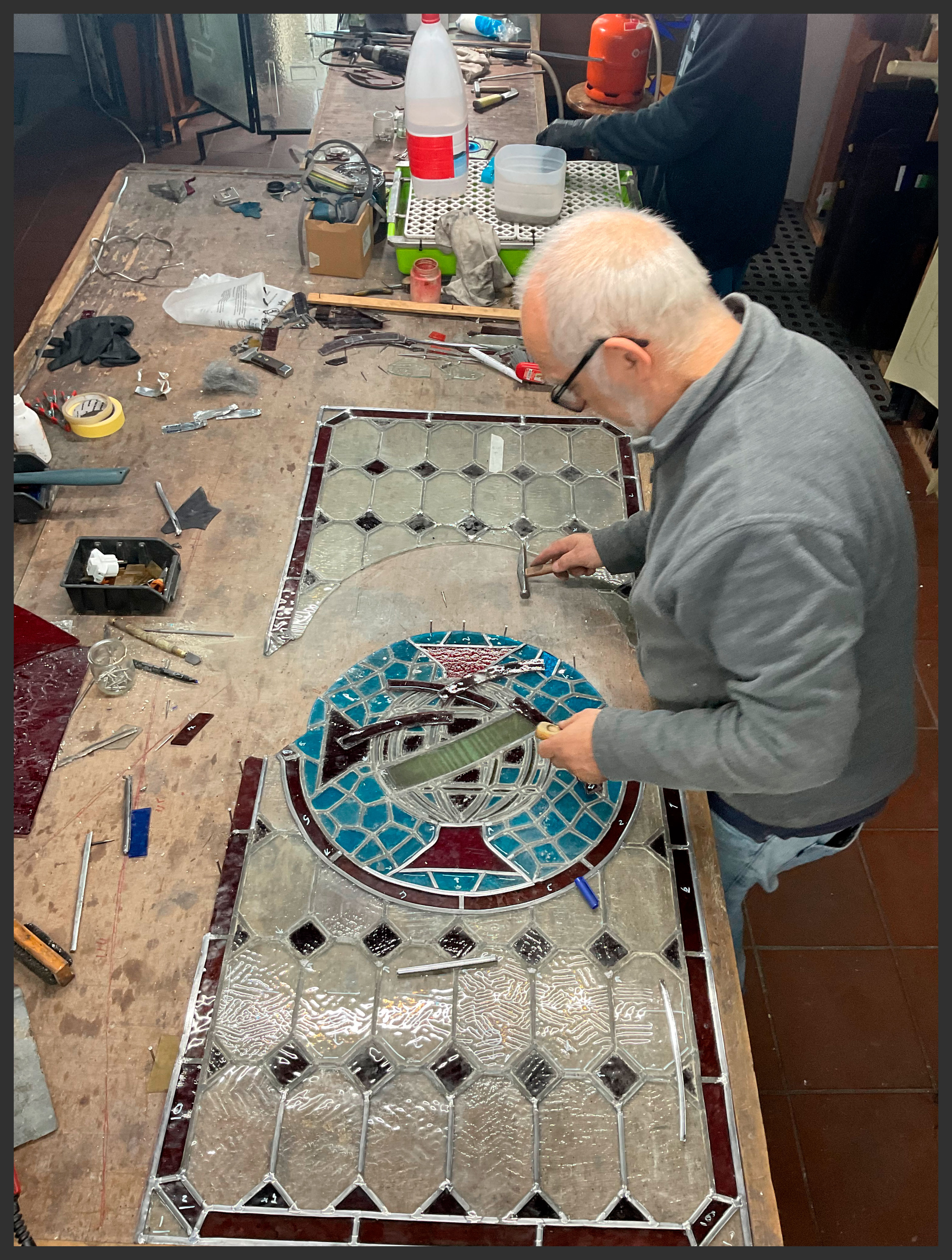
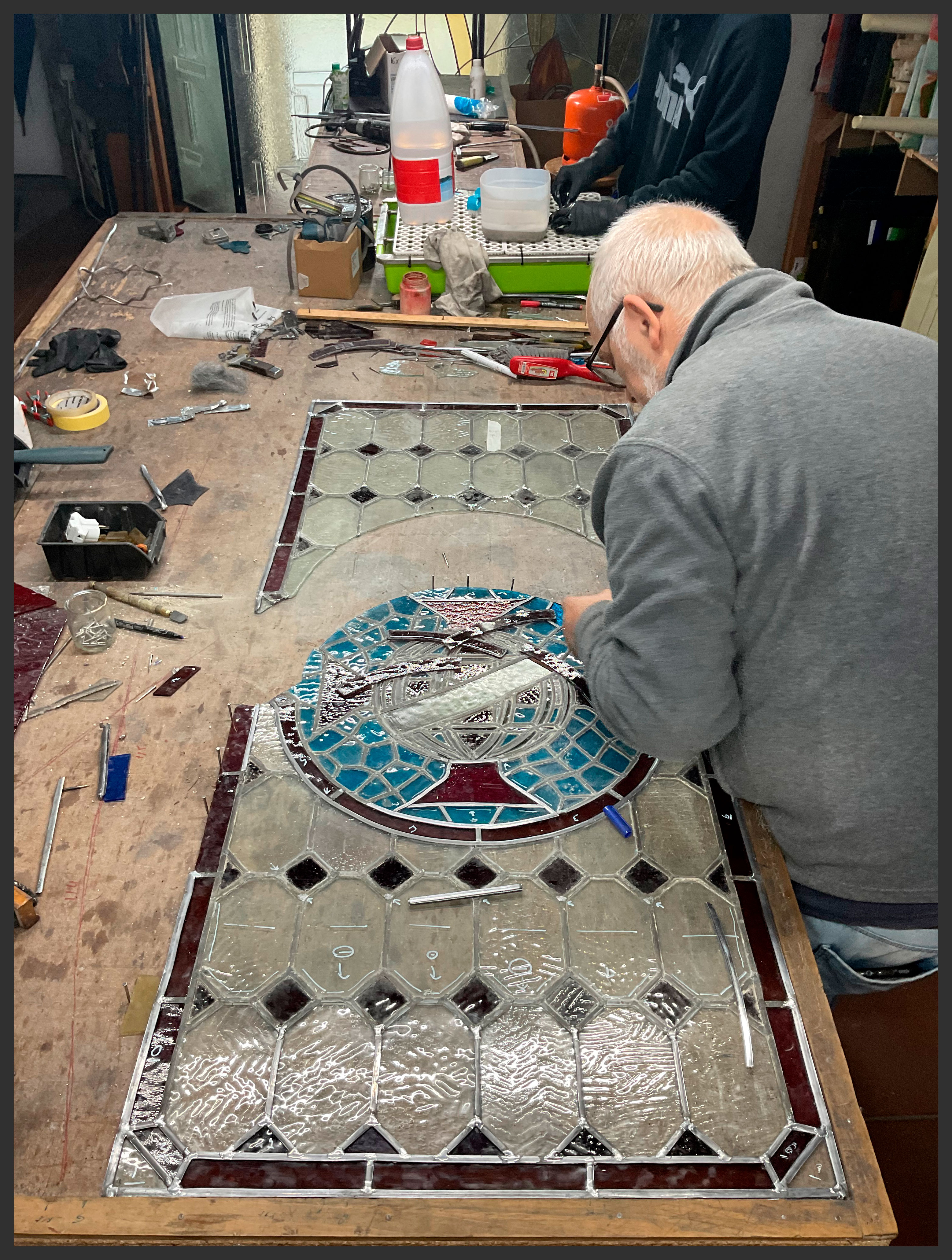
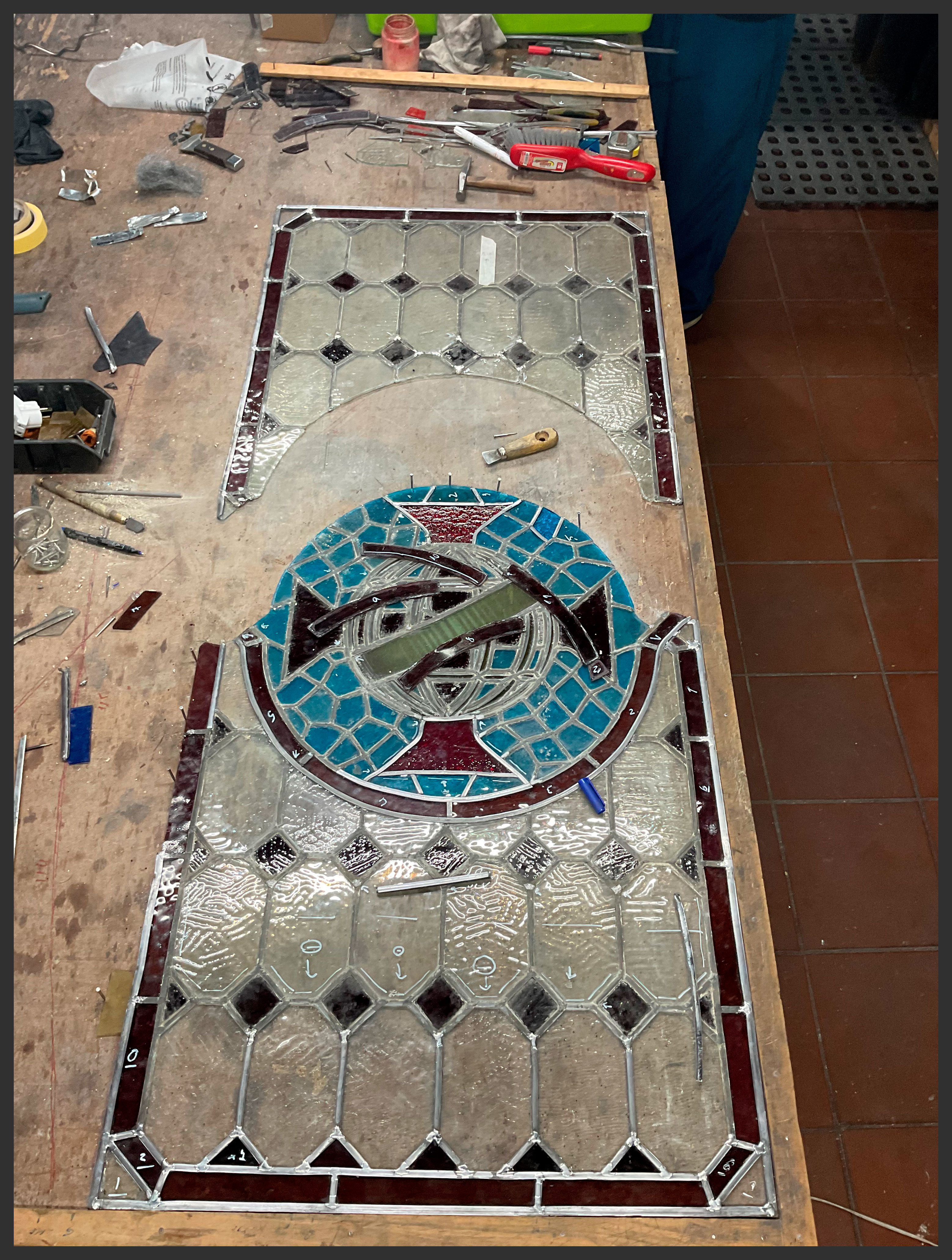
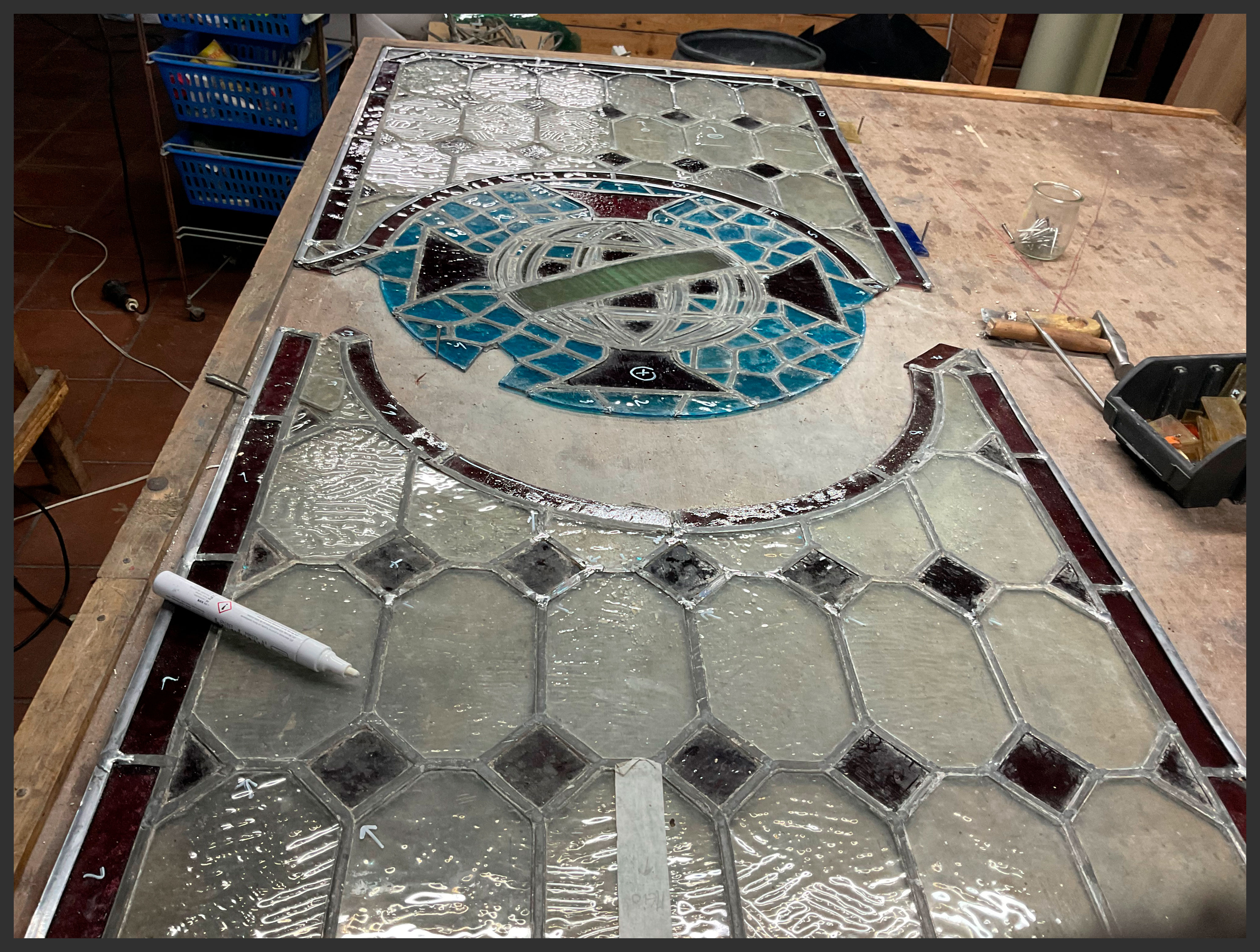
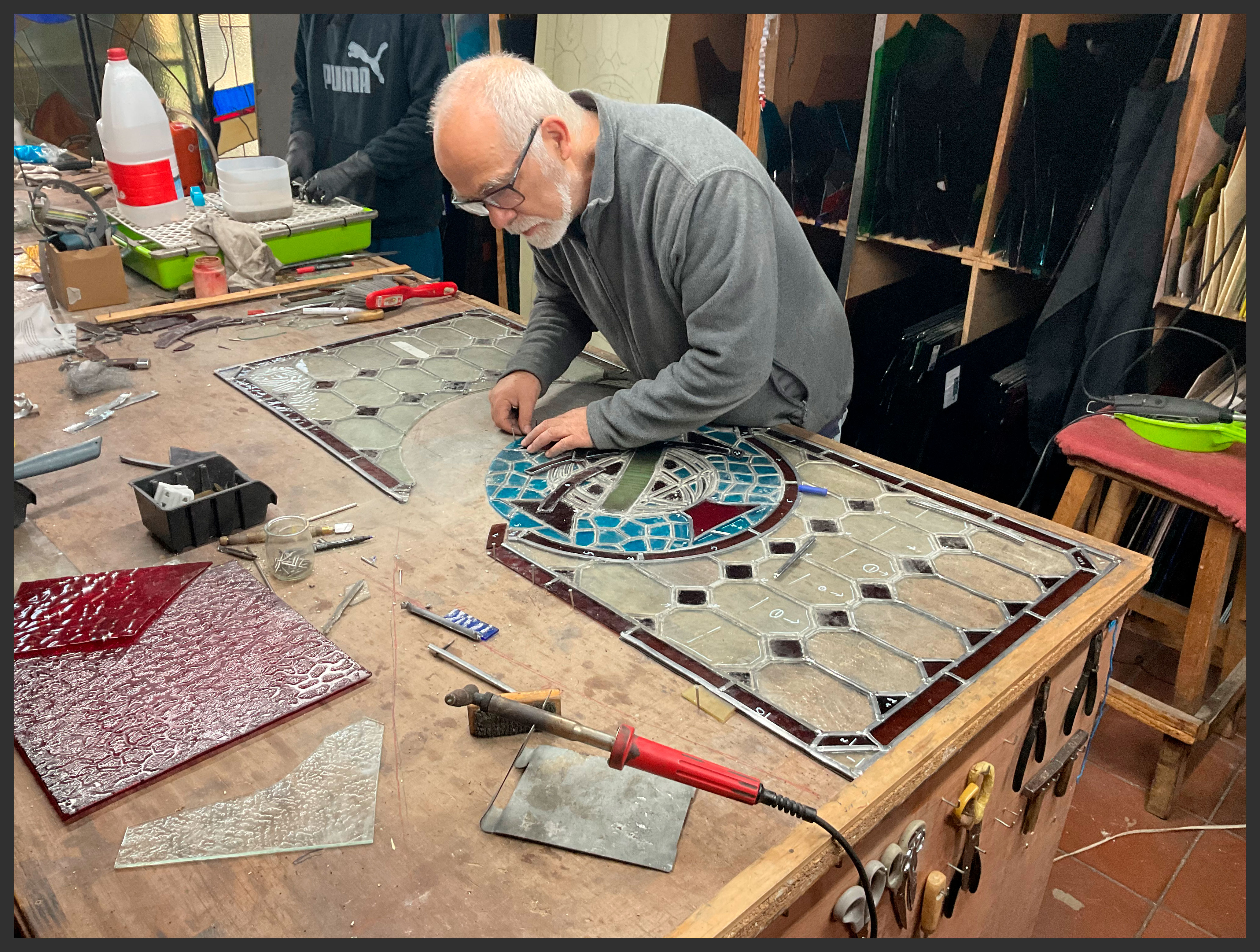
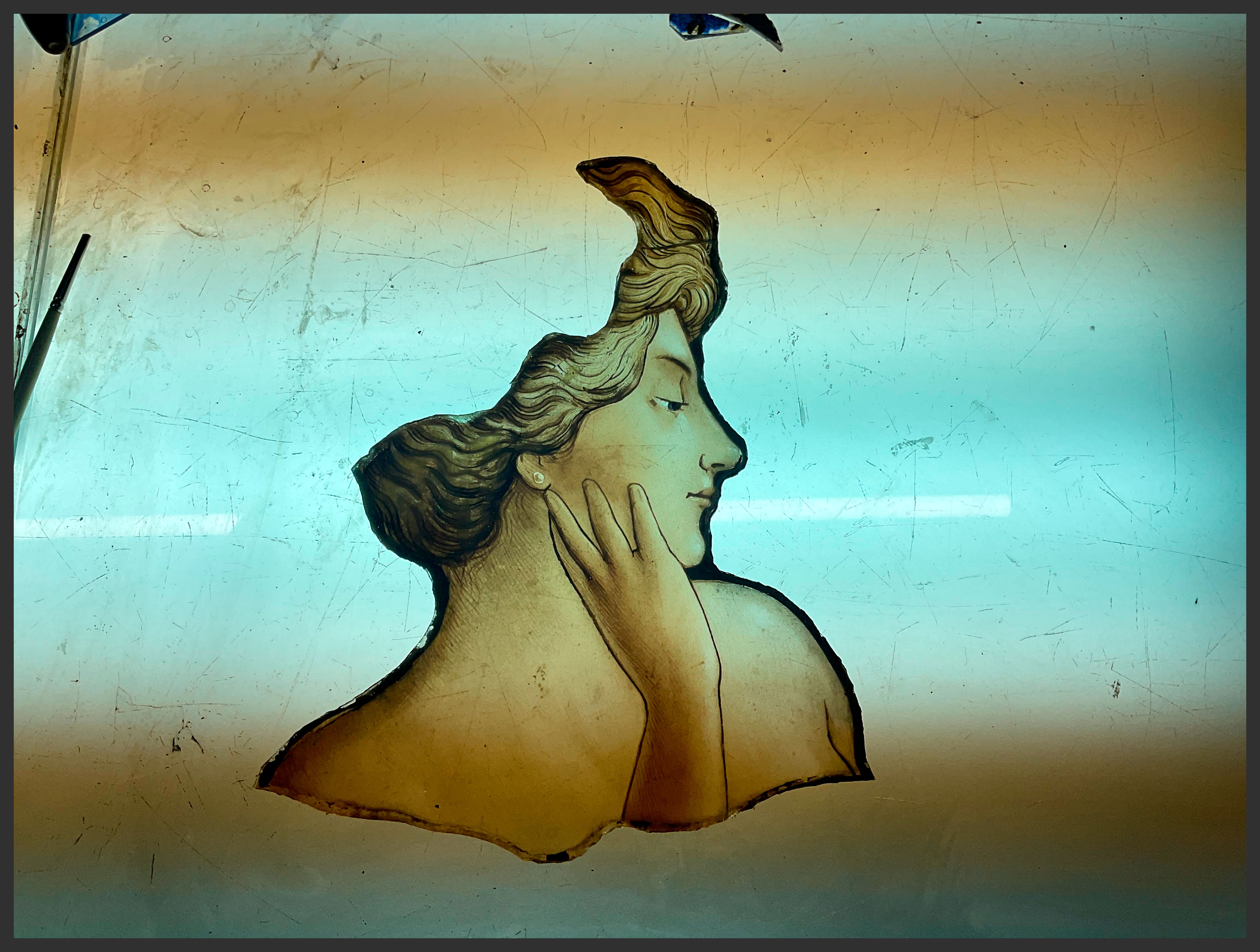
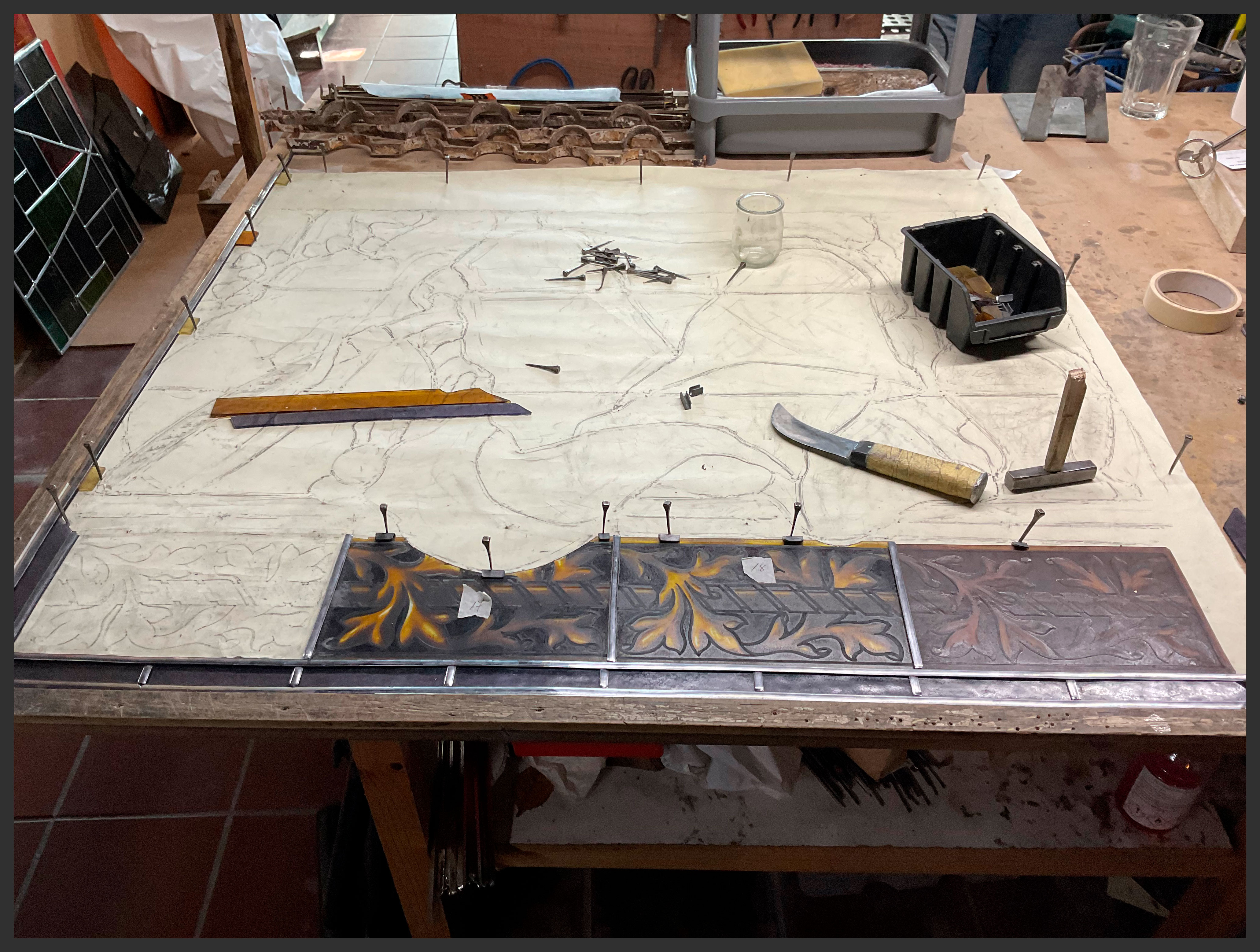
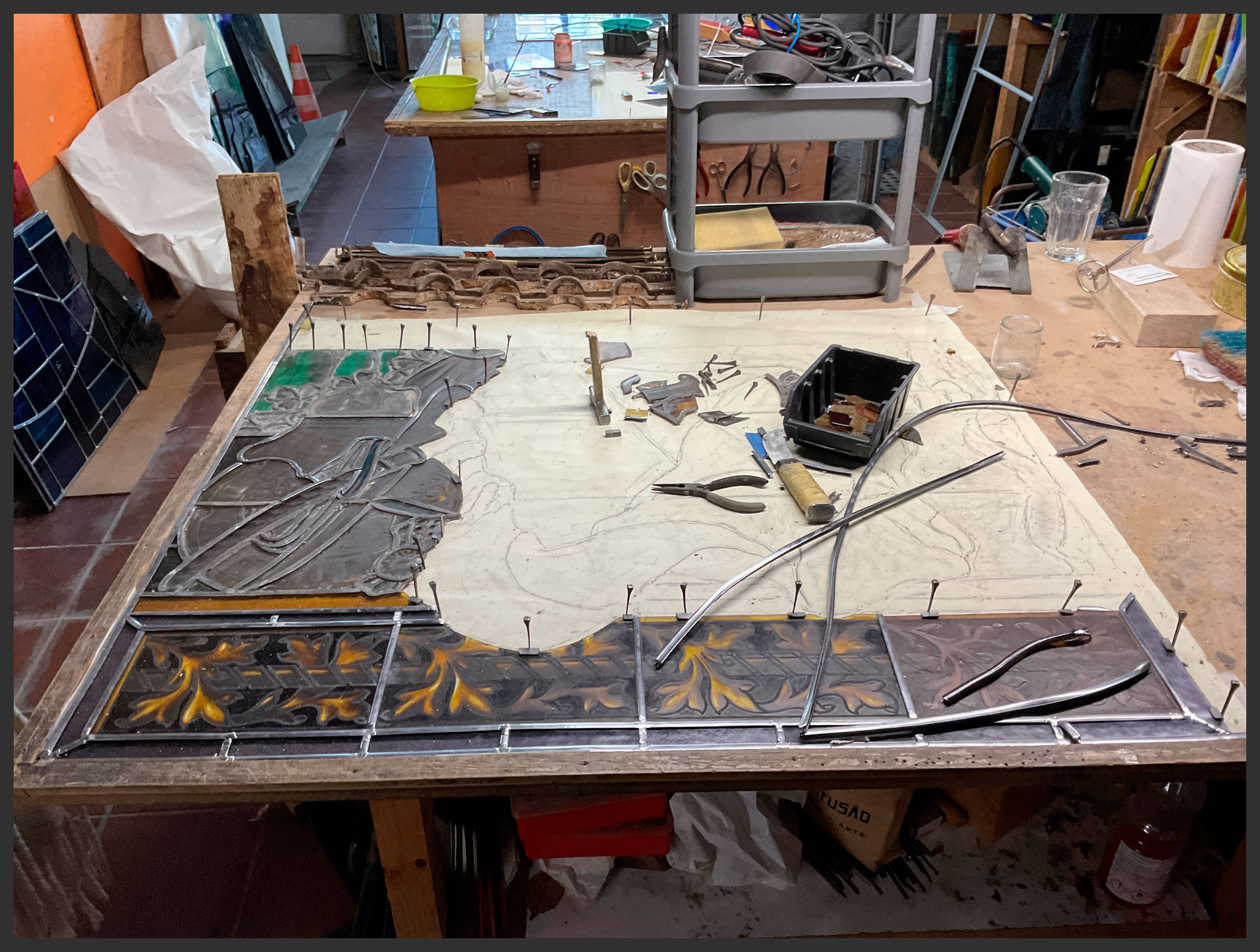
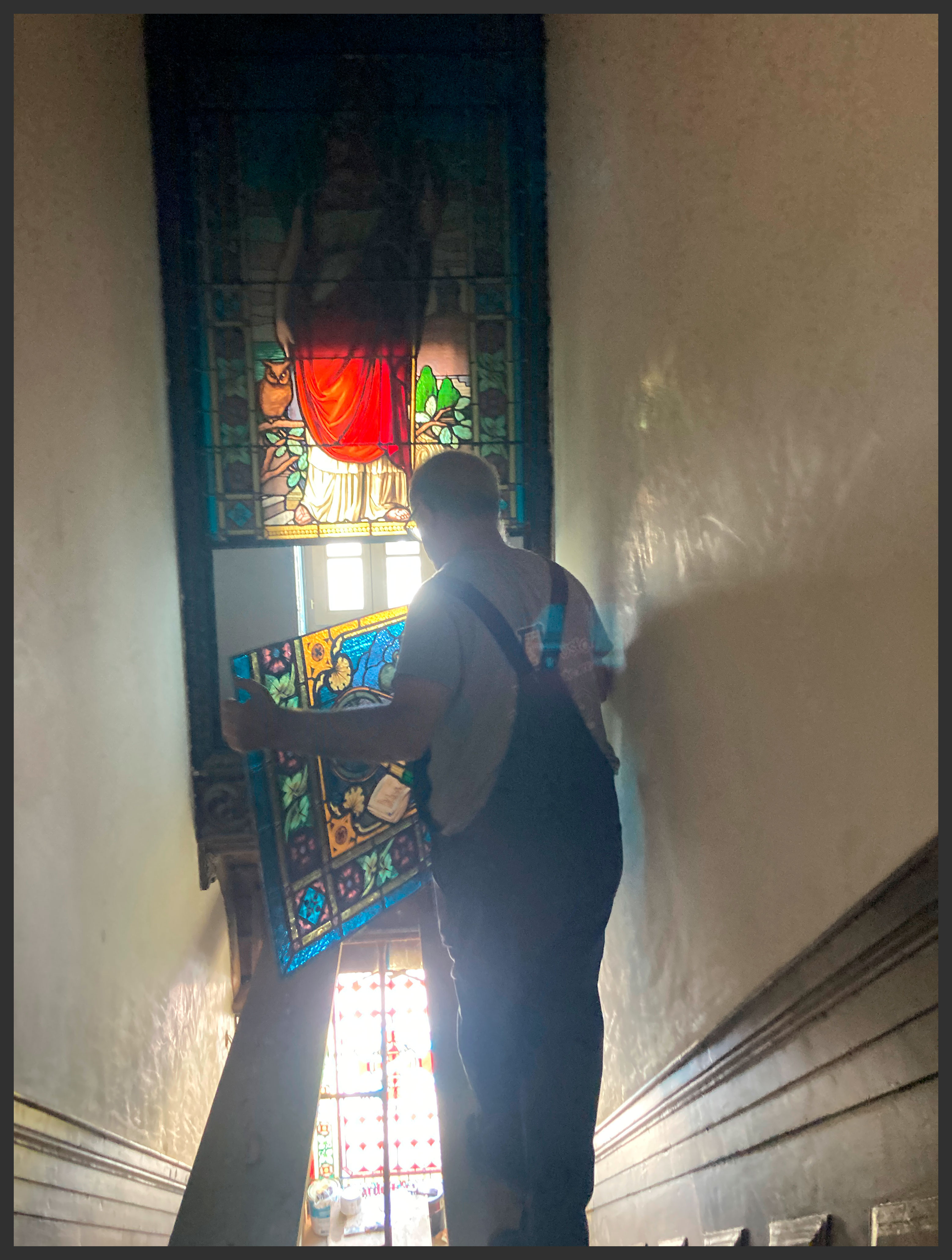
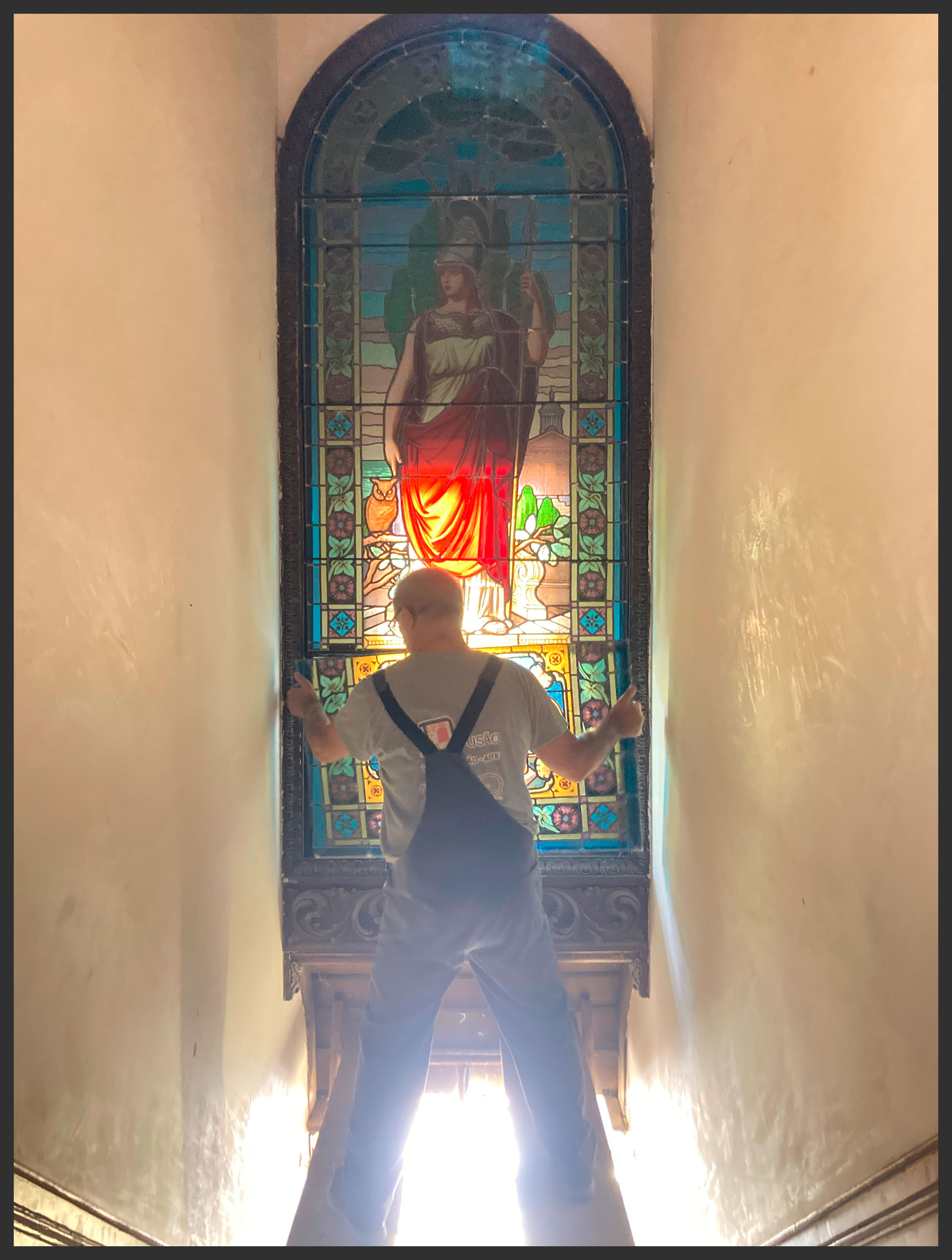
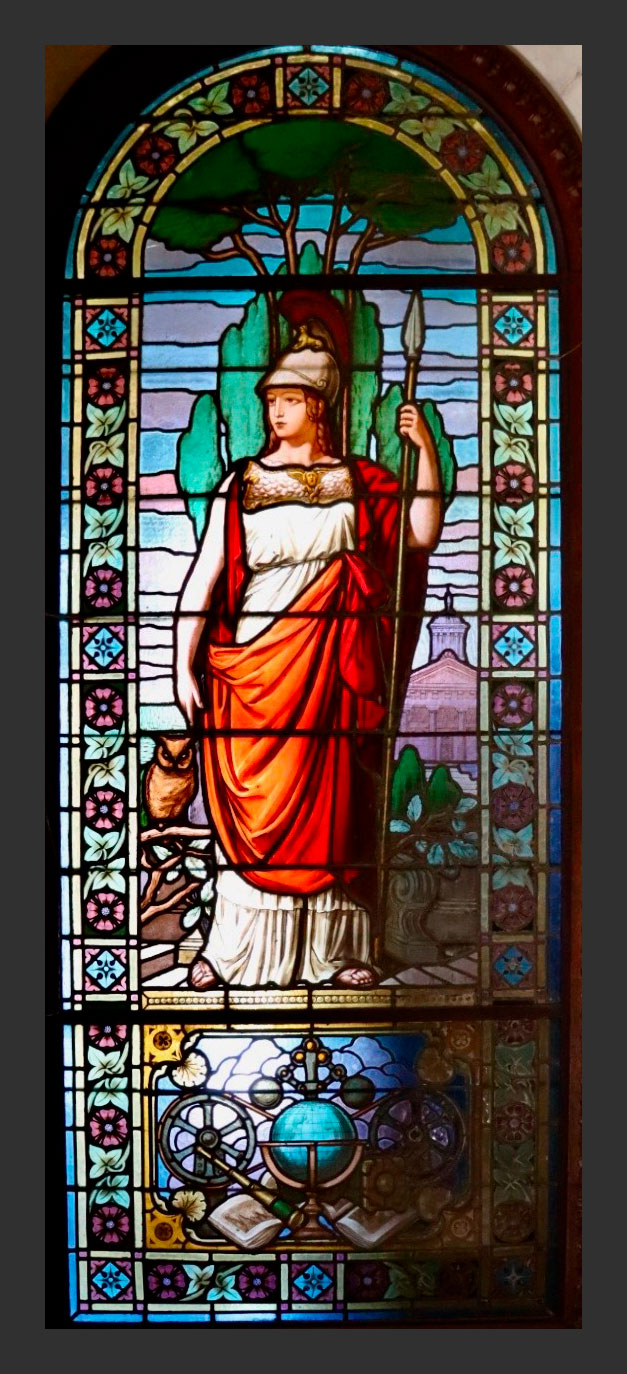
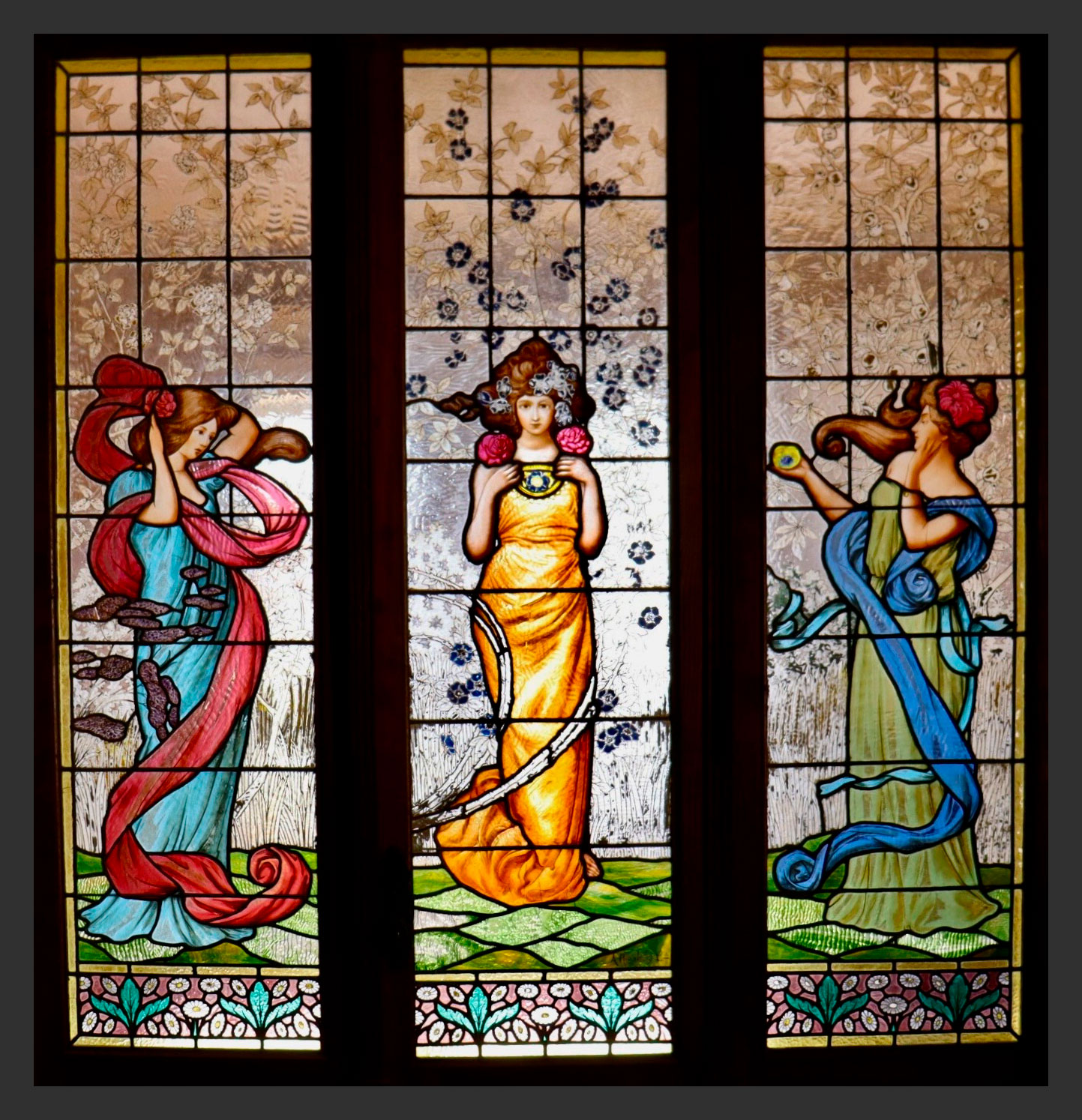
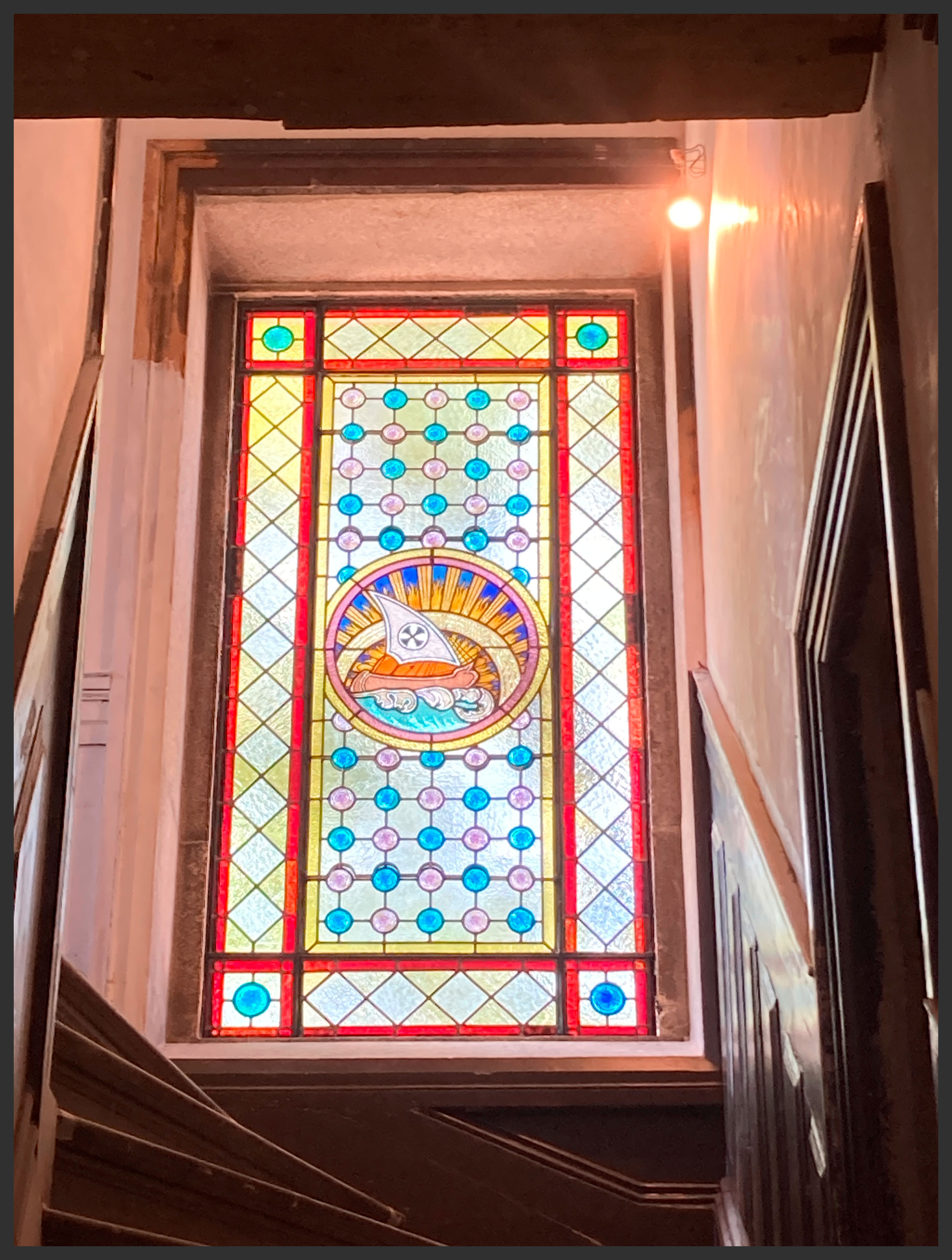
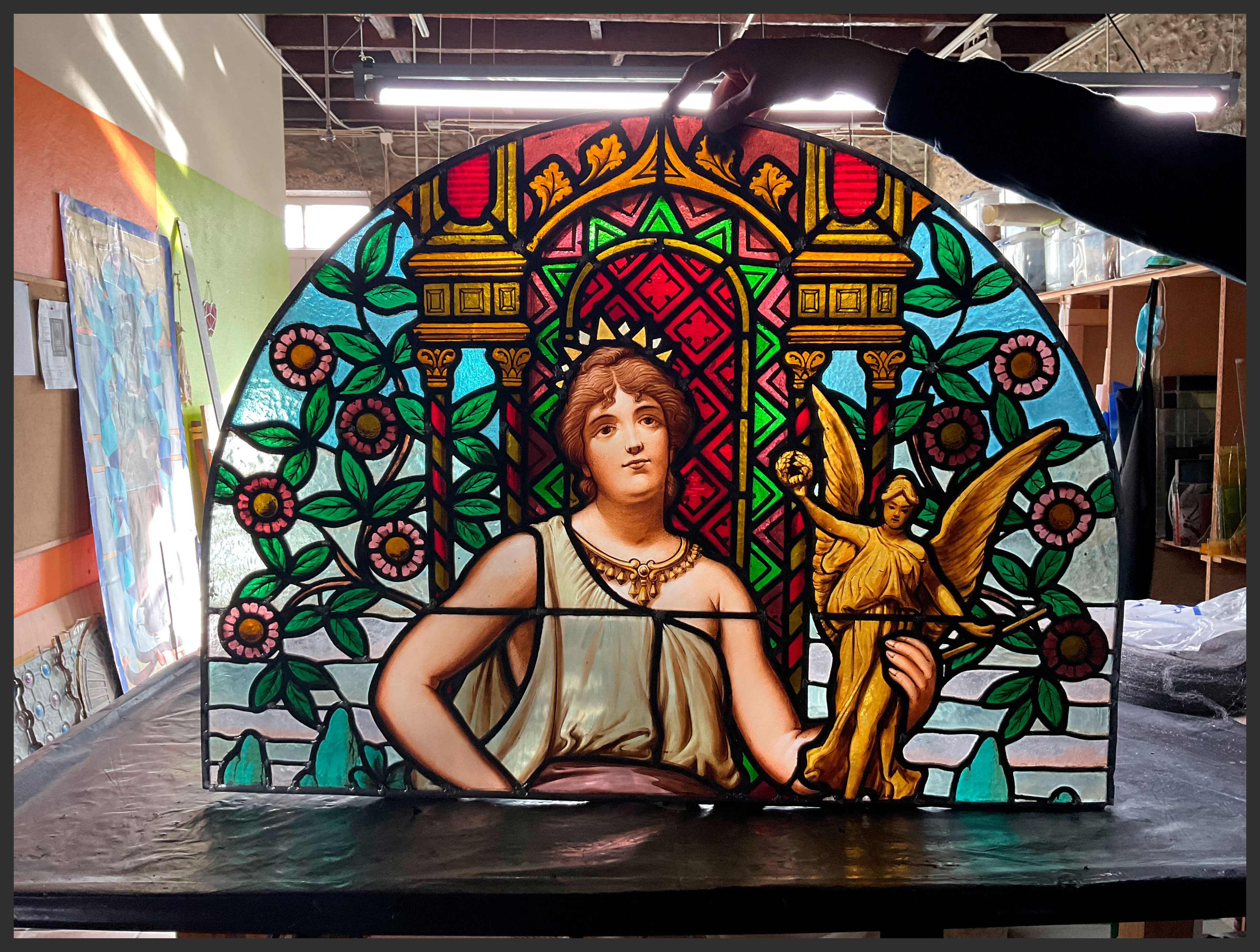
The works show some broken glass, as well as highly carbonated lead. This is one of the major problems with these panels, as the lead forms their structure, and reinforcements will be necessary to maintain their integrity. Some replicas will need to be made due to the total loss of certain pieces. In general, these stained glass panels are in good condition but show a high level of oxidation. The panels with the three figures on the interior doors show detachment of the blue pigment that was originally present on all the plants. This demonstrates the relative humidity that existed constantly inside the building, as well as cleaning processes that may have been overly aggressive for the panels.
Regarding the artist Antoni Rigalt, he was born in Barcelona in 1850 and studied at the Barcelona School of Fine Arts between 1861 and 1869, where he later became a professor. Before that, he excelled as a stained glass artist, being considered by many as one of the most remarkable artists of the modernist period. He carried out highly significant works, such as the Palau de la Música Catalana, as well as projects in collaboration with Gaudí.
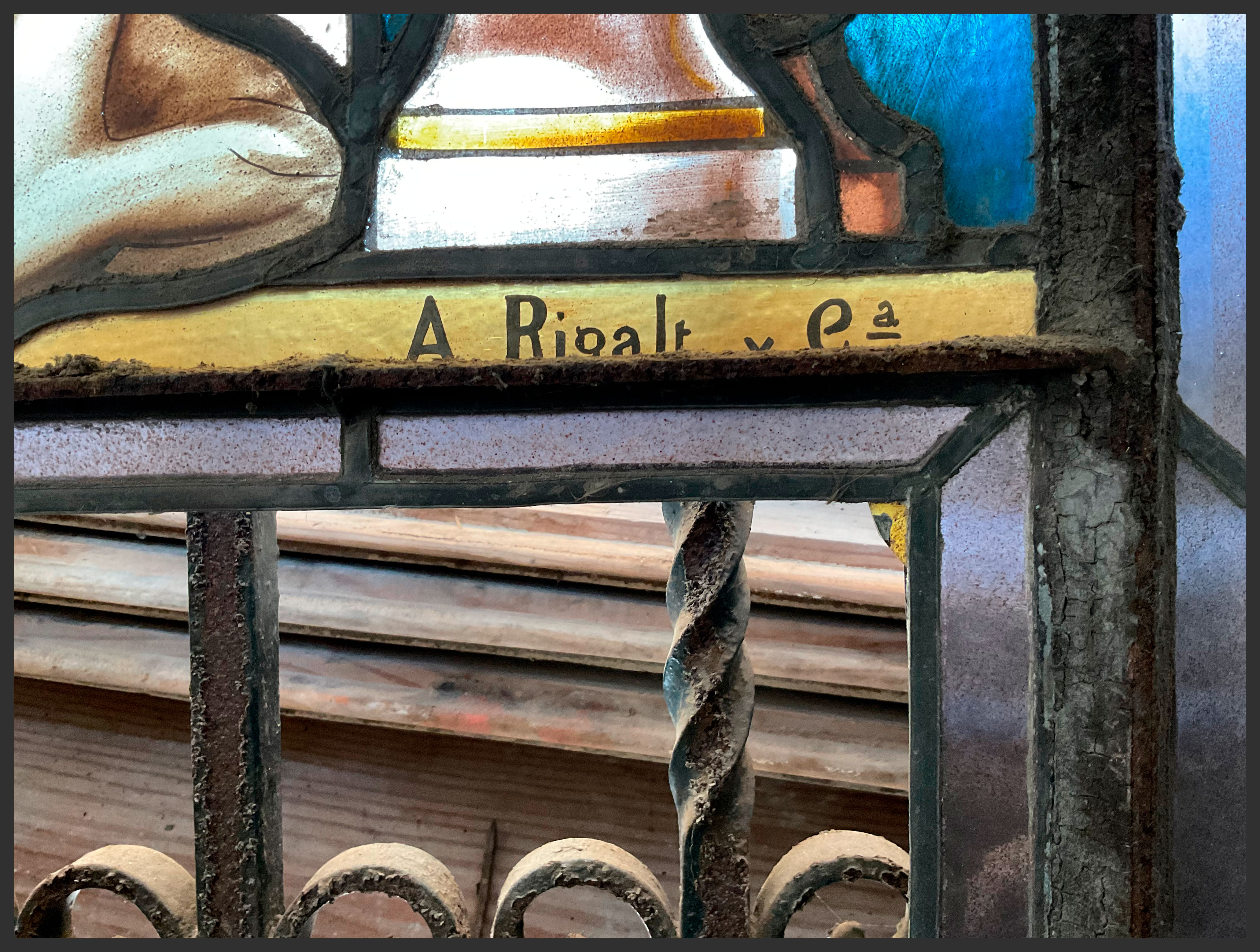
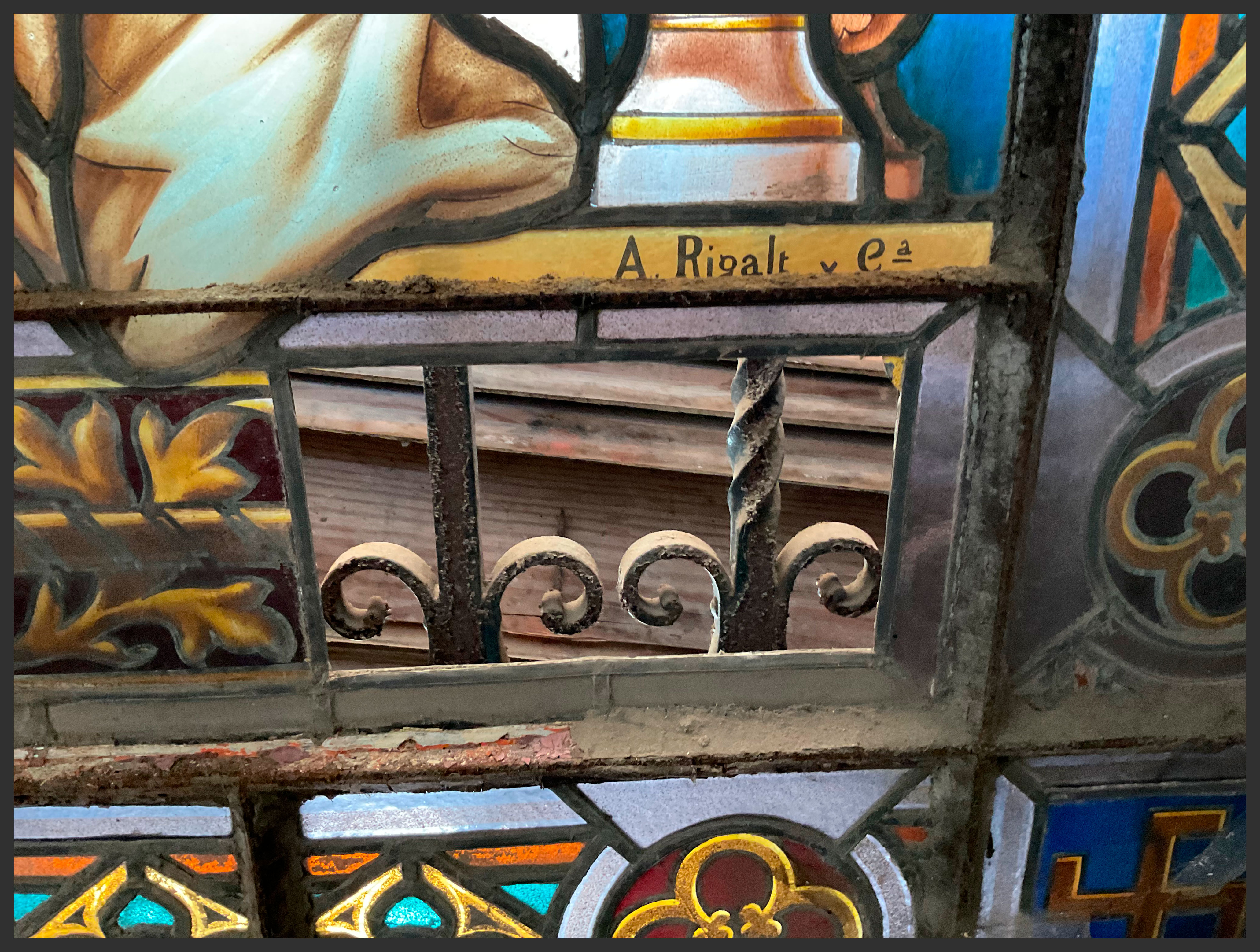
We can confirm that works from his studio are identified by the signature 'A. Rigalt y Cª,' meaning 'Antoni Rigalt and Company.' The work we present here holds great value for Portuguese heritage, as it is a creation of one of the greatest stained glass artists of his time. Names like Antoni Rigalt are extremely rare on a national level, and so far, no parallel by this artist is known in Portugal. However, it is possible that examples exist in similar palaces, considering Rigalt's prestige as a stained glass artist during his era.